
Imbalance Hormones Symptoms (Balance Your Hormones In 7 Days)
Imbalance hormones symptoms often appear subtly through signs like fatigue, mood swings, irregular periods, and unexplained weight changes, making them easy to overlook or misinterpret as lifestyle issues. This guide explains that hormonal disruptions can stem from life stages such as puberty or perimenopause, but also from chronic stress, poor nutrition, environmental toxins, thyroid dysfunction, and conditions like PCOS. Estrogen imbalance, in particular, is linked to sleep deprivation, alcohol use, and medical conditions, sometimes leading to concerns like dysfunctional uterine bleeding or an enlarged uterus caused by fibroids or adenomyosis. To identify these issues early, tracking menstrual patterns at home and noting irregularities is essential, while clinical tests like hormone panels and ultrasounds provide clarity. Managing symptoms involves a balanced approach, including a nutrient-rich PCOD-friendly diet, avoiding processed foods and sugar, and maintaining healthy lifestyle habits like proper sleep and stress control. Medical treatments and supplements may support recovery, but accurate diagnosis and consistent care remain the foundation for restoring hormonal balance effectively.
Neha Shukla
5/4/20266 min read
How Will You Check Imbalance Hormones System? - Every Step Disclosed
The Imbalance hormones symptoms are common nowadays, some get it early, whereas some get it late. Mood shifts, sudden fatigue, unexplained changes.It all feels like a puzzle. That is where imbalance hormones symptoms quietly step in. In this guide, I walk you through a refined, step-by-step way to actually check what your body is trying to tell you, with clarity you can finally trust.
So, now that you are aware of imbalance hormones symptoms, let’s get deeper and understand it precisely.
Understanding Imbalance Hormones Symptoms in Real Life
Imbalance hormones symptoms will not simply show up out of the blue. They come in like the fog very scattered and confusing. Someone could put on weight even if they eat healthily or their periods could change without any reason.
According to the NIH research, hormonal disorders affect millions of people across the world. In which, most are still undiagnosed for years due to their overlapping common lifestyle complaints.
Why Hormonal Changes Often Go Unnoticed ?
Hormonal changes or hormone problems usually go unnoticed because your bloating looks like overeating, and of course, due to the sedentary lifestyle we all are living in.
Causes of Imbalance Hormones Symptoms
The time you hit puberty, pregnancy or perimenopause, you get into an immediate cause of imbalance hormones symptoms. But, there are still more reasons that are tied to the causes of imbalance hormones symptoms. Let’s check it out.
Your chronic stress, as it disrupts your cortisol levels, later leads to imbalance hormones symptoms.
Nutritional deficiency of Vitamin D, magnesium, and zinc.
Environmental endocrine disruptors in plastics, pesticides, and synthetic fragrances.
Thyroid dysfunction and adrenal irregularities.
Now that you have covered so far, let’s check out the causes of estrogen imbalance.
What are the Causes of estrogen imbalance?
PCOS, Thyroid dysfunction and disturbed sleep cycle are the main causes of estrogen imbalance. To understand it deeply, check out the section mentioned.
Lifestyle Triggers You Might Be Ignoring
According to the National Sleep Foundation, people who sleep less than 7 hours come in contact with more health deficits that often impairs the liver’s ability to clear out excess oestrogen. Speaking of which, chronic stress releases high cortisol levels, which compete directly with progesterone.
Adding to that, alcohol consumption is also the reason for estrogen imbalance. But still, there are some medical causes that are interlinked with estrogen imbalance. Let’s understand it.
Medical Causes Linked to Estrogen Imbalance
Thyroid dysfunction, PCOS, and over consumption of oral contraceptives are some of the medical causes of estrogen imbalance. Not to mention, the adipose tissue is also linked to estrogen imbalance. And when you consider these as the causes of estrogen imbalance.
You will be shocked to know that these are also the primary causes of dysfunctional uterine bleeding and significant causes of imbalance hormone symptoms in reproductive-age women. Now, let’s talk about the causes of an enlarged uterus and womb.
What is the cause of enlarged uterus and womb?
The enlarged uterus or womb is probably one of the most unrecognised yet very important clinical manifestations of hormonal imbalance. A lot of women in India complain about the feeling of heaviness in the abdomen.
They feel pressure in the pelvis on gaining weight without thinking that the uterus could be the reason.
Conditions That Affect the Uterus
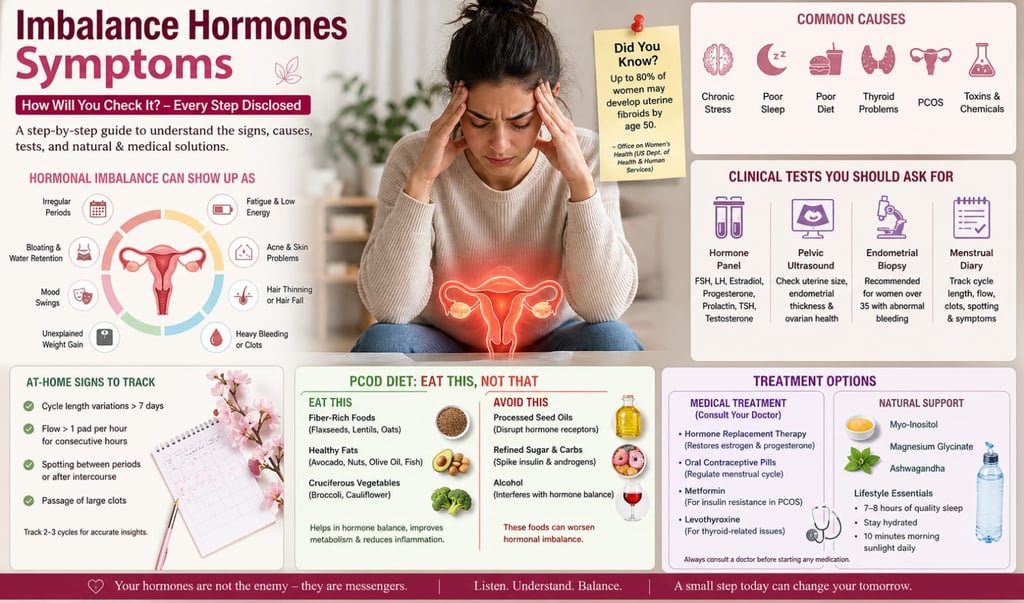
Uterine fibroids are benign muscular growths fuelled directly by oestrogen. The Office on Women's Health (U.S. Department of Health & Human Services) estimates up to 80% of women develop fibroids by age 50.
Talking about adenomyosis, it is a condition where the uterine lining embeds into the muscular wall. And this becomes the reason for an enlarged womb, and also leads to heavy, painful menstruation.
Both of these conditions are responsive to oestrogen. So, an enlarged uterus is actually one of the direct clinical signs of imbalance hormones symptoms.
Also, If you are feeling heavy lower belly every single time with irregular periods, you should see a gynaecologist for a check-up, there might be a reason for PCOD maybe or uterine dysfunctional bleeding too.
As you have covered so far, let’s understand how you will check the dysfunctional uterine bleeding.
How to check dysfunctional uterine bleeding?
Dysfunctional uterine bleeding (DUB) means unexplainable irregular or heavy bleeding. This is one of the most considered reasons for imbalance hormones symptoms.
If you are experiencing the same, you can also track your imbalance hormones at home. To check, read the following section without leaving a single phrase.
At-Home Signs You Should Track For Imbalance Hormones Symptoms
Keep a menstrual diary and document:
Cycle length variations exceeding seven days.
Flow requiring more than one pad per hour for consecutive hours.
Spotting between periods or after intercourse.
Passage of large clots
Two to three cycles of documented data transform vague concern into clinically useful evidence.
Clinical Tests You Should Ask For
Full hormone panel - FSH, LH, oestradiol, progesterone, prolactin, TSH, testosterone.
Pelvic ultrasound - assesses uterine size, endometrial thickness, and ovarian morphology.
Endometrial biopsy - recommended for women over 35 with persistent abnormal bleeding.
Understanding the causes of dysfunctional uterine bleeding in females - anovulation, thyroid disorders, oestrogen dominance- is what makes these tests actionable. This precision resolves the query of how to cure imbalance hormones symptoms in menstruation through diagnosis, not guesswork.
Now, it’s time to dig deeper and check out some of the PCOD diets you can consider if you have encountered this condition and the reason for your imbalance hormones symptoms.
Which PCOD diet is best for imbalance hormones symptoms?
See a nutritional diet is essential for you, as it supports you in your healing journey the most. And if you are someone who experiences imbalance hormones the most, a customised PCOD diet plan will support you in insulin resistance, inflammation, estrogen health and metabolism all at once.
Foods That Stabilise Hormonal Changes
Considering the foods that you can consider in your PCOD diet -
Try to add some fibre rich foods like flaxseeds, lentils, and oats. These foods will help you stabilise your hormones.
You can add good fats like avocado, walnuts, extra virgin olive oil, and even oily fish, as these will help you build the blocks of steroid hormones.
Add vegetables like broccoli and cauliflower. Try to have indole-3-carbinol, which is a compound that helps you promote healthy oestrogen metabolism in your body.
As you are aware of good foods now, check out the foods that worsen hormone problems in your body.
Foods That Worsen Hormone Problems
If you are concerned about your hormone health, avoid these foods as it will worsen your hormone problems:
Do not consume processed seed oils, as they will alter the functioning of receptors.
Avoid consuming refined sugar and carbohydrates as they boost up your blood sugar level and will worsen the problem of excessive androgens.
Avoid the consumption of alcohol, as this is the major cause of hormone problems.
If you are experiencing a worse situation and are looking for medications. Here are some of the pills that you can consider.
What is the best medicine to treat hormone problems?
The best medicine to treat hormone problems can be the hormonal replacement treatment. Why? Because it restores your estrogen and progesterone. Also, in case you are looking to regulate your menstrual cycle, add oral contraceptive pills.
Adding to that, consider Metformin to address insulin resistance in PCOS and Levothyroxine to correct hypothyroid-driven hormonal cascades.
[Disclaimer: Always consult a doctor before starting any treatment.]
Contrary to that, if you are looking for something that can assist you naturally. Try correcting your lifestyle and add supplements like myo-inositol, magnesium glycinate, and ashwagandha, which have demonstrated measurable benefit in studies published in NIH research.
Treatment of imbalance hormones symptoms can be done through both of the ways. Still, if you are having this experience for long, medication alone won’t give you the results.
And, if you want to balance your imbalance hormones symptoms, improve your lifestyle, have at least 7-8 hours of sleep, be hydrated, and spend at least 10 minutes in natural morning sunlight.
Conclusion
Imbalance Hormones symptoms should not be viewed as a life sentence, but rather as a call to respond wisely and mindfully. Monitor your situation, get tested, feed your body, and consult the appropriate professionals. With each move that you make towards understanding your hormones, you are moving closer to a life that genuinely suits you.
FAQs
What is the best medicine to treat imbalance hormones symptoms?
Ans: The best approach to imbalance hormones symptoms combines medical treatment like hormone therapy with lifestyle correction. Research shows structured care improves outcomes, especially in conditions like PCOS. Medication supports regulation, but long-term balance depends on sleep, diet, and stress management.
How do I fix my imbalance hormones symptoms?
Ans: Fixing imbalance hormones symptoms begins with tracking patterns, improving nutrition, and restoring sleep cycles. I recommend journaling symptoms daily. Clinical testing such as hormone panels helps confirm underlying issues and ensures targeted treatment rather than guesswork.
What are the 5 signs of imbalance hormones symptoms?
Ans: Five clear signs of imbalance hormones symptoms include irregular periods, persistent fatigue, acne, unexplained weight changes, and mood swings. These often appear gradually and are frequently ignored, even though they indicate underlying endocrine disruption.
How do I check my imbalance hormones symptoms?
Ans: To check imbalance hormones symptoms, start with self-observation through cycle tracking and journaling. Then confirm patterns using hormone blood tests and ultrasound imaging. Medical guidelines highlight this combined approach as the most accurate way to diagnose hormonal imbalance.
What are common causes of imbalance hormones symptoms?
Ans: Common causes of imbalance hormones symptoms include stress, poor diet, lack of sleep, thyroid disorders, and PCOS. Studies show hormonal disorders affect a significant portion of women globally, often remaining undiagnosed, which delays proper management and treatment.
About The Author
Neha Shukla
Is a writer and LinkedIn creator who demystifies wellness for modern lives. She writes about nutrition, mindfulness, and sustainable habits, grounded in research, infused with real-world wisdom. Her mission is to help you feel better without feeling overwhelmed.



Contact
Don't Let Your Wellness Journey Feel Boring! Get connected with us today to know your health better.
Phone
hello@nehashuklaa@gmail.com
+91 92110 33284
© 2026. All rights reserved.