
What Are Probiotics For Gut Health?
This blog explores the essential role of probiotics for gut health in restoring balance within the gut microbiome and improving overall wellbeing. It explains how modern lifestyles disrupt beneficial gut bacteria through processed diets, stress, and poor sleep, making digestive support increasingly important. The article highlights how probiotics function inside the body by enhancing digestion, improving nutrient absorption, and supporting the gut brain axis, which influences mood and mental clarity. It also outlines ten often-overlooked benefits, including reduced bloating, stronger immunity, better skin health, and improved metabolic balance. Natural sources such as fermented foods like curd, kefir, kimchi, and traditional Indian options like buttermilk and kanji are discussed alongside practical dietary habits that sustain gut health. The blog further examines when probiotic supplements for gut health become necessary and how to choose them wisely. Actionable insights such as daily routines, homemade probiotic preparation, and simple remedies for bloating make the content practical and relatable. Overall, the piece emphasises consistency, mindful eating, and lifestyle awareness as the foundation for long-term digestive health and vitality.
Neha Shukla
5/9/20268 min read
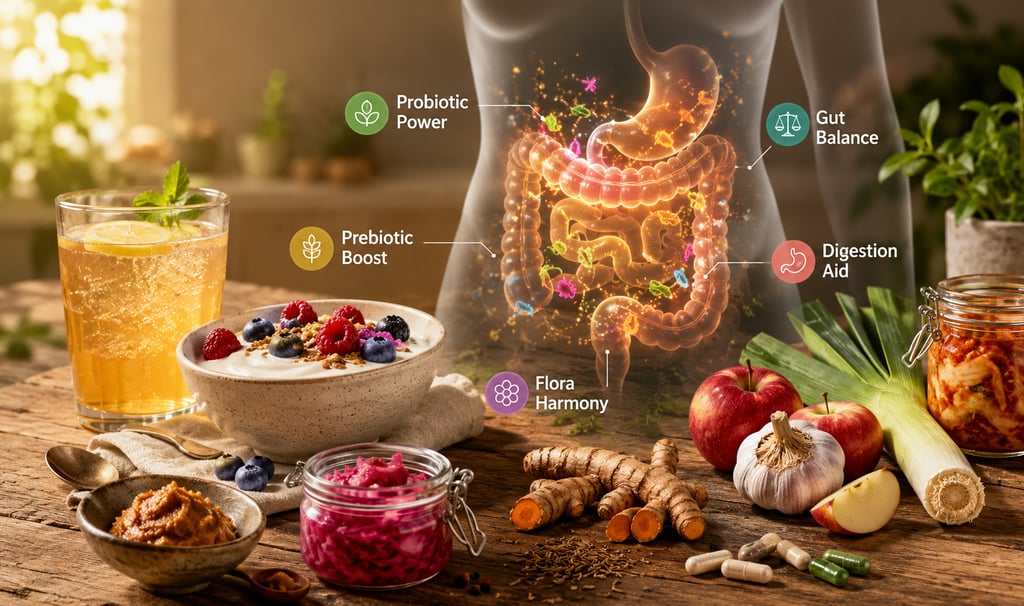
Why are probiotics for gut health necessary?
While talking about the probiotics for gut health, I remember a Tuesday evening when I sat curled on my sofa, bloated and miserable after a rather indulgent dinner, wondering why my body felt like a storm in a jar. Irregular digestion had become my uninvited companion.
That was the evening I discovered the extraordinary world of the gut microbiome and realised that probiotics for gut health were not merely a wellness trend, they were the ancient, eloquent answer my body had been whispering for years.
What Exactly Are Probiotics For Gut Health And Why Do They Matter?
Probiotics for gut health are living microorganisms that, when consumed in sufficient quantities, confer a genuine benefit upon the body. Think of your gut as a verdant garden. When the right flora flourishes, everything grows in glorious harmony.
When harmful weeds invade, the entire ecosystem falters. Probiotics are the skilled gardeners who restore that delicate balance within your gut microbiome, tending every corner with quiet diligence.
How do they work inside the body?
Once consumed, these microorganisms take up residence along the intestinal lining through a process called colonisation. They assist in breaking down complex food particles, enhance nutrient absorption, and produce short-chain fatty acids that nourish the gut wall.
Beyond digestion, they send signals along the gut-brain axis that bidirectional highway connecting your belly to your mind. The gut is not merely a digestive organ; it is a profound communicator.
Why Modern Lifestyles Damage Gut Bacteria?
Antibiotics do not discriminate, but they vanquish beneficial and harmful bacteria alike, leaving your gut microbiome depleted. Processed foods stripped of fibre offer gut bacteria little nourishment. Chronic stress floods the body with cortisol, measurably disrupting microbial diversity.
Poor sleep further destabilises the bacterial ecosystem. Most tellingly, urban diets have lost the rich microbial diversity that ancestral whole-food diets once generously provided. Probiotics for gut health exist as a dignified remedy to this very modern malaise.
And the rewards of restoring that balance, as you shall discover in the next section, are far more numerous than most people ever dare to imagine.
10 Benefits Of Probiotics For Gut Health That Most People Overlook
The splendour of probiotics for gut health extends far beyond simple digestion. Here are ten benefits, each a quiet revelation:
Reduced gut inflammation: Certain strains calm inflammatory pathways in the intestinal lining.
Better digestion: Probiotics produce enzymes that break down lactose, fibre, and protein with remarkable efficiency.
Stronger immunity: Nearly 70 per cent of the immune system resides in the gut, and a thriving microbiome trains immune cells to respond with precision.
Improved mental clarity via the gut brain axis: The gut produces approximately 90 per cent of the body's serotonin, supporting steadier moods and sharper focus.
Skin improvement: A flourishing microbiome reduces systemic gut inflammation, manifesting as clearer, more luminous skin.
Reduced bloating: Beneficial bacteria regulate gas production and improve motility, dissolving that uncomfortable distension.
Enhanced nutrient absorption: Probiotics improve the bioavailability of vitamins B12, K2, and magnesium.
Hormonal balance: Gut bacteria assist in metabolising excess oestrogen, supporting equilibrium in both men and women.
Weight management support: Certain strains influence appetite-regulating hormones, easing a wholesome relationship with food.
Reduced sugar cravings: A balanced microbiome diminishes sugar-hungry bacteria, gently quieting those insistent sweet cravings.
Unique insight: Emerging research from NIH suggests a thriving microbiome regulates circadian rhythm-linked hormones, meaning probiotics for gut health may genuinely improve sleep quality, a benefit rarely discussed but profoundly felt.
Now that the case is made, the natural next question is: which probiotic foods and daily sources deliver these benefits most abundantly?
Best Foods For Gut Health - Natural Sources Of Probiotics For Gut Health
Fermented Foods For Gut Health. The most resplendent natural sources are fermented foods for gut health. Kefir brims with Lactobacillus and Bifidobacterium strains that most supplements rarely rival. Kimchi carries Leuconostoc bacteria alongside anti-inflammatory compounds.
Sauerkraut delivers Lactobacillus plantarum, hardy and gut-resilient. Kombucha offers a gentler array of beneficial yeasts. And traditionally set curd remains one of the most accessible sources of probiotics for gut health available daily.
Indian Foods Rich In Probiotics
What Indian food is rich in probiotics? The answer is woven into the subcontinent's culinary heritage. Idli and dosa batter, fermented overnight, develops Leuconostoc mesenteroides of real potency. Kanji, the deep-violet fermented carrot drink of North India, is a probiotic elixir of rare elegance, prepared by fermenting mustard-seasoned carrots in earthen pots for two to three days.
Traditional pickles made without vinegar carry live cultures. Buttermilk tempered with curry leaves and ginger is both a digestive tonic and a gentle daily probiotic.
Everyday Foods That Quietly Support Gut Bacteria
Fibre-rich whole grains, bananas, garlic, and onions serve as prebiotics, the nourishing substrate upon which gut bacteria feast. Without prebiotics, even the finest probiotics struggle to take lasting root.
The best foods for gut health, then, are not exotic rarities, but they are humble, everyday ingredients waiting to be chosen with intention.
But what happens when food alone is no longer sufficient? That is precisely where supplements enter the conversation.
Probiotic Supplements For Gut Health - Do You Really Need Them?
Digestive health supplements become necessary after antibiotics, during chronic digestive issues such as IBS, or when dietary diversity is significantly limited. Food sources alone may not provide sufficient colonisation to restore a depleted gut microbiome in these circumstances.
How To Choose The Best Probiotics For Gut Health?
When selecting the best probiotics for gut health, three considerations reign supreme. First, CFU count. Seek at least 10 billion colony-forming units for therapeutic benefit. Second, strain specificity,
Lactobacillus rhamnosus suits IBS; Bifidobacterium longum calms anxiety via the gut-brain axis. Third, storage, many strains perish without refrigeration, so verify shelf stability before purchasing probiotic supplements for gut health.
Common Mistakes People Make While Taking Probiotic Supplements
Many take digestive probiotics at precisely the wrong moment. Taking them on an empty stomach exposes the bacteria to harsh gastric acid, decimating survival rates. The optimal timing is fifteen minutes before a meal. Others take the wrong strains or abandon the course within days, expecting instant transformation.
Consistency across four to six weeks is where the true, lasting restoration genuinely resides. Whether you are considering digestive health supplements for the first time or already mid-course, probiotics for men and women alike benefit enormously from being paired with a structured, gut-friendly daily diet, which is exactly what we explore next.
Gut Health Diet Plan To Support Probiotics For Gut Health
Begin each morning with warm water and raw apple cider vinegar to prime digestive secretions. Breakfast ought to include oats or whole grain toast, fibre-rich and prebiotic by nature.
At lunch, add a bowl of curd or a spoonful of kimchi alongside your meal. Dinner should be light and warm, a simple dal or khichdi that asks little of your digestive system before rest.
Foods To Avoid That Kill Gut Bacteria
Ultra-processed foods, refined sugar, and artificial sweeteners such as sucralose measurably reduce microbial diversity, the quiet adversaries of a flourishing gut microbiome, working their damage in the shadows of every convenient meal.
Weekly Gut Reset Strategy
Once a week, practise a gentle reset, warm lemon water at dawn, fruit and oats at breakfast, kanji or buttermilk at midday, and light khichdi for dinner. This single-day rhythm, undertaken consistently, allows gut bacteria to recalibrate and probiotics for gut health to take firmer, more enduring root.
Yet even the finest gut health diet cannot always prevent that persistent, daily nuisance: bloating. Let us address that directly next.
How To Prevent Bloating Naturally Using Probiotics For Gut Health
Bloating signals an imbalance between bacterial strains, digestive enzyme production, or stress-induced motility disruptions. When harmful bacteria dominate, excess gas accumulates, and that familiar, uncomfortable distension follows with tedious predictability.
Daily Habits That Reduce Bloating
Chewing each mouthful thoroughly, eating without screen distraction, and drinking water between rather than during meals reduces bloating with steady, accumulated efficacy that reveals itself gradually over weeks.
Quick Remedies That Actually Work
Ginger tea sipped after meals stimulates gastric emptying. Fennel seeds chewed raw relax intestinal muscles and release trapped gas. A small probiotic drink, such as buttermilk or kanji, consumed mid-morning reduces bacterial imbalance before bloating even begins. Digestive probiotics, when taken consistently before meals, address the root cause rather than merely soothing surface discomfort.
Probiotics for gut health work at depth, where bloating truly originates. Speaking of probiotic drinks, the next section reveals which beverages deliver the most potent live cultures with every sip.
What Drink Is High In Probiotics? Best Options Explained
Kefir leads with unmatched bacterial density. Kombucha offers a lighter, effervescent alternative. Kanji, the purple mustard-spiced North Indian ferment, is among the most potent and historically venerable probiotic drinks in existence.
Indian Drinks That Improve Digestive Health
Fermented rice water, consumed across South and East India, is quietly remarkable in its bacterial content. Jaljeera prepared with fermented tamarind water carries gentle probiotic properties alongside digestive spices that stimulate and comfort simultaneously.
When And How To Consume These Drinks?
Consume probiotic drinks on a relatively empty stomach in the morning for maximum colonisation. Avoid pairing them with hot beverages. Heat destroys the cultures you seek. Probiotics for gut health, in drink form, reward patience and daily regularity above all else.
And if you wish to take the most sovereign step of all, the next section shows you exactly how to craft these elixirs yourself, at home, from scratch.
How To Make Probiotics At Home?
To make curd, warm full-fat milk to 40 degrees Celsius, stir in one tablespoon of existing curd, wrap warmly, and allow to set undisturbed for six to eight hours. For kanji, submerge sliced black carrots in water with mustard powder and salt, seal in a glass jar, and ferment in a warm spot for two to three days.
For fermented rice water, soak cooked rice in water overnight and consume the liquid the following morning.
Which Is The Best Homemade Probiotic?
Curd wins for ease. Kanji triumphs for bacterial potency. Fermented rice water is the most affordable and gentlest introduction to homemade probiotics for gut health, ideal for those beginning this restorative journey.
Which Is Better, Boiled Rice Water Or Fermented Rice Water?
Boiled rice water soothes and hydrates, but it contains no live cultures. It is not a probiotic. Fermented rice water undergoes overnight lacto-fermentation, generating Lactobacillus strains that meaningfully support gut bacteria and long-term digestive comfort.
Nourishing the gut, it turns out, also nourishes the mind, and that extraordinary connection deserves a section of its own.
The Gut Brain Axis - How Probiotics For Gut Health Affect Your Mind Connection Between Gut And Mood?
The gut brain axis is a bidirectional neural highway. Approximately 90 per cent of serotonin, the body's mood-stabilising neurotransmitter, is synthesised within the gut. A depleted microbiome produces less serotonin, and the mind registers this as anxiety, low mood, or emotional fragility.
Signs Your Gut Is Affecting Your Mental Health
Persistent brain fog, unexplained anxiety, erratic mood swings, and poor concentration are frequently gut-originating symptoms rather than purely psychological ones. The gut speaks eloquently; we rarely pause to listen.
How To Improve Mental Wellbeing Through Gut Health
A sustained combination of probiotics for gut health, prebiotic-rich foods, reduced sugar, adequate sleep, and mindful movement creates a microbiome environment in which serotonin production flourishes and the mind grows quieter, clearer, and more resilient.
Conclusion
Your gut is the quiet architect of your vitality. With consistent nourishment through fermented foods, a thoughtful gut health diet, and considered supplementation, transformation arrives not dramatically, but gracefully. Let probiotics for gut health become your most faithful, enduring daily companion.
FAQs
Which food kills bad gut bacteria?
Ans: Garlic contains allicin, a potent antimicrobial that selectively targets harmful bacteria whilst sparing beneficial strains. Ginger suppresses pathogenic microbes through gingerols. Fermented foods crowd out harmful bacteria by producing lactic acid, creating an inhospitable internal environment for unwanted microbial residents within your gut.
Which fermented food is highest in probiotics?
Ans: Kefir consistently delivers the highest bacterial density, often exceeding 60 diverse strains per serving. Kimchi follows with abundant Lactobacillus varieties. Traditional curd, whilst gentler, remains the most universally accessible and daily-appropriate probiotic food for consistent gut microbiome support.
Is boiled rice water good for gut health?
Ans: Boiled rice water soothes the gut lining and provides digestible starches, excellent during recovery from digestive upset. However, it contains no live cultures. Fermented rice water undergoes overnight lacto-fermentation and delivers genuine probiotic benefits to gut bacteria.
What helps digest food immediately?
Ans: Thorough chewing activates salivary amylase, the first enzyme in digestion. Warm water before meals primes gastric acid secretion. Digestive enzymes found naturally in papaya and pineapple accelerate breakdown. A gentle walk after eating stimulates intestinal motility and hastens comfortable, efficient digestion.
Why do Chinese drink rice water?
Ans: In traditional Chinese wellness philosophy, fermented rice water is revered as a tonic for digestive harmony, skin luminosity, and sustained energy. It provides Lactobacillus cultures, B vitamins, and gentle starches, one of Asia's most enduring and elegant daily wellness rituals.
About The Author
Neha Shukla is a writer and LinkedIn creator who demystifies wellness for modern lives. She writes about nutrition, mindfulness, and sustainable habits, grounded in research, infused with real-world wisdom. Her mission is to help you feel better without feeling overwhelmed.



Contact
Don't Let Your Wellness Journey Feel Boring! Get connected with us today to know your health better.
Phone
hello@nehashuklaa@gmail.com
+91 92110 33284
© 2026. All rights reserved.