
Yeast Infection Treatment: Causes, Symptoms, and Effective Remedies You Should Know
This comprehensive guide simplifies yeast infection treatment by explaining its causes, symptoms, and the most effective remedies. It highlights how factors like antibiotics, hormonal changes, weak immunity, and lifestyle habits disrupt the body’s natural balance, leading to Candida overgrowth. Early signs such as itching, thick discharge, and irritation are discussed to encourage timely care. The blog covers trusted medical treatments like clotrimazole cream and fluconazole, alongside safe home remedies including probiotics and dietary adjustments. It also emphasizes prevention through proper hygiene, breathable clothing, stress management, and balanced nutrition. While the focus is on vaginal health, maintaining overall body wellness, similar to concerns like how to get bigger breast requires informed choices and consistency. With expert-backed advice, this guide empowers women to manage infections confidently and prevent recurrence effectively.
Neha Shukla
6/4/20267 min read
Yeast Infection Treatment Explained: Top Medicines and Prevention Strategies
There are discomforts women endure quietly, far longer than necessary - the persistent itch, the uninvited burn, the peculiar unease that arrives without warning. Seeking yeast infection treatment should never feel confusing or shameful. This guide covers causes, symptoms, proven remedies, and expert-backed advice so every reader may face this condition with genuine clarity and confidence.
What Are the Major Causes of Yeast Infection?
Before pursuing effective yeast infection treatment, understanding what triggers the infection is the most sensible first step. The body maintains a delicate internal ecosystem of bacteria and fungi. When that balance tips, Candida seizes its opportunity. Identifying the cause returns a sense of control, and control is half the healing.
Causes of Yeast Infection in the Vagina
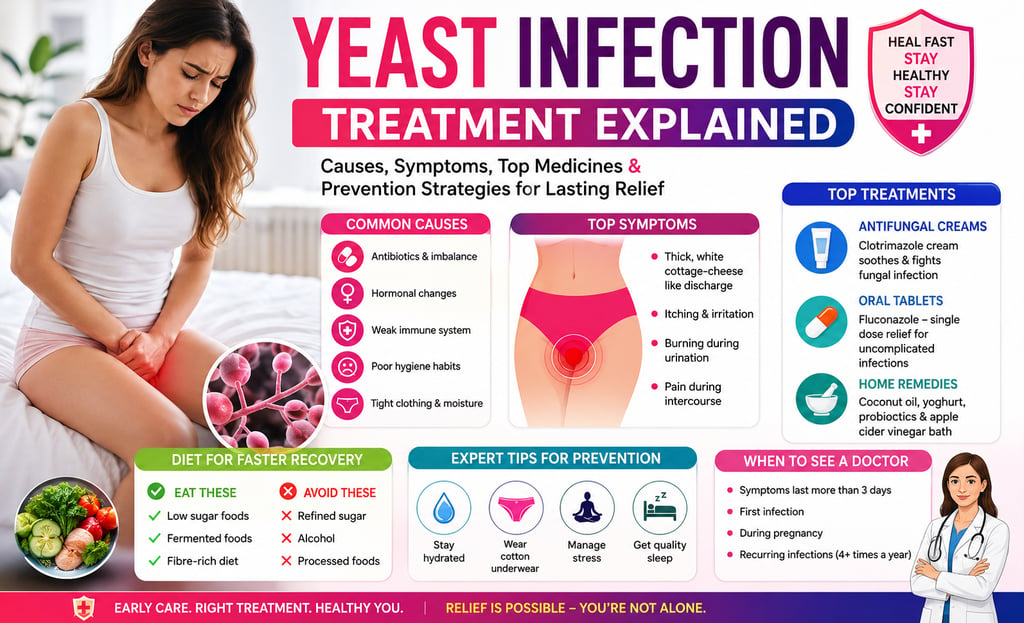
Antibiotics and imbalance: Antibiotics eliminate both harmful and beneficial bacteria, stripping away the Lactobacillus strains that hold Candida in check. Supporting recovery with probiotics during any antibiotic course is among the wisest preventive measures available.
Hormonal changes: Pregnancy, menstruation, and oral contraceptives shift vaginal pH, making fungal overgrowth considerably easier. Women navigating these hormonal transitions benefit from attentive symptom monitoring.
Weak immune system: A compromised immune system cannot suppress Candida effectively. Chronic illness, stress, and certain medications each lower the body's natural defences meaningfully.
Poor hygiene habits: Over-washing with scented soaps or douching paradoxically strips away the vagina's protective flora, creating an open invitation for infection.
Tight clothing and moisture: Synthetic, close-fitting garments trap warmth and moisture - the precise conditions Candida requires. Breathable cotton is always the wiser wardrobe decision.
What Are the First Signs and Symptoms You Should Not Ignore?
Recognising symptoms early transforms a manageable irritation into a timely yeast infection treatment rather than a prolonged ordeal. The body communicates clearly; the skill lies in listening and responding without delay.Yeast Infection Discharge Explained Clearly
Discharge is thick, white, and cottage-cheese-like in texture, with virtually no odour. This distinguishes a yeast infection from bacterial vaginosis, an important distinction when self-assessing.
Itching and irritation around the vulva are usually the first symptoms to appear, often preceding all others.
Burning during urination occurs when urine passes over inflamed tissue, warranting prompt yeast infection treatment without further hesitation.
Pain during intercourse is the body's unmistakable request for rest and care, not endurance.
When to consult a doctor: Seek professional advice if symptoms persist beyond three days, if this is a first infection, during pregnancy, or when infections return four or more times annually.
How Do You Flush a Yeast Infection Out of Your Body?
This question ranks among the most searched surrounding yeast infection treatment, and it deserves an honest, grounded answer. The body has no literal flush mechanism for fungal overgrowth. What it does possess is a remarkable capacity for restoration when given consistent, thoughtful support.
Hydration and Detox Myths
No cleanse or herbal tea holds power over Candida. Hydration supports kidney function and general cellular wellbeing. However, water alone cannot resolve a yeast infection that requires proper antifungal yeast infection treatment to fully clear.
Role of Gut Health
The gut microbiome and vaginal flora share a close, consequential relationship. A gut rich in beneficial bacteria naturally suppresses Candida. Probiotics containing Lactobacillus rhamnosus are among the most evidence-supported strains for restoring this essential microbial balance.
Supporting Recovery Through Lifestyle
Increase water intake to support cellular function and waste elimination.
Avoid sugar temporarily - refined sugars are Candida's most favoured nourishment.
Wear breathable cotton to reduce moisture and warmth against the skin.
Include probiotics daily through kefir, sauerkraut, and plain unsweetened yoghurt.
What Are the Top Yeast Infection Medications?
When the body requires clinical support, antifungal yeast infection treatment delivers well-studied, reliable relief. The range available today suits varying degrees of severity, from mild irritation to persistent infections demanding a more tailored approach.
Antifungal Creams
Clotrimazole cream is among the most trusted over-the-counter preparations. Applied directly to affected tissue, it disrupts the fungal cell membrane and dismantles the infection methodically.
Complete the full course, even if symptoms ease early, to prevent recurrence.
Oral Tablets
Single-dose fluconazole acts systemically and proves highly effective for uncomplicated infections, requiring no topical application whatsoever.
Yeast infection medication of this kind must be taken precisely as directed, and alcohol should be avoided throughout the entire treatment period.
Prescription Treatments
Severe or recurrent infections may require extended antifungal regimens or stronger yeast infection medicine formulations tailored to the individual's clinical history.
Yeast infection medication prescribed by a qualified clinician is designed for the specific infection at hand and should never be used without professional guidance.
How to Treat Yeast Infection at Home?
Yeast infection home remedies hold a respected place in health tradition, and some have earned that standing through genuine efficacy. Others circulate online with unwarranted confidence. Knowing the difference matters.
Top Yeast Infection Treatment at Home
Coconut oil application: Cold-pressed coconut oil contains caprylic acid, a compound with documented antifungal properties. Applied externally, it soothes irritation and offers gentle supportive relief alongside proper yeast infection treatment.
Yoghurt and probiotics: Plain, unsweetened yoghurt with live cultures supports microbial balance when consumed regularly. Safe, nourishing, and practically endorsed by existing evidence.
Apple cider vinegar bath: A modest measure of raw apple cider vinegar in a lukewarm bath may gently restore external pH balance. Never apply undiluted vinegar to inflamed or sensitive skin directly.
Garlic myth clarification: Garlic carries antifungal compounds, yet inserting raw cloves vaginally risks irritation and microbial disruption. Garlic belongs in the diet, not in internal application.
When home care proves insufficient, proper antifungal yeast infection treatment remains the most responsible and effective path forward.
Which Diet to Follow for Yeast Infection Treatment?
What sits on the plate directly influences what flourishes within the body. Yeast infection treatment naturally begins at the table, where daily choices either starve Candida or sustain it.
Foods to Eat
Low sugar foods such as whole grains, legumes, and low-glycaemic vegetables remove Candida's preferred fuel from the equation entirely.
Fermented foods including kefir, kimchi, and sauerkraut replenish beneficial bacteria and support long-term microbial resilience.
Fibre-rich diet options like oats, lentils, leafy greens, and chia seeds nourish gut bacteria and encourage consistent, healthy digestion.
Foods to Avoid
Refined sugar in pastries, sweets, and sugary drinks creates exactly the conditions Candida requires to multiply.
Alcohol metabolises into sugars and disrupts gut flora, actively counteracting any course of yeast infection treatment.
Processed foods laden with additives and refined carbohydrates compromise the immune system with cumulative, measurable effects.
A simple sample day: plain kefir and berries at breakfast, a leafy green salad with grilled chicken at midday, and lentil soup with steamed vegetables for dinner. Nourishment need not be complicated.
Vaginal Yeast Infection Treatments: What Actually Works?
Vaginal yeast infection treatments are not uniform in their effectiveness. The wisest approach accounts for symptom severity, individual health history, and how promptly care begins.
When Home Remedies Are Enough
Mild, infrequent infections with a clear trigger, such as post-antibiotic disruption, often respond to dietary changes, probiotics, and gentle home care within three to five days.
When Medication Is Necessary
Moderate to severe symptoms call for antifungal intervention. Clotrimazole cream over seven days or a single fluconazole dose is the clinical standard for uncomplicated yeast infection treatment.
When to Seek Medical Help
When yeast infection treatment fails to resolve symptoms within a week, or when infections recur frequently, professional evaluation is essential. Conditions such as diabetes or immune system suppression may be quietly contributing. Mild infections typically clear in three to seven days; complex cases may require up to three weeks.
Expert Tips for Faster and Safer Yeast Infection Treatment
Beyond remedies and medications, certain refined daily habits meaningfully accelerate recovery and, more elegantly, prevent recurrence before it ever begins.
Hygiene Practices
Cleanse the vulva with plain warm water or a pH-balanced, unscented wash. Dry thoroughly after bathing, as residual moisture is Candida's most loyal companion. Avoid douching entirely - the vagina is a self-regulating system that requires no internal intervention.
Clothing Choices
Loose cotton underwear allows essential airflow and discourages moisture accumulation. Changing promptly after exercise or swimming reduces the warm, damp conditions that make yeast infection treatment necessary.
Stress Management Impact
Cortisol suppresses immune response and disrupts hormonal changes and equilibrium, creating fertile ground for Candida. Even ten minutes of daily mindfulness or gentle movement supports the nervous system in ways that benefit vaginal health measurably over time.
Sleep and Recovery
Seven to nine hours of quality rest is when the immune system performs its most diligent repair. Prioritising sleep supports the body's natural response to yeast infection treatment and lowers the risk of recurrence with remarkable consistency.
Conclusion
Yeast infection treatment is entirely manageable when approached with knowledge and composure. Recognise symptoms early, choose the right remedy, and support the body through sound diet and daily habits. Recovery is not merely possible, it is well within reach for every woman who acts with informed, timely care.
FAQs
What kills a yeast infection quickly?
Ans: The fastest, most reliable yeast infection treatment involves a single-dose fluconazole tablet or a seven-day course of clotrimazole cream. Pairing either antifungal option with temporary sugar reduction, daily probiotics, and breathable cotton underwear accelerates healing and significantly lowers the likelihood of the infection returning.
What are the first signs of a yeast infection?
Ans: Early signs include persistent itching around the vulva, thick white odourless discharge resembling cottage cheese, and visible redness or irritation. A burning sensation during urination may also appear. Recognising these signs early allows timely yeast infection treatment before discomfort deepens into more significant and prolonged distress.
Will yeast infection go away on its own?
Ans: Occasionally, a very mild infection may subside when its trigger is swiftly removed, such as completing antibiotics and restoring probiotics. However, waiting is rarely comfortable or wise. Most infections require proper yeast infection treatment to fully resolve and prevent the overgrowth from intensifying into a more stubborn, difficult condition.
How to know 100% if you have a yeast infection?
Ans: No self-assessment offers absolute certainty, however convincing symptoms appear. Thick white odourless discharge combined with itching and redness is strongly indicative. A healthcare provider's laboratory swab delivers a definitive diagnosis, especially important before beginning any yeast infection treatment for the very first time in one's life.
How to treat vaginal yeast infection?
Ans: Effective vaginal yeast infection treatments include clotrimazole cream, oral fluconazole, and dietary adjustments with daily probiotics. Mild cases may respond to yeast infection home remedies such as coconut oil or fermented foods. Persistent or severe infections warrant professional evaluation and targeted antifungal yeast infection treatment from a qualified clinician.
About The Author
Neha Shukla is a writer and LinkedIn creator who demystifies wellness for modern lives. She writes about nutrition, mindfulness, and sustainable habits, grounded in research, infused with real-world wisdom. Her mission is to help you feel better without feeling overwhelmed.



Contact
Don't Let Your Wellness Journey Feel Boring! Get connected with us today to know your health better.
Phone
hello@nehashuklaa@gmail.com
+91 92110 33284
© 2026. All rights reserved.