High Cholesterol Symptoms - Lower Cholesterol in 15 Days
High cholesterol symptoms often go unnoticed because they rarely present obvious warning signs, making the condition a silent risk for heart health. This blog explains that early indicators may include chest discomfort, shortness of breath, fatigue, dizziness, and visible signs like yellowish deposits around the eyes. It highlights how excess LDL (bad cholesterol) can build up in arteries, forming plaques that may lead to heart attacks or strokes, while HDL (good cholesterol) helps remove this buildup. The article also outlines key causes such as poor diet, lack of exercise, smoking, and excess weight, along with recommended cholesterol testing through a lipid profile. A practical 15-day action plan focuses on dietary improvements, hydration, physical activity, and better sleep to help manage cholesterol levels effectively. Rather than quick fixes, the emphasis is on sustainable lifestyle changes, including fiber-rich foods, reduced processed intake, and regular monitoring. Overall, understanding high cholesterol symptoms and taking consistent, informed steps can significantly improve heart health and reduce long-term risks.
Neha Shukla
5/4/20266 min read
How to Lower Cholesterol in 15 Days?
High Cholesterol Symptoms? Let’s talk about it later, but the discussion of Chicken Biryani, Fries, Manchurian, Noodles - Got watery mouth just by hearing these names, right? Do you know how much cholesterol they contain, which is affecting your health, especially leading to heart strokes? You blame them blindly, but there are some signs that are high cholesterol symptoms you never know.
Not only you, but most people fix their plates without knowing the other hazardous high cholesterol symptoms. So, let’s get into it and check out the symptoms of high cholesterol, starting with understanding the very first signs of high cholesterol.
Also Read | Imbalance Hormones Symptoms - Balance Your Hormones in 7 Days.
What are the first signs of high cholesterol?
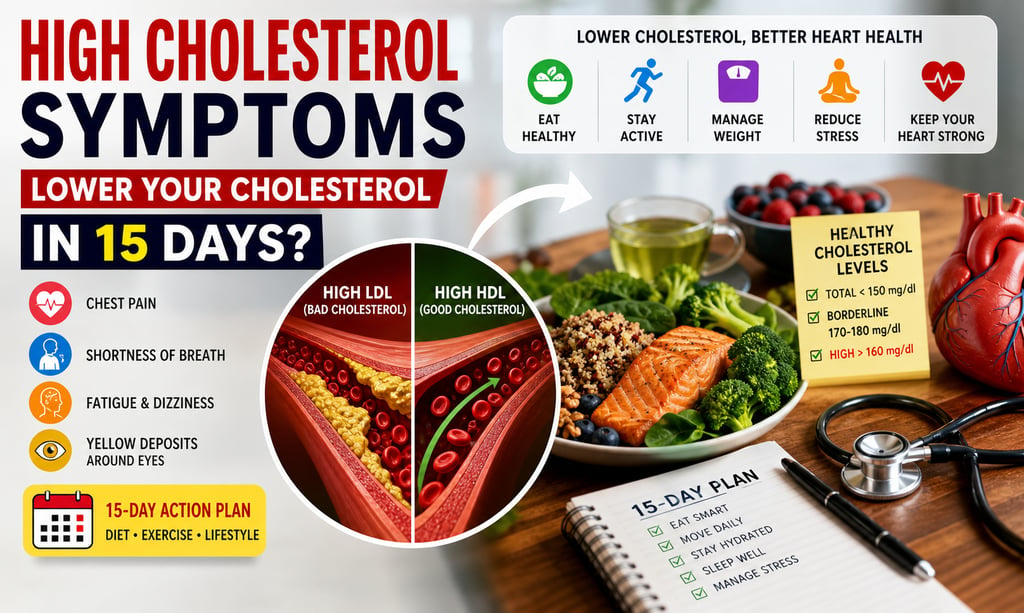
According to the research of Lal Pathlabs, People with high cholesterol may experience chest discomfort or pain, often described as tightness, pressure, or squeezing in the chest. This high cholesterol symptom typically occurs during physical exertion or stress, shortness of breath, heart palpitations, fatigue and even dizziness. High cholesterol symptoms are a silent enemy. No fever, no rash, no loud announcement. It quietly builds up unnoticed while the harm it causes gets worse. You need to check out symptoms even when you are considering the causes of high cholesterol.
Symptoms to Watch
When you are looking for cholesterol symptoms, check out the following things before judging.
Talking about the signs of high cholesterol on face, the symptoms include yellowish waxy deposits around your eyes, which are usually called xanthelasma, and may include small fatty bumps around your eyelids.
Symptoms of high cholesterol in females can include unexplained fatigue, irregular hormones, and sudden weight changes.
Some women may suffer from persistent chest heaviness, which is often misattributed to stress.
There could be a mild shortness of breath during routine movement.
After knowing the high cholesterol symptoms, if you find any of these discrepancies or symptoms with you, an urgent doctor visit is required. You can also book a cardiac family history if you are over the age of 30.
You may encounter different numbers in your cholesterol reports, and maybe be wondering if high cholesterol causes a heart stroke or not. Let’s get the answers.
Check Out | Imbalance Hormones Symptoms - Balance Your Hormones in 7 Days.
Does cholesterol cause a heart stroke?
Your heart and cholesterol are somehow interlinked with each other. If you are suffering from bad cholesterol (LDL Cholesterol), then yes, you can have a heart stroke.
How LDL Cholesterol Blocks Arteries?
LDL cholesterol, also known as low-density lipoprotein, is the one that deposits fatty substances on the walls of arteries. Eventually, this material turns into plaque that hardens. Arteries become narrower. Blood pressure increases. When a piece of plaque breaks off, a clot is formed immediately.
If that clot moves to the brain, it causes a stroke. If it obstructs a heart artery, it causes a heart attack. It's a silent chain reaction that starts as soon as the levels of LDL cholesterol go up without being controlled.
The Role of Good Cholesterol (HDL Cholesterol)
Think of HDL cholesterol as the body's skilled team of cleaners. They pick up surplus LDL that has managed to reach the blood vessel walls and carry it back to the liver for elimination.
High levels of HDL are truly protective. In fact, raising HDL should be considered equally important as lowering LDL when it comes to controlling the overall cholesterol levels.
Adding to that, if you are concerned about checking your cholesterol levels, let’s study the process now.
Also Read | Imbalance Hormones Symptoms - Balance Your Hormones in 7 Days.
How to check cholesterol levels?
The cholesterol test requires a lipid profile blood test that examines the LDL (bad cholesterol) and HDL (good cholesterol) levels of your cholesterol. And this test required a certified laboratory and a doctor’s prescription, too. If you are going for a lipid profile blood test, here are the things you need to take care of.
Preparing for your lipid profile test - step by step
Do not eat at least 9 to 12 hours before the test (you can drink water)
It is advisable not to consume alcohol for 24 hours before
Tell your doctor about any current medications
Plan your test in the morning so that you can have a light fast
Get the results and not focus only on total cholesterol, but also on all four values.
When and How Often to Test Cholesterol?
Adults over 20 can get a cholesterol test once every four to six years. People who have a family history of heart disease, are overweight, or have diabetes can be tested yearly. If the levels turn out to be high, it is advised to check them every three months.
As you have covered so far, let’s check out the reasons for high cholesterol and what the healthy cholesterol levels are.
Check Out | Imbalance Hormones Symptoms - Balance Your Hormones in 7 Days.
What are the reasons for high cholesterol, and what are healthy cholesterol levels?
If you are having a saturated or trans fat-rich diet, not indulging in any physical activity/training, then you will be the one with high cholesterol. Not only this, but smoking, excess body weight, specifically in abdomen region, these things will put you under high cholesterol.
Talking about the healthy cholesterol levels. The stats show a different story and amazing numbers.
Healthy Cholesterol Levels
If you encounter less than 150 mg/dl, you are in a safe zone. But the result over 160 mg/dl is a high cholesterol level, and you should seek a medical prescription. The borderline will include the number of 170-180 mg/dl.
Bad Cholesterol Levels
According to the Centers for Disease Control and Prevention (CDC-GOV), bad cholesterol generally refers to LDL cholesterol. If you encounter more than 160 mg/dl, it means you are in the red zone and might suffer from bad cholesterol levels and require a medical consultation.
If you are suffering from bad cholesterol, there are some ways you can get out of it. You just need to follow some sort of things and change your lifestyle. Let’s understand how.
Also Read | Imbalance Hormones Symptoms - Balance Your Hormones in 7 Days.
How to lower LDL cholesterol?
If you want to lower LDL cholesterol, you need to work on your diet and lifestyle and include some physical activity in your daily routine. You can also consider this 15-day action plan to lower LDL cholesterol.
15-Day Action Plan To Lower Cholesterol
Follow this routine for a straight 15 days, and you will get the result for sure.
Day 1 to 3 Detox Foundations: Get rid of all trans fats and processed snacks in your kitchen. Have a bowl of oatmeal with flaxseeds every morning. Three litres of water intake should be your daily goal. Take up 20-minute evening walking as a new hobby.
Day 4 to 10 Dietary Architecture: Eat two servings of fatty fish per week. Consume one spoonful of psyllium husk in water before meals. Use legumes instead of red meat. Use green tea twice a day. Its catechin can lower LDL cholesterol levels effectively.
Day 11 to 15 Optimisation Phase: Try resistance training thrice a week. A 40-minute walk after dinner would be better. Plant sterols come with fortified foods. Get seven to eight hours of sleep per night.
Encountering high cholesterol symptoms does not mean that you cannot reverse or lower it. You just need to work on yourself and can get the results in 15 or 30 days. It is just a matter of consistency, and you will get a boom for sure.
Check Out | Imbalance Hormones Symptoms - Balance Your Hormones in 7 Days.
Conclusion
The high cholesterol symptoms are a collection of different human choices, biology, and circumstances. Diet is one of the factors. Sleep stress, exercise, and heredity also affect the cholesterol levels. Grasping the entire picture of the causes of high cholesterol is the best way to take control of the situation.
FAQs
What foods quickly lower cholesterol?
Ans: Foods rich in soluble fibre, such as oats, nuts, and fruit,s help reduce cholesterol effectively. They support good cholesterol levels while limiting absorption of bad cholesterol. Including fibre-rich meals daily creates a gradual but meaningful improvement in overall cholesterol levels without drastic dietary restrictions or unsustainable habits.
How do I stop high cholesterol?
Ans: Managing the causes of high cholesterol requires consistent lifestyle changes. Regular exercise, a balanced diet, adequate sleep, and stress management work together. Avoid quick fixes and focus on long-term habits. Monitoring cholesterol levels regularly ensures you stay on track and make timely adjustments when necessary.
Will 2 eggs a day raise my cholesterol?
Ans: Eating two eggs daily does not necessarily raise LDL cholesterol for most people. Eggs provide protein and essential nutrients. Moderation remains key. Pair eggs with fibre-rich foods to balance cholesterol impact and maintain overall health without unnecessary dietary restrictions or fear-driven choices.
What is the number one fruit that kills bad cholesterol?
Ans: Apples and berries are highly effective in reducing bad cholesterol due to their high fibre content. Soluble fibre binds cholesterol in the digestive system and helps remove it from the body. Including these fruits regularly supports healthier cholesterol levels and improves heart health naturally.
Should I stop eating eggs to lower my cholesterol?
Ans: There is no need to eliminate eggs. They offer valuable protein and nutrients. Focus on portion control and balance with other foods. Maintaining healthy cholesterol levels depends more on overall dietary patterns and lifestyle habits than on avoiding a single food item altogether.
About The Author
Neha Shukla is a writer and LinkedIn creator who demystifies wellness for modern lives. She writes about nutrition, mindfulness, and sustainable habits, grounded in research, infused with real-world wisdom. Her mission is to help you feel better without feeling overwhelmed.



Contact
Don't Let Your Wellness Journey Feel Boring! Get connected with us today to know your health better.
Phone
hello@nehashuklaa@gmail.com
+91 92110 33284
© 2026. All rights reserved.