
What Are the Symptoms of Diabetes And How To Prevent Them?
This blog explains the often subtle yet significant symptoms of diabetes, emphasizing how early signs like fatigue, excessive thirst, frequent urination, and blurred vision are commonly overlooked. It highlights the importance of timely detection to prevent complications affecting vital organs such as the eyes, kidneys, and nerves. The article clearly distinguishes between type 1 and type 2 diabetes, noting the rapid onset of the former and the gradual progression of the latter. It also sheds light on lesser-known indicators like skin darkening, slow wound healing, and nerve-related sensations. Beyond symptoms, the blog explores causes such as sedentary lifestyle, stress, poor sleep, and gut health imbalance. Practical guidance is provided on monitoring blood sugar levels, maintaining a balanced diet, staying active, and using medical treatments when necessary. Preventive strategies, including consistent sleep, stress management, and early intervention in prediabetes, are strongly emphasized. Overall, the blog encourages awareness, consistency, and informed lifestyle choices to manage and reduce the risk of diabetes effectively.
Neha Shukla
5/6/20268 min read
What Are the Symptoms of Diabetes?
Symptoms of diabetes can be disguised as ordinary fatigue, a persistent thirst, and blurry morning vision. They blend into the texture of daily life so seamlessly that most people dismiss them entirely, until the body can no longer afford that dismissal. The danger lies not in the condition alone, but in ignoring the Symptoms of diabetes. When unnoticed, they quietly damage nerves, blood vessels, and vital organs.
Imagine a typical morning. You wake up feeling unusually tired despite a full night’s sleep. You reach for water again and again. It feels harmless. Yet, these subtle shifts often signal something deeper.
Early detection allows you to regain control before complications emerge. It transforms a looming concern into a manageable condition. So, let’s get deep into it and understand the symptoms of diabetes in a better way.
Also Read | Imbalance Hormones Symptoms - How Will You Check It? - Every Step Disclosed
Understanding Symptoms of Diabetes and Why Early Detection Matters
Diabetes, at its core, is a condition where the body loses its graceful ability to regulate blood sugar levels. Under healthy circumstances, insulin, a hormone produced by the pancreas, acts as a dutiful gatekeeper, ushering glucose levels from the bloodstream into the body's cells for energy. When this system falters, glucose accumulates in the blood, and every organ begins to bear the quiet burden of that excess.
Picture a gentleman who works long hours, sleeps poorly, and blames his constant thirst on the summer heat. He notices he visits the lavatory more frequently than usual, but attributes it to coffee. Six months pass. Then a year. By the time a doctor measures his blood sugar levels, the damage is already whispering in his kidneys and eyes.
This is precisely why recognising the symptoms of diabetes early is not merely advisable, it is essential. Delayed detection transforms a manageable condition into a formidable adversary.
Check Out | High Cholesterol Symptoms - Lower Cholesterol in 15 Days?
What are the early signs of diabetes, and what is type 1 diabetes?
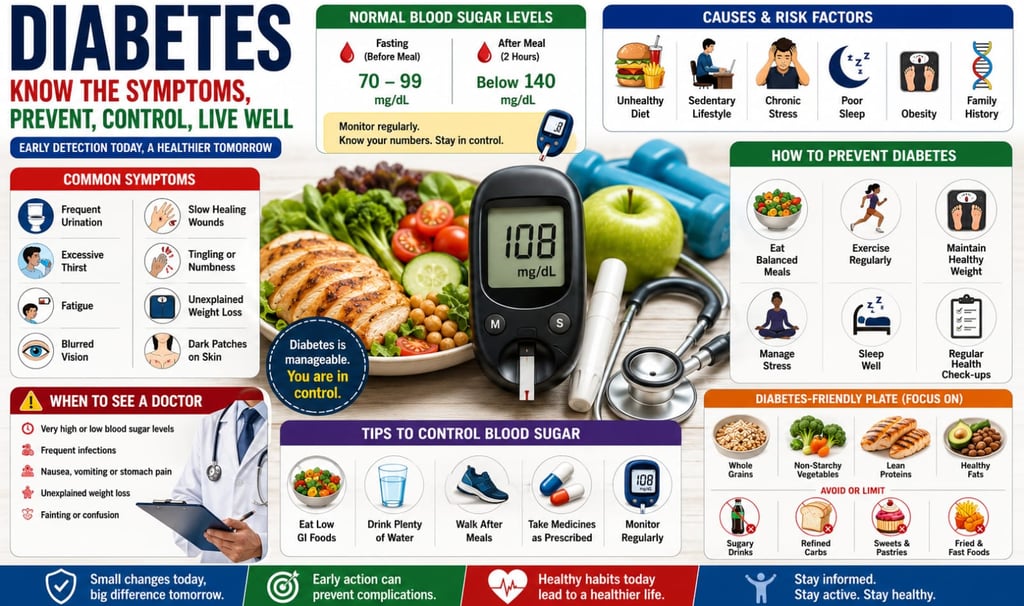
The early signs of diabetes include frequent urination, excessive thirst, persistent fatigue, and blurred vision. Each of these has a biological story worth understanding. When blood sugar levels climb beyond what the kidneys can reabsorb, the body flushes the excess through urine. This means the frequent trips to the lavatory and the compensatory thirst that follows, as the body attempts to replenish what it has expelled.
Also, fatigue settles in because the cells, starved of glucose despite its abundance in the blood, cannot produce sufficient energy. Blurred vision occurs because elevated glucose draws fluid from the lenses of the eyes, distorting their shape and therefore their focus. These are the body's first, polite requests for attention.
Now that you are a bit aware of the symptoms of diabetes and its early signs, let’s check out type 1 and type 2 diabetes.
Type 1 vs Type 2 Symptoms Differences
Understanding what type 1 diabetes is helps clarify why its symptoms differ so strikingly from those of its counterpart. In type 1 diabetes, the immune system, in a misguided act of self-destruction, attacks the insulin-producing cells of the pancreas. The onset is swift, often occurring in childhood or adolescence, and the symptoms of diabetes appear rapidly, sometimes within days or weeks.
Type 2 diabetes, on the other hand, develops with the patience of a slow-burning ember. It emerges most commonly in adults, built upon years of insulin resistance, and its early signs of diabetes may go unnoticed for extended periods.
The types of diabetes differ not merely in mechanism but in the urgency with which they demand recognition.
Check Out | What Are the Causes of Pimples on Face and Different Types of Acne?
Common and Advanced Symptoms of Diabetes Most People Overlook
Skin darkening, particularly around the neck, armpits, and groin, known medically as acanthosis nigricans, is an often-dismissed early indicator of insulin resistance. Slow wound healing, which occurs because elevated blood sugar impairs circulation and immune response, is another signal the body sends quietly.
A tingling or numbing sensation in the hands and feet, born from nerve damage caused by prolonged glucose excess, rounds out this trio of overlooked signs. The causes of diabetes are woven into these very symptoms, as the body, strained by insulin dysfunction, begins to manifest its distress through the skin, the nerves, and the circulation.
When Symptoms Turn Severe
Unexplained weight loss, particularly in type 1 diabetes, occurs when the body begins consuming its own muscle and fat for energy. Recurring infections, especially of the urinary tract, skin, and gums, become the early signs of diabetes. And it becomes more frequent because elevated blood sugar creates an environment in which bacteria and fungi flourish.
Nausea, vomiting, and profound weakness may signal diabetic ketoacidosis, a medical emergency particularly associated with type 1 diabetes. Stress and diabetes share an especially treacherous relationship here, as elevated cortisol from chronic stress actively raises blood sugar levels, accelerating the very progression one hopes to halt.
Also Read | Imbalance Hormones Symptoms - How Will You Check It? - Every Step Disclosed
What Are Low Blood Sugar Symptoms and Why Are They Dangerous?
The low blood sugar symptoms manifest with an almost theatrical urgency. Cold sweats appear without exertion. The hands begin to tremble.
Confusion descends with startling speed, sometimes accompanied by heart palpitations, pallor, and an overwhelming hunger. In severe instances, loss of consciousness follows.
What Triggers Sudden Drops?
Skipping meals is perhaps the most common culprit, disrupting the delicate balance of glucose levels in the bloodstream. Excess insulin, whether from miscalculated medication or a particularly vigorous bout of exercise without adequate nutrition, can send blood sugar plummeting.
Over-exercising on an empty stomach is a mistake with particular resonance in modern wellness culture, where the enthusiasm for movement sometimes outpaces nutritional prudence.
Consider a devoted morning runner who skips breakfast in the name of discipline, takes her insulin dose, and is halfway through her route when the trembling begins.
Check Out | High Cholesterol Symptoms - Lower Cholesterol in 15 Days?
What Are Normal Blood Sugar Levels and How to Track Them?
During fasting, a healthy individual maintains glucose levels between 70 and 99 mg/dL. After meals, the figure should remain below 140 mg/dL. These benchmarks offer clarity in what can otherwise feel like a labyrinth of numbers.
How to Monitor at Home Without Panic?
Home monitoring need not be a source of anxiety. Checking fasting glucose levels in the morning before eating establishes a clean baseline. Post-meal readings, taken approximately two hours after the first bite, illuminate how particular foods affect individual glucose levels.
Two to four checks daily is a sensible rhythm for most people managing diabetes, though a physician's guidance remains indispensable.
The temptation to check obsessively, driven by health anxiety, is worth resisting. Over-monitoring without a clinical context creates noise where clarity is needed.
Check Out | What Are the Causes of Pimples on Face and Different Types of Acne?
Causes of Diabetes You Might Not Expect
Sedentary habits, even in individuals who exercise regularly, carry risk when the bulk of each day is spent seated. Disrupted sleep cycles alter insulin sensitivity in ways that are only beginning to be fully understood, with poor sleep consistently linked to impaired glucose regulation.
Hidden Risk Factors
Chronic stress, through the sustained elevation of cortisol and adrenaline, directly interferes with insulin function. The relationship between stress and diabetes is biochemical, not merely anecdotal.
A chronically stressed body is a body in a state of perpetual metabolic alert, and blood sugar levels respond accordingly.
Gut health imbalance, where the diversity and vitality of intestinal microbiota are compromised, has also emerged in recent research as a contributor to insulin resistance.
The gut and the pancreas, it seems, are in deeper conversation than once believed. Now, let’s study the ways to control blood sugar levels.
Check Out | High Cholesterol Symptoms - Lower Cholesterol in 15 Days?
How to Control Blood Sugar Levels Naturally and Medically?
Meal timing carries extraordinary influence. Eating at consistent intervals prevents the dramatic fluctuations that stress the insulin system. A gentle ten-minute walk after meals measurably reduces post-meal blood sugar spikes. Adequate hydration supports kidney function and the body's natural glucose regulation.
Medical Interventions Explained Simply
Insulin therapy, for those who require it, is not a failure. It is the body receiving what it can no longer produce sufficiently. Oral medications such as metformin work by improving the body's sensitivity to insulin, reducing the liver's output of glucose, and creating conditions under which blood sugar levels can be managed with greater stability.
What works in real life sometimes diverges from what looks impeccable on paper. Sustainable management is built on consistency, not perfection.
Diet Plan Blueprint Including Low Carb Diet for Diabetics
A low-carb diet for diabetics is not a regime of deprivation but one of discernment. Whole grains such as oats, barley, and brown rice release glucose slowly into the bloodstream. Fibre-rich vegetables, legumes, and nuts blunt the glycaemic impact of meals.
Lean proteins, whether from fish, poultry, or plant-based sources, provide satiety without burdening blood sugar.
A nourishing daily meal plan might begin with eggs and whole-grain toast, progress to a lentil and vegetable lunch, and conclude with grilled salmon alongside roasted greens.
What to Avoid Smartly
Refined sugars, white bread, pastries, and sweetened beverages offer rapid glucose surges with negligible nutritional return. Hidden carbohydrates in processed sauces, flavoured yoghurts, and breakfast cereals warrant scrutiny. Prediabetes treatment often begins here, in the quiet revolution of the shopping basket.
Also Read | Imbalance Hormones Symptoms - How Will You Check It? - Every Step Disclosed
How to Prevent Diabetes and the Symptoms of diabetes Before It Starts or Progresses?
Sleep hygiene is a preventive measure of remarkable potency. Seven to nine hours of restorative sleep regulates the hormones that govern appetite and insulin sensitivity. Stress reduction through mindful practice, whether meditation, walking in nature, or creative engagement, lowers cortisol and, by extension, blood sugar.
Consistency over intensity is the governing principle: modest, daily commitments outperform occasional heroic efforts.
Early Intervention for Prediabetes
Prediabetes treatment hinges on one compelling truth: the condition is reversible. When blood sugar levels sit above normal but below the diabetic threshold, the window for intervention remains open.
Weight reduction of even five to ten per cent of body weight meaningfully improves insulin sensitivity. The reversibility window does not remain ajar indefinitely, which lends urgency to early action.
Check Out | What Are the Causes of Pimples on Face and Different Types of Acne?
When Should You See a Doctor for Diabetes Symptoms?
Extremely elevated blood sugar levels accompanied by confusion, vomiting, or loss of consciousness demand urgent medical attention. Severe dehydration despite drinking ample fluids and fainting without apparent cause are equally urgent signals.
A fasting glucose test provides a foundational measurement. The HbA1c test, which reflects average blood sugar levels over the preceding three months, offers a broader view of glycaemic patterns and is the gold standard for confirming a diabetes diagnosis.
Also Read | Imbalance Hormones Symptoms - How Will You Check It? - Every Step Disclosed
Conclusion
Recognising the symptoms of diabetes with clarity and responding with resolve are among the most consequential acts of self-stewardship available to us. Prevention, early detection, and consistent daily choices form a triad of power that no illness, however silent in its onset, can easily overcome.
FAQs
What are the signs of high blood sugar?
Ans: Common signs of diabetes include excessive thirst, constant fatigue, and blurred vision. These occur because excess glucose remains in the bloodstream instead of entering cells. The body struggles to maintain balance, leading to dehydration and reduced energy availability.
What is the biggest cause of diabetes?
Ans: The primary cause is insulin resistance, often driven by lifestyle habits such as poor diet, inactivity, and chronic stress. Over time, this disrupts normal blood sugar levels, leading to persistent Symptoms of diabetes and eventual diagnosis.
What is the 3-hour rule in diabetes?
Ans: The 3-hour rule suggests eating small, balanced meals every three hours to maintain stable glucose levels. This prevents sudden spikes and drops, reducing the intensity of Symptoms of diabetes and supporting consistent energy throughout the day.
What two fruits should a diabetic avoid?
Ans: Fruits with high glycaemic index, such as ripe bananas and mangoes, require moderation. They raise blood sugar levels quickly. However, complete avoidance is not necessary. Portion control and pairing with protein helps manage the Symptoms of diabetes effectively.
What is the quickest way to reverse diabetes?
Ans: There is no instant reversal. Improvement comes gradually through lifestyle changes, including diet, exercise, and stress management. Consistency remains key. With disciplined effort, early-stage diabetes or prediabetes can improve significantly over time.
About The Author
Neha Shukla is a writer and LinkedIn creator who demystifies wellness for modern lives. She writes about nutrition, mindfulness, and sustainable habits, grounded in research, infused with real-world wisdom. Her mission is to help you feel better without feeling overwhelmed.



Contact
Don't Let Your Wellness Journey Feel Boring! Get connected with us today to know your health better.
Phone
hello@nehashuklaa@gmail.com
+91 92110 33284
© 2026. All rights reserved.