
Is Dal With High Protein a Complete Source of Protein For Muscle Growth
Dal with high protein has long been a cornerstone of Indian diets, offering an affordable, nutrient-rich source of plant-based protein that supports overall health and fitness. However, building muscle requires more than simply consuming enough protein. This guide explores whether dal with high protein is a complete source of protein for muscle growth by examining its amino acid profile, digestibility and role in muscle protein synthesis. It also compares different types of dals, highlights their nutritional value, and explains how pairing dal with foods such as rice, whole grains, paneer or Greek yoghurt can create a more balanced protein intake. Alongside practical meal plans, protein comparison tables and expert-backed tips, you'll discover how to maximise the benefits of dal with high protein while meeting your daily protein requirements for effective recovery, strength gains and long-term fitness progress.
Neha Shukla
7/22/20267 min read
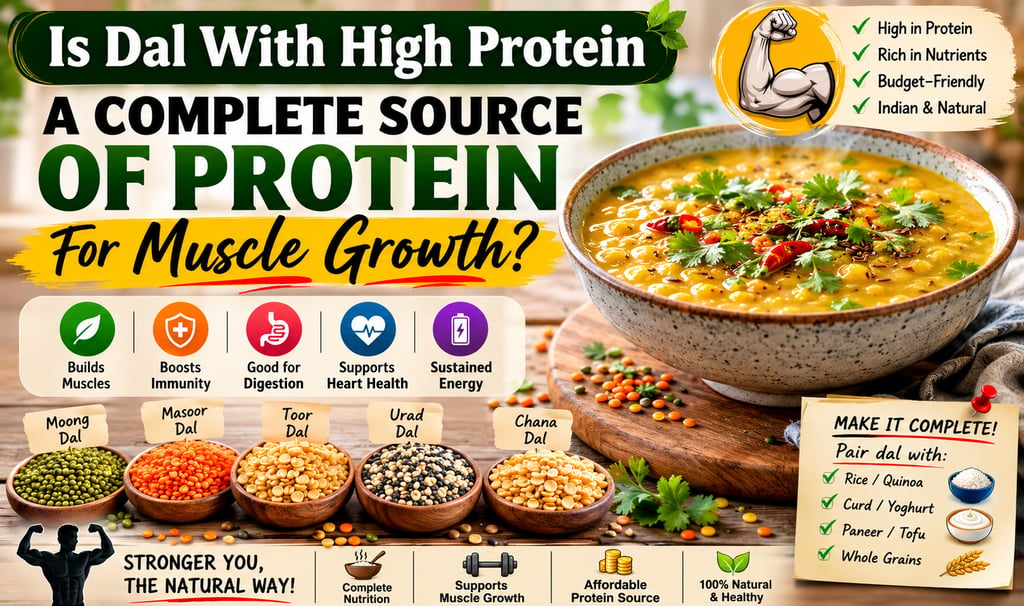
Dal With High Protein: Which Lentils Are Best for Weight Loss, Fitness, and Health?
Protein is the silent architect of every successful muscle-building journey. It repairs microscopic muscle fibres after training, supports recovery, and lays the foundation for strength.
Yet one important question continues to puzzle fitness enthusiasts across India: is dal with high protein enough for muscle growth, or does your body need something more?
For generations, Indian households have relied on dal with high protein as a nourishing, affordable and dependable staple. From humble bowls of masoor to hearty servings of chana dal, legumes have earned a cherished place on every dining table.
However, a common misconception persists that all protein sources nourish muscles equally. In reality, the quality of protein matters just as much as the quantity.
Understanding the difference between complete and incomplete proteins helps separate nutritional folklore from scientific fact.
Before planning your next high-protein meal, it is worth discovering whether dal with high protein alone can truly support optimal muscle growth.
Also Read: Top 10 Sources of Protein For Muscle Growth
What Makes Dal With High Protein Popular Among Fitness Enthusiasts?
Indian diets have leaned upon lentils for centuries, out of necessity, thrift and taste. A sedentary adult needs roughly 0.8g protein per kilogram of body weight, while a gym-goer chasing muscle growth needs nearly double. This gap is why dal with high protein earned the wistful title "poor man's protein." Modern athletes rarely rely on dal alone; they pair it with grains, dairy or soy.
Nutritional Benefits Beyond Protein
Fibre for digestion and satiety
Iron for oxygen transport
Folate for cellular repair
Potassium for muscular contraction
Magnesium for recovery
Slow-digesting carbohydrates for sustained energy
High protein lentils deliver a quiet abundance of micronutrients rarely credited enough, and lentil beans remain a staple because this abundance rewards the modest cook as generously as the seasoned athlete.
Why Protein Digestibility Matters More Than Protein Quantity
Two foods with identical protein figures on paper behave differently once inside the body. Absorption, bioavailability and digestibility together decide how much protein muscles actually receive - matched grams do not mean matched nutrition.
Which Dal Is High In Protein For Muscle Gain?
Among the many lentils lining Indian pantries, a handful consistently outperform the rest once cooked - red lentils, yellow lentils, brown lentils, red split lentils and black beluga lentils chief among them.
Protein in Dal Per 100g (Raw)
Moong: around 24g
Masoor: around 25g
Urad: around 25g
Chana: around 19g
Toor: around 22g
Highest Protein Lentils Per 100g
Red lentils, yellow lentils, brown lentils and black beluga lentils all cluster closely in this range
Top 7 High Protein Dals Ranked
Black gram, dense and rich once soaked.
Moong, light yet remarkably efficient.
Masoor, quick-cooking with a fine amino profile.
Urad, creamy and protein-forward.
Chana, hearty with excellent staying power.
Toor, a daily staple with dependable protein.
Mixed dals, offering a broader amino acid spread.
Which Dal Has Highest Protein After Cooking?
Urad and masoor retain the highest post-cook protein density among common dals
Which Dal Has Highest Protein and Fibre?
Chana and urad combine strong protein with notable fibre, ahead of lighter dals
Which Dal Gives the Best Protein Per Calorie?
Rather than chasing total protein, the discerning eater ought to weigh protein earned per calorie spent. Moong and masoor offer the most favourable ratio - quietly efficient choices for lean muscle gain.
Also Read: Probiotic for Digestive Health: 10 Powerful Benefits Your Gut Will Thank You For
Is Dal With High Protein a Complete Protein?
A complete protein carries all nine essential amino acids in proportions the body can use, while an incomplete protein falls short in one or more. Dal with high protein is rich in lysine, yet runs relatively lower in methionine - the shortfall keeping it from being crowned complete on its own.
Why Dal Alone Cannot Maximise Muscle Growth
Muscle protein synthesis requires crossing a leucine threshold before repair begins, and an imbalanced amino acid profile delays this trigger. Without methionine alongside lysine, recovery slows, leaving muscle-building potential partially unrealised.
Foods That Turn Dal Into a Complete Protein
Rice, supplying the methionine dal lacks.
Millet, offering a similar amino complement.
Quinoa, a complete plant protein in its own right.
Whole wheat, pairing well with lentil curries.
Greek yoghurt, adding methionine and calcium.
Paneer, adding a dense, complementary protein.
Once rice or wheat joins dal on the plate, the amino acid picture becomes whole - leading naturally to how much protein one needs across a day.
How to Get 70g of Protein a Day in India?
A modest, well-structured Indian day can comfortably deliver 70g of protein without excess.
Vegetarian 70g Protein Plan
Breakfast: sprouted moong chilla with curd ~18g protein.
Lunch: mixed dal, brown rice, paneer sabzi ~22g protein.
Evening snack: roasted chana with peanuts ~10g protein.
Dinner: masoor dal with whole wheat roti ~14g protein.
Post-workout: milk with soaked almonds ~8g protein.
High Protein Vegan Alternative
Sprouted lentils in a light salad.
Lentil seeds soaked overnight for digestion.
Soy chunks simmered into a curry.
Tofu scrambled with turmeric.
Also Read: Creatine Before or After Workout: 90% of People Get This Wrong
What Are the 7 Highest Protein Foods?
Considering protein sources broadly, seven names consistently top the list: eggs, chicken, paneer, Greek yoghurt, soy chunks, dal and fish. Dal with high protein sits respectably here, distinguished not by the highest figure but by unmatched affordability and its place in daily Indian cooking.
Animal Protein Versus Plant Protein
Animal sources often satisfy hunger longer, yet lentils tend to be gentler on the gut, kinder on the budget, and lighter on the environment.
How Much Dal for 100g of Protein?
Reaching a full 100g of protein would require close to 1.2–1.4 kilograms of cooked dal in a single day, impractical and unpleasant by any measure.
Protein in Cooked Dal Per 100g
Cooked dal: roughly 7–9g protein, ~115 calories.
Raw dal: nearly triple this concentration before water absorption during cooking
Practical Portion Sizes for Muscle Growth
One generous bowl of dal at lunch.
A smaller portion at dinner, paired with grains.
Canned lentils for convenience on busier evenings.
Also Read: How to Increase Testosterone Level Naturally (Most Men Ignore These 5 Tricks)
How to Get 45g of Protein a Day?
For beginners, 45g is a gentle starting point built from familiar, budget-friendly foods. A bowl of beans and lentils at lunch, a chickpea lentil salad for the office, and an occasional serving of lentil pasta can carry a student or professional through the day.
Protein Boosters That Pair Well with Dal
Curd stirred through the main meal.
Warm milk before bed.
Soy chunks added to curries
Peanuts scattered over salads
Pumpkin seeds atop soups
Also Read: Best Cardio for Fat Loss at Home: Easy Workouts That Burn More Calories
Common Mistakes People Make When Eating Dal With High Protein
Years ago, in a small kitchen smelling of cumin and ghee, my grandmother simmered dal for nearly an hour, insisting patience was the secret ingredient. What went unnoticed then was how much protein that long boiling was quietly diminishing.
Overcooking breaks down protein structure, excess tempering adds oil without nutrition, and modest portions rarely meet real requirements. Many depend solely on dal, ignoring total intake. The fix - moderate cooking time, mindful tempering, generous portions, and pairing with grains or dairy.
Protein Snapshot Every Fitness Beginner Should See
Placed side by side, dal, paneer, chicken, eggs, soy, fish and Greek yoghurt each bring something distinct. Dal offers affordability and fibre, paneer offers calcium, chicken and fish offer completeness, eggs offer unmatched digestibility, soy offers a plant-based complete option, and yoghurt offers probiotic convenience — a combination beats reliance on any single food.
Also Read: Top Immune Boosting Foods That Help Strengthen Your Immune System Naturally
Expert Tips to Maximise Muscle Growth with Dal With High Protein
Add lemon or amla for vitamin C to aid iron absorption.
Spread protein evenly across meals, not just dinner.
Eat a protein-rich meal within an hour post-training.
Combine dal generously with rice or wheat.
Prepare batches ahead to avoid rushed, protein-poor meals.
Favour gentle simmering over prolonged boiling.
Track daily protein to stay on course.
Also Read: Weight Loss Exercise: Routines, Workouts, And Training - Everything You Need To Know
Final Verdict
Dal with high protein is wholesome and affordable, yet insufficient alone for serious muscle growth due to limited methionine. Paired with rice, wheat, dairy or soy, it becomes a genuinely complete protein, ideal for vegetarians, budget-conscious eaters and anyone building strength sustainably.
FAQs
What is poor man's protein?
Ans: Dal earned the name "poor man's protein" generations ago for offering substantial nourishment at minimal cost, accessible across every income bracket. Despite the humble title, dal with high protein remains nutritionally admirable, offering fibre, iron and folate alongside protein - affordability and excellence coexisting on one plate.
Is 2 eggs a day enough protein?
Ans: Two eggs provide roughly 12–13g of protein, meeting part of daily needs for a sedentary adult requiring around 50–60g overall. For active individuals pursuing muscle growth, two eggs alone fall short and require dal, dairy, or lean meat to reach adequate daily totals.
What is Kohli's protein diet?
Ans: Virat Kohli is publicly known for favouring a disciplined, balanced approach to nutrition, high-quality protein, seasonal vegetables and mindful portion control over dramatic diet trends. His routine reportedly prioritises consistency and recovery-focused eating, reflecting principles any individual relying on dal with high protein might reasonably adopt.
How to fulfill 100g protein a day?
Ans: Reaching 100g daily means combining several sources rather than one. A mix of dal with high protein, dairy such as paneer or curd, soy chunks, eggs and occasional lean meat, spread across breakfast, lunch, snacks and dinner, achieves this target without excessive volume at any meal.
What is Kohli's weakness?
Ans: Speculating about a public figure's personal weaknesses would be inappropriate and unverified. What remains publicly evident is Virat Kohli's admired discipline around fitness, recovery, and nutrition, offering a useful example of consistency for anyone striving to build strength through a balanced, protein-conscious approach to eating.
About The Author
Mandeep Rawat is a writer who demystifies wellness for modern lives. He writes about nutrition, mindfulness, and sustainable habits, grounded in research, infused with real-world wisdom. His mission is to help you feel better without feeling overwhelmed.



Contact
Don't Let Your Wellness Journey Feel Boring! Get connected with us today to know your health better.
Phone
hello@nehashuklaa@gmail.com
+91 92110 33284
© 2026. All rights reserved.