
Probiotic for Digestive Health: 10 Powerful Benefits Your Gut Will Thank You For
A balanced gut is the quiet cornerstone of overall wellbeing, yet many struggle with persistent bloating, gas, and irregular digestion without realising the deeper cause lies within the gut microbiome. This blog explores how a probiotic for digestive health can restore internal harmony by introducing beneficial bacteria such as lactobacillus and bifidobacterium, which support digestion, nutrient absorption, and immunity. It highlights both natural food sources like yogurt, buttermilk, kimchi, and sauerkraut, as well as supplements, offering practical guidance for daily integration within an Indian lifestyle. The article also addresses realistic expectations, noting that initial bloating may occur as the gut adjusts, while long-term benefits develop gradually. It further discusses potential side effects, ideal supplement selection, and groups who should exercise caution. By outlining signs of an unhealthy gut and comparing natural versus supplemental approaches, the content provides a well-rounded, actionable perspective. Ultimately, it positions probiotics not as a quick fix, but as a thoughtful, consistent addition to a holistic routine that nurtures digestion, strengthens immunity, and supports overall vitality.
Neha Shukla
5/19/20266 min read
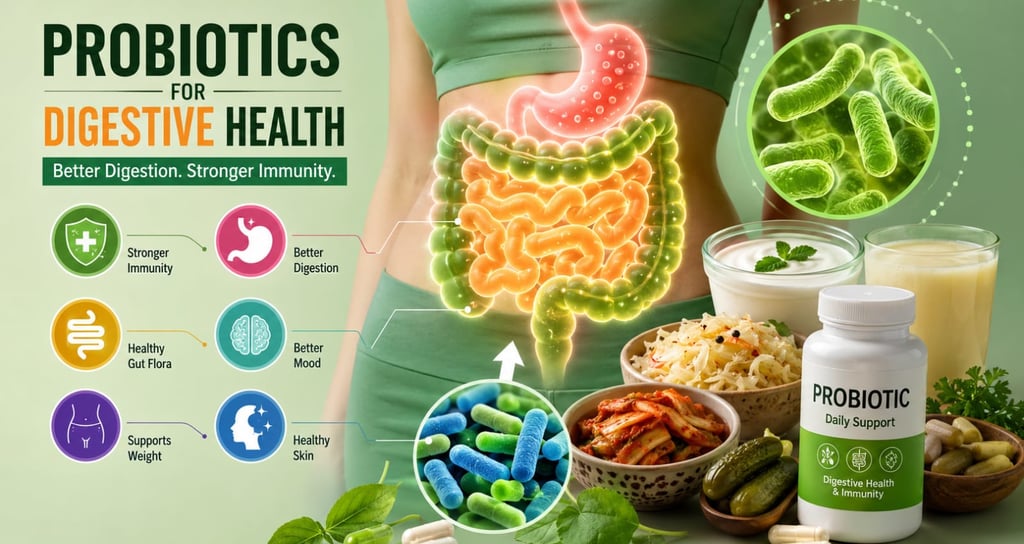
Is a Probiotic for Digestive Health the Secret to Better Digestion and Immunity
A restless stomach, stubborn bloating, and that discomfort after meals can quietly steal your daily ease. What if the answer lies not in restrictive diets but in nurturing your inner ecosystem? A well-chosen probiotic for digestive health may gently restore balance, supporting both digestion and immunity in ways many overlook.
Also Read: What Are Probiotics For Gut Health?
What Are Probiotics for Digestive Health?
A digestive health probiotics refers to live, beneficial bacteria inhabiting your intestinal tract, promoting equilibrium within your gut microbiome. These aren't foreign invaders; they're essential custodians of digestive sanctuary. The distinction between good and bad bacteria is elegantly simple.
Good bacteria produce enzymes breaking down food particles and maintain fortified intestinal barriers. Bad bacteria proliferate in unbalanced conditions, contributing to inflammation and compromised digestion.
The role of a probiotic for digestive health is tipping scales decisively in favour of beneficial microorganisms.
How Probiotics Work Inside Your Gut
When consuming a probiotic for digestive health, live organisms take residence in your colon and small intestine. They produce short-chain fatty acids, nourishing your gut lining and enhancing nutrient absorption. This enzymatic production directly improves digestion efficiency, transforming your gut into an optimised nutrient extraction machine.
Types of Beneficial Bacteria
Two predominant strains deserve attention:
Lactobacillus: Prevents pathogen colonisation and strengthens barriers.
Bifidobacterium: Reduces inflammation and strengthens immune responses
These powerhouses within a probiotic for digestive health work synergistically, creating an internal ecosystem where wellness flourishes.
Check Out: Top 10 Sources of Protein For Muscle Growth
Why Should You Use Probiotics for Digestive Health?
When investing in a probiotic for digestive health, you're investing in a cascade of interconnected benefits rippling outward through every system. Your intestinal lining acts as a selective barrier, allowing nutrients through whilst keeping harmful substances out. Dysbiosis creates microscopic tears in this barrier, allowing toxins into the bloodstream.
This phenomenon triggers inflammation and weakens immunity. A quality probiotic for digestive health rebuilds this fortress methodically. Your enteric nervous system communicates via the vagus nerve with the central nervous system, influencing mood. Dysbiotic conditions amplify anxiety, whilst balanced digestion restores mental tranquillity.
10 Benefits of Probiotics
When consistently using a probiotic for digestive health, remarkable transformations become possible:
Reduced bloating and excessive gas.
Enhanced immunity and stronger pathogen defence.
Improved nutrient absorption and assimilation.
Reduced disease-causing inflammation.
Gut lining repair and regeneration support.
Hormonal balance through oestrogen metabolism.
Mental clarity and improved focus.
Reduced IBS symptoms and bowel irregularity.
Better metabolism and weight management capacity.
Improved skin health and reduced acne manifestations.
Realistic Expectations from Probiotics
Results unfold gradually across 6-8 weeks for most people. Some notice improvements within 2-3 weeks, while others require 12 weeks. This isn't failure, but your gut recalibrating after months or years of imbalance.
Myths abound: probiotics are miracle cures, one dose lasts forever, or they work identically for everyone.
A quality probiotic for digestive health requires consistency, proper strain selection, and complementary lifestyle habits for optimal results.
Also Read: Top 10 Hair Treatment for Hair Loss in India
How Probiotics and Bloating Are Interlinked?
This paradox troubles many newcomers: why does consuming something intended to eliminate bloating actually cause it initially? The answer reveals fascinating biological processes. Understanding this connection prevents discouragement during a probiotic for digestive health adjustment phase.
Why Bloating Happens Initially
When introducing a probiotic for digestive health, you're triggering a rebalancing process. Beneficial bacteria begin metabolising undigested foods, producing gases as byproducts. Simultaneously, pathogenic bacteria die off, releasing endotoxins, causing temporary inflammation.
This adjustment phase, lasting 3-7 days, typically signals positive change occurring. Your gut undergoes renovation: structural improvements precede visible results.
When to Be Concerned
Distinguish temporary adjustment from genuine problems. Normal responses include mild bloating, slight gas, and soft stools. Red flags warranting cessation include severe abdominal pain, persistent diarrhoea, or symptoms worsening beyond two weeks.
Also Read: Imbalance Hormones Symptoms - How Will You Check It? - Every Step Disclosed
What Are the Food Sources of Probiotic for Digestive Health?
Supplementation holds value, yet nature provides abundant sources. Embracing fermented foods creates a sustainable path toward lasting digestive health. This transition from science to practical application matters enormously. Food-based probiotics offer natural, cost-effective alternatives.
Top Natural Probiotic Foods
Ancient fermentation practice preserved food whilst cultivating beneficial cultures:
Yogurt: Contains lactobacillus and bifidobacterium strains.
Buttermilk: Traditional dairy ferment rich in beneficial cultures.
Kimchi: Korean fermented vegetables bursting with lactobacilli.
Sauerkraut: Cabbage fermented into a nutrient-dense powerhouse.
Cottage cheese: Unpasteurised varieties contain live cultures.
Soy products: Tempeh and miso offer plant-based options
Also Read: What Are Probiotics For Gut Health?
How to Add Them to Daily Diet
Start mornings with unsweetened yogurt topped with mango slices. Incorporate buttermilk into traditional Indian chaach for midday refreshment. Include sauerkraut or kimchi as condiments alongside lunch. Experiment with tempeh in curries. This consistency proves transformative across months.
Best Probiotics for Gut Health
Navigating supplement marketplace requires discernment. Quality varies dramatically, and not all brands deliver promised benefits. Moving from food sources to supplements demands understanding key differentiators, ensuring you select genuinely beneficial products. This understanding bridges your transition from natural to concentrated forms effectively.
Probiotic Supplements Explained
Manufacturers offer supplements in three primary forms: capsules (stable, convenient), powders (versatile), and fermented drinks (palatable). Each format serves different preferences. The distinction lies in strain diversity, CFU count, and storage stability.
How to Choose the Right Supplement
Evaluate these essential factors:
CFU Count: Therapeutic dosing involves 1-10 billion daily for probiotic for digestive health.
Strain Diversity: Multi-strain formulations create synergistic effects.
Shelf Stability: Some require refrigeration; others remain stable.
Certification: Third-party testing ensures potency in your probiotic for digestive health
Prioritise clinical validation and transparent ingredient disclosure over marketing promises.
Check Out: What Are the Symptoms of Diabetes And How To Prevent Them?
Issues with Probiotic for Digestive Health
Transparency demands acknowledging downsides alongside benefits. Not every intervention suits everyone universally. This candid perspective builds trust through honest assessment of potential risks and complications.
Common Side Effects
Temporary adverse effects include gas, bloating, digestive discomfort, and mild headaches as the system rebalances. These typically resolve within 2-7 days. Starting with lower CFU counts helps minimise responses significantly.
Long-Term Risks (Rare Cases)
Overuse occasionally triggers systemic issues in vulnerable individuals. Immunocompromised people or those with severe underlying disease face theoretical risks, though documented cases remain extraordinarily rare. Moderation and professional guidance mitigate these remote possibilities effectively.
Also Read: High Cholesterol Symptoms - Lower Cholesterol in 15 Days?
Who Cannot Take Probiotics?
Certain populations require medical supervision before introducing a probiotic for digestive health into their wellness regimen. This critical information ensures safe implementation for every individual.
High-Risk Groups
Severely immunocompromised individuals (advanced HIV, chemotherapy patients), those with acute pancreatitis, and people with indwelling catheters should avoid probiotics without professional guidance. Conversely, those with mild immunosuppression often benefit enormously from consistent supplementation.
When to Consult a Doctor
Schedule conversations with healthcare providers if immunocompromised, taking immunosuppressant medications, recovering from major surgery, or managing a serious underlying disease before starting a probiotic for digestive health regimen.
7 Signs of Unhealthy Gut
Recognising dysbiosis guides intervention timing effectively:
Frequent bloating after meals, regardless of portion size.
Persistent poor digestion and sluggish bowel movements.
Unexplained fatigue and low energy throughout the day.
Sudden skin issues, including acne or eczema flare-ups.
Food intolerances emerging to previously tolerated foods.
Irregular bowel movements alternating between constipation and diarrhea.
Recurrent infections and compromised immunity.
If experiencing three or more symptoms, your gut signals an imbalance, precisely where a probiotic for digestive health demonstrates transformative potential.
Check Out: Reason for High Blood Pressure: Causes, Symptoms & Natural Ways to Control It
Probiotic Supplements vs Natural Sources
Understanding both pathways helps determine the optimal personal strategy. Each approach offers distinct advantages.
Which One Works Better?
Neither outperforms the other universally. Fermented foods provide lower CFU counts but offer additional enzymes, fibre, and nutrients. Supplements deliver concentrated bacterial colonies targeting specific outcomes. An optimal strategy combines both: build foundations through fermented foods whilst using supplements during acute dysbiotic periods.
Cost vs Effectiveness
Quality fermented foods cost less than premium supplements yet require consistency. Supplements offer convenience, justifying higher costs for managing conditions like IBS. A sustainable approach weaves both seamlessly into lifestyle.
Also Read: What Are Probiotics For Gut Health?
Conclusion
A probiotic for digestive health isn't a miraculous panacea, but a cornerstone intervention within comprehensive wellness architecture. Combined with fibre-rich whole foods and intentional sleep, probiotics restore what dysbiosis compromises. Your gut health anchors immunity, vitality, and mental clarity, warranting your deliberate investment now.
FAQs
Who Cannot Take Probiotics?
Ans: Severely immunocompromised individuals, those with acute pancreatitis, or people with indwelling medical devices should consult doctors before using a probiotic for digestive health. Most others benefit safely from carefully selected supplements tailored to their conditions.
What Happens If You Take Probiotics Every Day?
Ans: Consistent daily use of a probiotic for digestive health supports sustained bacterial balance and strengthens immunity. Safety remains excellent for non-immunocompromised individuals using clinically validated products at recommended CFU dosages, though cycling supplements occasionally optimises long-term effectiveness.
What Naturally Kills Bad Bacteria in the Gut?
Ans: Your stomach acid provides initial antimicrobial defence against pathogens. High-fibre foods feed beneficial bacteria whilst starving pathogens. Fermented foods introduce beneficial strains that outcompete harmful organisms, naturally rebalancing your gut microbiome without requiring additional interventions.
What Are Signs You Need Probiotics?
Ans: Persistent bloating, poor digestion, unexplained fatigue, recurring infections, food intolerances, irregular bowel movements, and skin issues signal dysbiosis where a probiotic for digestive health offers significant benefits. Listen to these signals—your body knows what it requires.
What Naturally Kills Bad Bacteria in the Gut? (Alternative Perspective)
Ans: Stress management significantly impacts gut health naturally. Regular meditation, movement, and adequate sleep strengthen natural antimicrobial defences. Combined with prebiotic fibre through vegetables and legumes, this holistic approach restores balance within your gut microbiome better than isolated interventions alone.

Contact
Don't Let Your Wellness Journey Feel Boring! Get connected with us today to know your health better.
Phone
hello@nehashuklaa@gmail.com
+91 92110 33284
© 2026. All rights reserved.