
Top 10 Sources of Protein For Muscle Growth
Building muscle is not merely about eating more, but about choosing the right protein for muscle growth with intention and clarity. This blog simplifies the confusion by explaining how complete and incomplete proteins, digestion speed, and amino acid quality influence results. It highlights practical intake guidelines based on body weight and fitness goals, while stressing that consistency matters more than excess. From chicken, fish, and turkey to plant-based options like lentils, chickpeas, and tofu, the guide presents balanced choices for every dietary preference. It also explores protein timing, beginner-friendly strategies, and the role of supplements like whey isolate and concentrate without overcomplicating decisions. Real value lies in combining smart nutrition with training and recovery, ensuring each meal contributes meaningfully to progress. In practical terms, most people notice better results when they focus on quality sources, distribute intake evenly, and prioritise whole foods before supplements. Ultimately, sustainable muscle gain is crafted through disciplined habits, informed choices, and a steady commitment to nourishing the body with purpose.
Neha Shukla
5/16/20267 min read
What Are the Sources of Protein For Muscle Growth?
I had been training for six months and barely noticed any change. The missing piece? I was completely wrong about protein for muscle growth. Not all protein sources are equal, and that one realisation changed everything. If you are a beginner confused about the right sources, this guide is your honest, no-fluff answer.
The world of nutrition is crowded with opinions. Yet, not all protein sources are equal. Some nourish deeply, others merely fill. Let us unravel the difference with clarity and purpose.
Check Out | What Are Probiotics For Gut Health?
What is the Best Type of Protein for Muscle Growth?
Complete proteins carry all nine essential amino acids that your body cannot produce. Animal sources like high protein lean meat, eggs, and dairy are naturally complete. Plant proteins are often incomplete, but not inferior when paired wisely. That distinction shapes everything in the sections ahead.
Fast vs Slow Digesting Proteins
Whey digests rapidly, flooding muscles with amino acids within 30 to 60 minutes, making it ideal post-workout. Casein, found in cottage cheese, digests slowly over six to eight hours, perfect before sleep for sustained muscle repair. Knowing this timing detail alone gives you an edge most beginners never use.
Amino Acid Profile Matters More Than Quantity
Leucine content matters more than total protein grams. Leucine triggers muscle protein synthesis and determines how effectively your body uses protein for muscle growth. You need roughly 2.5 to 3 grams per meal to hit the anabolic threshold. A 30g serving of whey typically delivers this.
Also Read | High Cholesterol Symptoms - Lower Cholesterol in 15 Days?
How Much Protein Per KG is Required for a Person?
Now that you understand protein quality, the next logical question is quantity. The answer depends entirely on your lifestyle and goal.
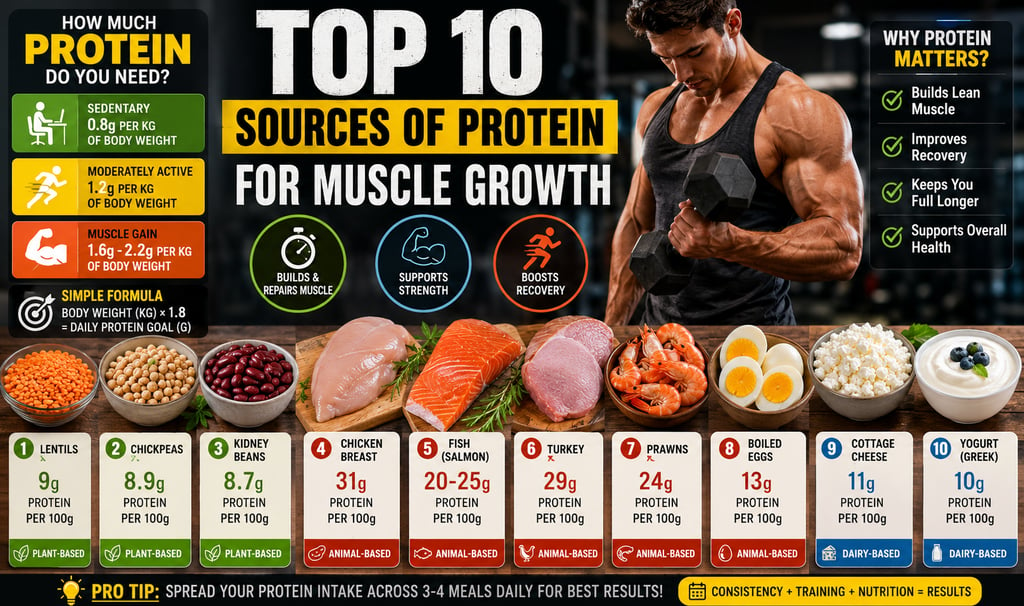
Sedentary individuals: 0.8g per kg of body weight
Moderately active people: 1.2g per kg
Training for muscle gain: 1.6g to 2.2g per kg
Simple formula: multiply your body weight by 1.8. For a 70kg person, that is roughly 126g of protein for muscle growth daily.
Protein Intake Based on Fitness Goals
For fat loss, 1.6g to 2g per kg preserves lean muscle in a calorie deficit. For muscle gain, push to 2g or 2.2g. For maintenance, 1.2g to 1.4g is comfortable and sustainable without digestive strain.
Common Protein Intake Mistakes
Overconsumption beyond 2.5g per kg does not accelerate gains; your body simply processes the excess. Spreading your protein for muscle growth across three to four meals daily is far superior to consuming it all at once.
Check Out | What Are the Symptoms of Diabetes And How To Prevent Them?
What Are Sources of Veg, Vegan, and Non-Vegetarian Protein?
With your targets set, the next step is choosing the right sources. Here is a structured breakdown across all three dietary categories, starting with vegetarian and moving outward.
Vegetarian Protein Sources
Yogurt, particularly the Greek variety, offers 10g per 100g with probiotics that support gut health alongside protein for muscle growth.
Natural peanut butter contributes 25g per 100g and pairs beautifully with whole grain toast, bridging protein and complex carbohydrates in one satisfying snack.
Cottage cheese delivers 11g per 100g, rich in slow-digesting casein that works splendidly overnight.
Boiled eggs provide a near-perfect amino acid profile at 13g per 100g.
Vegan Protein Sources
Moving further along, plant-based eaters have equally powerful options.
Tofu delivers 8g per 100g and absorbs flavours effortlessly, ideal for anyone seeking high protein foods vegetarian options.
Kidney beans contain 8.7g per 100g and pair magnificently with rice to form a complete amino acid profile.
Chickpeas provide 8.9g per 100g, among the most versatile legumes for meal prepping.
Lentils offer 9g per 100g cooked, rich in iron and fibre.
Best Vegan Protein Combinations
Combining rice with lentils creates a complete protein; each source covers the other's amino acid gaps. Natural peanut butter on whole grain bread bridges the lysine gap in grains, delivering complete protein for muscle growth with no animal product required.
Non-Vegetarian Protein Sources Ranked by Bioavailability
For those who eat animal products, the options are even more potent.
Chicken leads with 31g per 100g, digestibility rivalling whey. Fish offers 20 to 25g per 100g with omega-3s that reduce muscle inflammation.
Turkey provides 29g per 100g, leaner than most cuts of high protein lean meat.
Prawns are a sleek, low-fat option at 24g per 100g.
All four are high protein foods forming the backbone of any serious protein for muscle growth plan.
Check Out | Imbalance Hormones Symptoms - How Will You Check It? - Every Step Disclosed
Top 10 High-Protein Foods for Muscle Growth
Now that you have the categories mapped, here is precisely how each food performs and when to use it.
Plant-Based Sources
Lentils (9g/100g): Soak overnight to reduce phytic acid and improve protein absorption by nearly 20%.
Chickpeas (8.9g/100g): Roasted chickpeas deliver steady protein without blood sugar spikes.
Kidney beans (8.7g/100g): Always cook them fully. Raw kidney beans contain lectins that impair protein absorption.
Animal-Based Sources
Chicken (31g/100g): Grill or bake it and avoid deep frying, which degrades protein quality. Best consumed post-workout.
Fish (20-25g/100g): Rich in omega-3s that combat inflammation. Consume at lunch or dinner for comfortable digestion.
Turkey (29g/100g): Turkey contains tryptophan, which supports sleep quality, and better sleep means better muscle recovery.
Prawns (24g/100g): Among the fastest-digesting animal proteins available. Ideal as a pre-training meal two hours before exercise.
Boiled eggs (13g/100g): The gold standard of bioavailability. The yolk carries vitamins D and B12, critical for protein for muscle growth efficiency.
Dairy-Based Sources
Cottage cheese (11g/100g): Casein-rich and deeply satiating. Eat it before bed to keep muscles fed through the night.
Yogurt (10g/100g): Probiotic-rich yogurt supports nutrient absorption, meaning protein for muscle growth from other meals is better utilised.
Check Out | Depression symptoms - why people are suffering from it?
What is the Best Protein for Muscle Gain for Beginners?
Start with whole foods, always. Build meals around chicken, boiled eggs, lentils, and yogurt, all affordable and effective sources of protein for muscle growth.
Beginner-Friendly Protein Sources
Easy wins: scrambled eggs at breakfast, a chicken or turkey wrap at lunch, and cottage cheese with fruit before bed. None require culinary expertise, yet all deliver consistent protein for muscle growth.
Budget Protein Planning
A weekly meal prep anchored on lentils, kidney beans, boiled eggs, and chicken thighs costs a fraction of any supplement stack and delivers impressive results when training and sleep are dialled in.
Also Read | High Cholesterol Symptoms - Lower Cholesterol in 15 Days?
How to Gain Muscle Fast for Beginners?
Solid nutrition sets the foundation. Now pair it with the right actions. Protein alone will not build muscle; training is the blueprint. Combine progressive overload three to four days per week with adequate sleep and consistent protein for muscle growth.
Protein Timing Strategy
Pre-workout: Boiled eggs or yogurt 90 minutes before training.
Post-workout: Chicken breast or a whey shake within 45 minutes.
Before sleep: Cottage cheese for overnight muscle protein synthesis.
Weekly Muscle Gain Routine
Train three days, rest one, train two, rest one. Include compound movements: squats, deadlifts, rows. Pair this with your protein for muscle growth target, and results become almost inevitable.
Check Out | How Do HIV AIDS Symptoms Look Like And Why Do They Happen?
Which Protein is Best for Beginners: Isolate or Concentrate?
Isolate vs Concentrate vs Hydrolysed
Whey concentrate contains 70 to 80% protein with small amounts of lactose; it is affordable and effective. Whey isolate is 90%+ protein with minimal lactose, better for those with mild sensitivity. Hydrolysed whey is pre-digested for faster absorption, but at a premium price rarely justified for beginners.
Who Should Avoid Whey Protein
Those with lactose intolerance should lean towards plant-based protein or whey isolate.
People with gut issues may find whey concentrate aggravates bloating.
Building a body you are proud of begins with understanding your plate. Whether you choose chicken, tofu, lentils, or cottage cheese, consistency across weeks and months truly transforms your physique. Real protein for muscle growth comes from disciplined, whole-food nutrition practised daily, without exception.
Check Out | Heart Attack Symptoms - What Are The Early Signs To Look For?
Conclusion
True progress lies not in fleeting enthusiasm but in steady devotion. Choosing the right protein for muscle growth, consuming it with intention, and aligning it with disciplined training creates lasting transformation. In the end, consistency, not perfection, quietly shapes the physique you seek.
FAQs
Which whey protein is best: isolate, concentrate, or hydrolysed?
Ans: For most beginners, whey concentrate offers the finest balance of cost and effectiveness. Isolate suits those with lactose sensitivity. Hydrolysed whey absorbs fastest but costs significantly more, and is better suited for advanced athletes training at high intensity daily.
Which whey protein is best for diabetics?
Ans: Whey isolate is preferred for diabetics as it contains fewer carbohydrates and minimal lactose, with a lower glycaemic impact than concentrate. Always consult your physician before introducing any supplement, as blood sugar responses to protein intake vary considerably.
What are the 7 signs of an unhealthy gut?
Ans: Persistent bloating, irregular bowel movements, excessive gas, food intolerances, fatigue, skin breakouts, and mood fluctuations are the seven classic indicators. An unhealthy gut impairs absorption, directly compromising your ability to utilise protein for muscle growth effectively.
When should you not take whey protein?
Ans: Avoid whey protein if you have a diagnosed kidney disorder, liver disease, or a known dairy allergy. Consuming it repeatedly as a meal replacement is unwise, as whole foods provide micronutrients and fibre that whey simply cannot replicate.
What are the 5 worst foods for gut health?
Ans: Refined sugar, processed meats, artificial sweeteners, alcohol, and fried foods damage gut health the most. These disrupt the microbiome, impairing your capacity to absorb protein for muscle growth from even the finest dietary sources.
6. When should you not take whey protein?
Ans: (Context: timing) Avoid whey protein immediately before bed; it digests too quickly to sustain overnight muscle repair. It also competes with other nutrients on an already full stomach. Cottage cheese is far superior at night for sustained protein for muscle growth.

Contact
Don't Let Your Wellness Journey Feel Boring! Get connected with us today to know your health better.
Phone
hello@nehashuklaa@gmail.com
+91 92110 33284
© 2026. All rights reserved.