
What Is Masterbation: Insights into Its Psychological and Physiological Effects
Understanding what is masterbation begins with separating scientific facts from widespread myths. This comprehensive guide explores the psychological and physiological effects of masturbation, explaining how it influences the brain, body, and emotional wellbeing. It discusses common concerns such as the side effects of daily masturbation in men, its impact on brain function, skin, and overall health, while also addressing the safety of masturbating during pregnancy. The article dispels misconceptions surrounding memory loss and offers practical guidance for individuals wishing to reduce the habit through mindful, healthy strategies. With evidence-based insights, balanced explanations, and compassionate advice, this guide helps readers develop a well-informed perspective on what is masterbation. Rather than relying on fear or misinformation, it encourages a holistic approach to sexual health, reminding readers that individual experiences vary and that overall wellbeing is best supported through balance, self-awareness, and informed decision-making.
Neha Shukla
7/6/20266 min read
What Is Masterbation And How Does It Affect the Mind And Body?
Curiosity often nudges people toward search engines late at night, typing out the same quiet question: what is masterbation, really, beyond the whispers and half-truths passed down through generations? This guide steps past outdated taboos, offering a candid, scientifically grounded look at what is masterbation from both a psychological and physiological standpoint.
Rather than repeating information already scattered across the internet, this piece uncovers rarely discussed truths about hormones, mood, and the body's own chemistry surrounding what is masterbation.
In its simplest sense, masterbation refers to the self-stimulation of one's own body for sexual pleasure, a natural human behaviour observed across cultures and centuries, in both masterbate meaning and masturbating meaning contexts.
Understanding what is masterbation means understanding a small but significant piece of human biology, one that deserves clarity rather than shame.
Also Read: How to Increase Testosterone Level Naturally (Most Men Ignore These 5 Tricks)
What are the side effects of masturbation in male daily?
When exploring what is masterbation through a daily lens, the conversation naturally turns toward frequency. The side effects of masturabation in male daily are largely subjective, shaped by individual biology, lifestyle, and emotional state rather than any fixed rulebook.
For most men, occasional or even regular self pleasure brings no lasting harm, though excessive frequency can occasionally leave behind mild fatigue, a dip in concentration, or a fleeting sense of low energy.
Emotionally, some men report a brief lull in mood shortly afterwards, a normal hormonal dip rather than a warning sign. It helps to observe patterns with empathy rather than alarm, since the body often speaks in whispers before it speaks in shouts.
Occasional discussions also raise the side effects of masturabation in male once a week compared with daily habits, and weekly frequency rarely produces any noticeable physical change at all, since the body resets its hormonal balance comfortably within that window.
Side effects of masturabation in male daily on skin: occasional dullness or minor breakouts have been anecdotally linked to sleep disruption and stress hormones rather than the act itself, and tend to settle once rest and hydration are restored.
Bridging this physical picture with what happens internally sets the stage for the next layer of understanding, the brain itself.
Also Read: Yeast Infection Treatment: Causes, Symptoms, and Effective Remedies You Should Know
How does masterbation affect the brain?
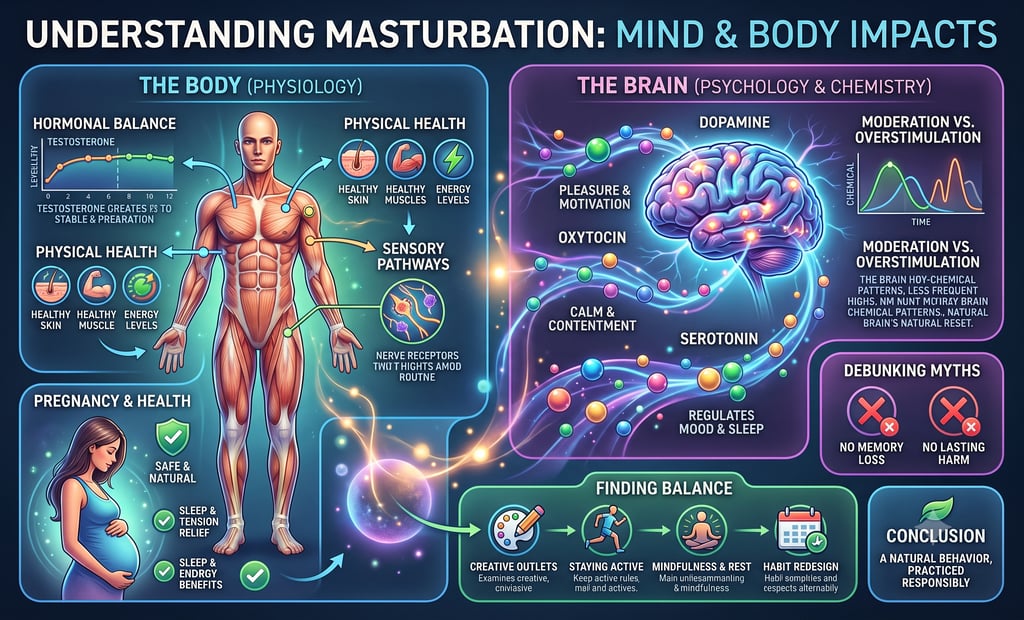
The brain is, in many ways, the true engine behind what is masterbation actually feels like. During arousal and climax, dopamine floods the reward pathways, creating that familiar rush of pleasure and motivation.
Oxytocin follows closely behind, often nicknamed the bonding hormone, responsible for the sense of calm and closeness that lingers afterwards.
The side effects of masturabation in male daily on brain are typically short lived, a passing wave of relaxation followed by a natural chemical rebalancing within hours.
Repeated overstimulation, however, may occasionally blunt the brain's natural reward sensitivity over time, making everyday pleasures feel slightly duller until balance returns.
Serotonin also plays a quiet supporting role, contributing to the sense of settled contentment that often follows, while cortisol, the stress hormone, typically dips soon after. Grasping what is masterbation means grasping this entire orchestra of chemicals working in concert, not a single hormone acting alone.
Carrying this understanding forward, it becomes easier to address a more delicate and often misunderstood chapter, pregnancy.
Also Read: How to Get Bigger Breast Naturally: Proven Methods, Diet, and Exercises
What are the side effects of masturbating during pregnancy?
Pregnancy brings a wave of questions, and masterbating during pregnancy is one that many women quietly wonder about but rarely voice aloud. In a low risk, healthy pregnancy, self pleasure is generally considered safe and can even ease tension, improve sleep, and support emotional wellbeing during a period of significant hormonal upheaval. Mild uterine contractions afterwards are a normal physiological response and typically settle within minutes.
Those with a history of preterm labour or placental concerns may need to approach things with a touch more caution, listening closely to their own body's signals. Beyond the physical, masturbating during pregnancy can also offer emotional grounding, a private moment of comfort during months filled with change.
This particular chapter of what is masterbation research remains under discussed in mainstream conversation, despite touching countless women who quietly search for reassurance during a changing season of life.
Having covered the physical terrain, it feels only fair to turn toward practical choices for those wishing to recalibrate their habits.
Also Read: What Is Women White Discharge? Meaning, Types & Health Insights
How to avoid masturbation?
For those seeking to reduce frequency, whether for personal, spiritual, or lifestyle reasons, the path forward rests less on willpower alone and more on gentle habit redesign.
Replace idle moments, particularly before sleep or upon waking, with a short physical activity such as stretching or a brisk walk, since idle time is often the true trigger rather than desire itself.
Introduce a consistent creative outlet, journaling, sketching, or playing an instrument, to redirect restless energy into something tangible and rewarding.
Practice mindful breathing during moments of urge, allowing the wave of impulse to rise and fall naturally without judgement, much like watching a tide recede.
Curate the digital environment deliberately, reducing exposure to content that quietly fuels the habit, and replacing scrolling time with reading or music.
Build a simple accountability ritual, whether a private journal entry or a quiet evening reflection, to track patterns without harsh self criticism.
These small, deliberate shifts often prove far more sustainable than sudden, forceful restriction, which tends to backfire. Anyone asking what is masterbation avoidance truly requires will find the answer lies in patience and repetition, not punishment.
Also Read: Childbirth Normal Delivery: How to Increase Chances of Natural Birth Without C-Section
Can masturbation cause memory loss?
This question surfaces often, and the honest answer is refreshingly simple: no credible scientific research supports the idea that can mastubation cause memory loss is a genuine physiological outcome.
Memory relies on entirely different neural circuits, primarily the hippocampus, and there is no established pathway linking self pleasure to cognitive decline.
What people sometimes mistake for memory trouble is usually linked to poor sleep or guilt driven anxiety surrounding the habit itself, rather than the act. The myth persists largely through folklore rather than fact.
Anyone genuinely researching what is masterbation does to long term cognition will find the scientific literature consistently silent on any lasting memory impairment, a reassuring gap rather than an oversight.
Additional Perspectives
Beyond biology, what is masterbation also touches philosophy, spirituality, and personal history, layers worth a brief, honest glance.
Spiritual effects of masturbation: various traditions view the practice through differing lenses, some framing it as a neutral bodily function, others as a distraction from disciplined focus or energy conservation, a matter deeply personal and rarely universal.
Causes of masturbation: curiosity, stress relief, loneliness, hormonal surges, and simple biological urge all rank among the most common triggers behind what is masterbation, varying widely between individuals and life stages.
Female mastrubating remains an equally natural, though historically under discussed, experience, with mastrubation woman patterns often shaped by emotional connection as much as physical sensation.
A close friend once confided that years of quiet guilt around the habit dissolved the moment proper, judgement free information about what is masterbation replaced inherited myths, a small reminder that knowledge often heals what silence prolongs.
Also Read: How to Get Period Fast at Home: Effective Tips Backed by Science & Tradition
Conclusion
Understanding what is masterbation clearly, without shame or exaggeration, allows for healthier choices and quieter minds. Individual experiences vary widely, shaped by biology, emotion, and circumstance. Focusing on holistic wellbeing, balanced rest, and gentle self awareness matters far more than rigid rules or borrowed guilt.
FAQs
Is it healthy to masturbate once a day?
Ans: For most healthy adults, once daily self pleasure carries no inherent harm and can even support better sleep and reduced tension. Understanding what is masterbation at this frequency means recognising that the real measure of health lies in whether the habit feels balanced, private, and free from guilt, rather than a fixed number recommended universally across every individual body.
Can I release sperm 10 times in a day?
Ans: Physiologically possible for some, though highly unusual and often linked to temporary soreness, fatigue, or reduced sensitivity afterwards. The body typically signals its own natural limit through diminishing pleasure or mild discomfort, acting as a built in regulator long before any lasting harm could occur.
What happens if I don't mastrubate for 7 days?
Ans: Nothing harmful occurs within a week of abstaining. Some notice slightly heightened arousal or vivid dreams, both entirely normal hormonal responses tied to what is masterbation patterns. The body simply redirects that reproductive energy elsewhere, with no measurable negative impact on physical or mental performance during this short window.
Can mastubation cause memory loss?
Ans: No credible evidence links the two. Memory depends on separate neural pathways entirely unrelated to sexual activity. Perceived forgetfulness is usually tied to guilt, anxiety, or poor sleep surrounding the habit rather than the act itself, and typically fades once those underlying factors are addressed directly.
Is materbation good or bad for health?
Ans: Neither inherently, moderation and mindset shape the outcome far more than the act itself. The honest verdict on what is masterbation and health depends entirely on balance, practised without guilt it often supports emotional release and better sleep, while practised compulsively with heavy shame attached, it can quietly strain mental wellbeing over time in health.
About The Author
Neha Shukla is a writer and LinkedIn creator who demystifies wellness for modern lives. She writes about nutrition, mindfulness, and sustainable habits, grounded in research, infused with real-world wisdom. Her mission is to help you feel better without feeling overwhelmed.



Contact
Don't Let Your Wellness Journey Feel Boring! Get connected with us today to know your health better.
Phone
hello@nehashuklaa@gmail.com
+91 92110 33284
© 2026. All rights reserved.