
White Discharge During Pregnancy: What’s Normal & What Could Be Dangerous
White discharge during pregnancy is a common yet often misunderstood experience that can leave many women feeling anxious. This blog gently unravels the truth behind white discharge during pregnancy, explaining that in most cases, it is a natural and protective process known as leucorrhoea. Caused by hormonal changes and increased blood flow, this discharge helps maintain vaginal health and prevent infections. From early pregnancy to the third trimester, the nature of white discharge during pregnancy may change, but not all variations are a cause for concern. The guide clearly distinguishes between normal discharge and warning signs such as foul smell, irritation, or discomfort. It also explores common causes of abnormal discharge, including infections, and offers practical care tips. With reassuring insights and medically sound advice, this blog empowers women to understand their bodies with confidence.
Neha Shukla
6/9/202611 min read
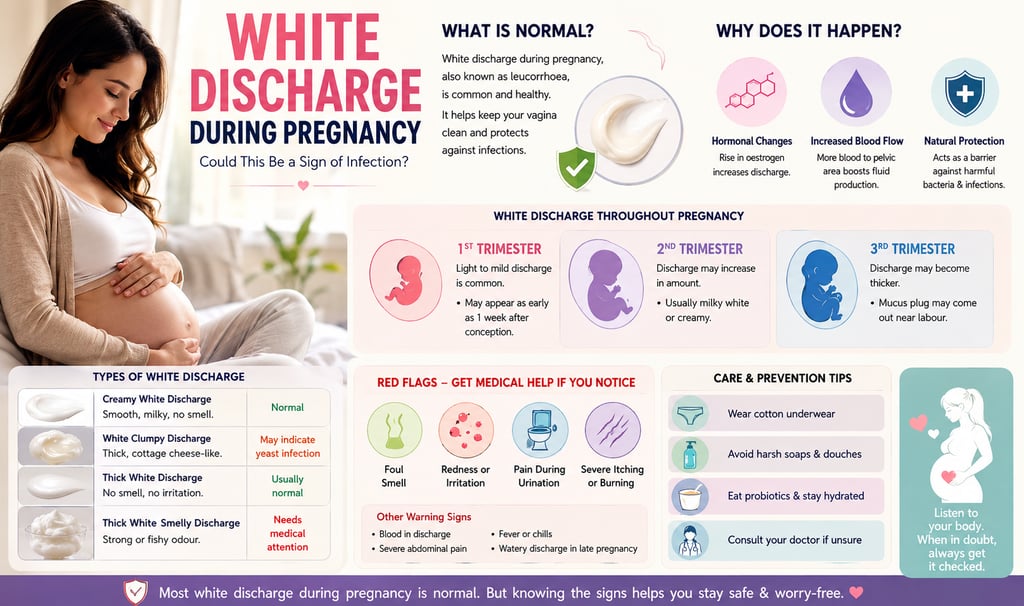
White Discharge During Pregnancy: Could This Be a Sign of Infection?
White discharge during pregnancy is one of those changes that leaves many expectant mothers quietly anxious, typing questions into search bars at midnight, wondering whether what they are experiencing is natural or something that warrants a call to their doctor.
Here is the truth: white discharge during pregnancy is extraordinarily common. It has a name, a purpose, and in most cases, it is your body working precisely as it should. However, not every kind of discharge deserves the same reassurance.
Some variations do carry meaning, and knowing the difference between the two can spare you unnecessary anxiety or, conversely, alert you when care is genuinely needed.
This guide walks you through everything, with warmth, clarity, and the kind of practical wisdom that makes a real difference.
Also Read: What Is Women White Discharge? Meaning, Types & Health Insights
Is White Discharge During Pregnancy Normal?
Yes, and rather emphatically so. White discharge during pregnancy is one of the body's most consistent and purposeful responses to the hormonal upheaval that begins almost the moment conception occurs. It even carries a rather distinguished name in the medical world: leucorrhoea.
What is discharge, exactly? In the simplest terms, it is a fluid produced by the cervix and vaginal walls. This fluid carries away dead cells, maintains the vaginal environment, and guards against infection.
For white discharge for women in general, this is a routine part of reproductive health. During pregnancy, however, the volume increases considerably.
The hormone oestrogen surges with remarkable intensity during pregnancy, prompting the cervix and vaginal walls to produce discharge in greater quantities. Increased blood flow to the pelvic region further stimulates this production.
The result is a discharge that may seem alarming in its abundance but is, in most circumstances, entirely benign.
Why the Body Produces More Discharge
Elevated oestrogen levels stimulate the mucous membranes of the cervix and vagina to become more active, producing a generous flow of fluid throughout all trimesters.
Heightened blood flow to the pelvic region, a hallmark of pregnancy, encourages the glands in the vaginal walls to secrete more fluid than they would under ordinary circumstances.
Protective function is central to this increase. The discharge forms a subtle barrier that discourages harmful bacteria and microbes from travelling upward toward the womb, effectively standing guard over the pregnancy.
Also Read: How to Increase Testosterone Level Naturally (Most Men Ignore These 5 Tricks)
What Does White Discharge During Pregnancy Actually Means?
Understanding what white discharge during pregnancy communicates about your body requires looking at it through the lens of vaginal health. The vagina is a self-regulating ecosystem, one that maintains a precise pH balance to keep beneficial bacteria thriving and harmful ones at bay. Discharge is one of the primary ways this balance is preserved and expressed.
When the discharge is doing its job correctly, it is the body's quiet, competent housekeeper, clearing away cellular debris, buffering against infection, and signalling that the vaginal environment is functioning in harmony.
Knowing what healthy discharge looks like is the essential starting point, because it gives every other observation its context.
What Healthy Discharge Looks Like
Healthy white discharge during pregnancy tends to be:
Clear or milky white in colour, without any grey, green, or yellowish tinge.
Mild in odour or effectively scentless; a faintly musky quality is not unusual but should never be sharp or unpleasant.
Smooth or slightly sticky in texture, sometimes resembling egg whites in consistency.
Non-irritating, meaning it does not cause burning, itching, or discomfort upon contact with the skin
If the discharge matches this description, it is very likely a perfectly healthy expression of pregnancy physiology.
White Discharge During Pregnancy in First Trimester
The white discharge during pregnancy in first trimester often catches women off guard simply because it begins so early.
Within days of implantation, hormonal shifts are already quietly at work, and white discharge early pregnancy can appear before many women even know they are pregnant.
This early increase is driven by the rapid rise in human chorionic gonadotropin (hCG) and progesterone, hormones that begin to reshape the body almost immediately after conception.
Week Pregnancy Discharge
At this astonishingly early stage, the hormonal triggers that initiate discharge production are already in motion. Some women notice what is sometimes called 1 week pregnancy discharge, a light, watery or milky fluid that may coincide with implantation itself. Implantation can occasionally cause a small amount of spotting alongside discharge, which is generally pale pink or light brown rather than white. If the discharge at this stage is white, odourless, and non-irritating, it is almost certainly a sign of a body gracefully beginning its pregnancy journey, not a cause for alarm.
Also Read: Childbirth Normal Delivery: How to Increase Chances of Natural Birth Without C-Section
White Discharge During Pregnancy in Second Trimester
As the pregnancy settles into its middle chapter, the volume of white discharge during pregnancy in second trimester tends to increase further. This is entirely expected. The cervix and vaginal walls are now richly supplied with blood and are more active than they have perhaps ever been.
Many women find that during this period, the discharge becomes a near-constant companion. Wearing breathable cotton underwear and changing it regularly can make a significant difference to daily comfort.
Unscented panty liners are a practical solution, though they should be changed frequently to prevent moisture buildup. Maintaining this gentle, consistent hygiene routine keeps the vaginal environment healthy and reduces the risk of irritation.
White Discharge During Pregnancy in Third Trimester
The white discharge during pregnancy in third trimester introduces a new character to the story: the mucus plug. This is a thick, gel-like accumulation that has been sitting at the cervical opening for months, acting as a natural seal that shields the womb from external pathogens.
As the body begins preparing for labour, the cervix gradually softens and dilates. This process dislodges the mucus plug, which may be expelled as a single cohesive piece or in smaller portions over several days.
It can appear as a thick, white, or slightly bloodstained discharge and is commonly known as the "bloody show."
White Discharge During Pregnancy in 9th Month
During the white discharge during pregnancy in 9th month, the discharge may become notably heavier and more gelatinous. This is the body broadcasting its preparedness for birth in a language only those who know what to look for can read.
When the mucus plug passes, it often signals that labour is approaching within days or weeks.
However, if the discharge suddenly becomes watery and flows continuously, this could indicate a rupture of the amniotic sac, commonly called breaking of waters, and warrants immediate medical attention.
Types of White Discharge You May Notice
Understanding the various textures and qualities of discharge helps enormously in distinguishing the ordinary from the noteworthy.
Creamy white discharge is the most common type throughout pregnancy. It is smooth, mild-smelling, and consistent with healthy leucorrhoea. No action is required beyond standard hygiene.
White clumpy discharge that resembles cottage cheese in texture is a hallmark sign of a yeast infection. It is often accompanied by itching, redness, and irritation. This type should not be ignored and merits a conversation with your doctor.
Thick white discharge during pregnancy without any accompanying symptoms is generally normal, particularly in the later trimesters when discharge volume naturally increases.
Thick white discharge no smell is almost always benign. The absence of odour is one of the most reassuring indicators that the discharge is functioning healthily.
Thick white smelly discharge is a different matter entirely. A pronounced or unpleasant odour is one of the clearest signals that the vaginal balance has been disrupted and that something requires medical attention.
Also Read: How to Get Bigger Breast Naturally: Proven Methods, Diet, and Exercises
What Indicates in White Discharge During Pregnancy is a Red Signal?
Not all white discharge during pregnancy is a herald of wellness. Certain characteristics transform an otherwise familiar occurrence into something that deserves prompt professional attention. Recognising these signals with calm clarity rather than panic is both practical and empowering.
Symptoms You Must Not Ignore
Foul smell: A sharp, fishy, or otherwise unpleasant foul smell accompanying the discharge is one of the most consistent indicators of bacterial imbalance or infection. This should be assessed promptly.
Redness: Visible redness around the vaginal opening or on the vulva, especially when combined with discharge, often points to irritation or infection that warrants examination.
Pain during urination: A burning or stinging sensation during urination alongside unusual discharge can indicate a urinary tract infection or a vaginal infection that has affected the surrounding tissues.
Itching and intense irritation: Persistent itching that does not subside is rarely a benign symptom. In combination with discharge that is clumpy or odorous, it strongly suggests an infection requiring treatment.
Can White Discharge During Pregnancy Means Miscarriage?
This is the question that sits heaviest in the hearts of many pregnant women who notice a change in their discharge. The fear is understandable, deeply human, and deserves a thoughtful answer.
White discharge during pregnancy alone is not a sign of miscarriage. Miscarriage is typically signalled by very different symptoms, and discharge in isolation, without the accompanying signs described below, is not cause for this particular fear. The body is, in all likelihood, simply doing what pregnancy asks of it.
Signs That Need Immediate Medical Help
However, certain combinations of symptoms should prompt immediate contact with your healthcare provider or a visit to your nearest maternity unit:
Blood mixed with discharge: Any discharge that is accompanied by bright red or dark blood, particularly in significant quantity, requires urgent medical evaluation.
Severe abdominal or pelvic pain: Cramping or pain that feels sharp, persistent, or worsening alongside discharge is not something to wait out.
Fever: A raised temperature in combination with unusual discharge may indicate an infection that has spread beyond the vaginal environment and requires prompt treatment.
Common Causes of Abnormal Discharge
When white discharge during pregnancy takes on qualities that fall outside the healthy range, several culprits are commonly at work.
Yeast Infection
A yeast infection during pregnancy is strikingly common. The hormonal shifts of pregnancy alter the vaginal pH, creating conditions in which the naturally occurring Candida fungus can overgrow.
The result is a white clumpy discharge that resembles cottage cheese, accompanied by intense itching, redness, and sometimes a burning sensation.
Reassuringly, yeast infections during pregnancy are treatable, though always under the guidance of a doctor rather than self-medicated.
Bacterial Imbalance
Bacterial vaginosis arises when the natural balance of bacteria in the vagina is disrupted. This can occur for several reasons, including excessive washing, synthetic underwear that traps moisture, or the use of scented products near the vaginal area.
The discharge associated with this condition often carries a pronounced fishy odour and may appear greyish or watery.
Hygiene habits that disrupt rather than support the vaginal environment are among the most common and preventable causes.
Role of Douches
Douches deserve particular mention here because they are widely misunderstood as a hygiene aid when they are, in fact, one of the more counterproductive things a pregnant woman can introduce to her body.
Douches wash away the beneficial bacteria that form the vagina's first line of defence, stripping the environment of its natural protective qualities and significantly increasing the risk of infection.
They should be avoided entirely during pregnancy, and indeed at all other times.
Also Read: Yeast Infection Treatment: Causes, Symptoms, and Effective Remedies You Should Know
White Discharge During Pregnancy Treatment & Care
The white discharge during pregnancy treatment approach begins with something elegant in its simplicity: working with the body rather than against it.
Daily Hygiene Routine
Cotton underwear is worth its weight in gold during pregnancy. It breathes, does not trap moisture, and allows the skin to remain dry and comfortable. Synthetic fabrics, however soft they may feel, create the warm, damp conditions in which infections thrive.
Avoid harsh soaps or any scented products in the vaginal area. Plain warm water is sufficient for external cleansing. The vagina cleanses itself internally; the role of external hygiene is simply to keep the surrounding skin comfortable.
Change underwear daily or more frequently if discharge is heavy, and choose unscented panty liners over tampons.
Diet Tips
Probiotics found in natural yoghurt, kefir, and fermented foods support the flourishing of beneficial bacteria not only in the gut but also in the vaginal environment. Making these a quiet daily habit is one of the most understated and effective forms of prevention.
Hydration maintains the body's natural flushing mechanisms and supports overall cellular health. Drinking adequate water throughout the day is a foundational act of care during pregnancy.
Arrange a consultation if you notice:
Discharge with a strong or unpleasant foul smell.
White clumpy discharge accompanied by itching or redness.
Pain during urination or during intercourse.
Discharge that is green, yellow, or grey in colour.
Any discharge accompanied by blood, fever, or severe pain.
A sudden, continuous flow of watery discharge in the third trimester.
Also Read: How to Get Period Fast at Home: Effective Tips Backed by Science & Tradition
Myths vs Facts About White Discharge During Pregnancy
Some beliefs surrounding white discharge during pregnancy have persisted through generations and deserve to be met with gentle but firm clarity.
Myth: White discharge during pregnancy means boy or girl can be determined.
Fact: There is no scientific basis whatsoever for this claim. Discharge has no relationship to foetal sex. It is a physiological function, not a gender oracle.
Myth: More discharge means something is wrong.
Fact: Increased discharge is one of the most consistent and expected features of a healthy pregnancy. Volume alone, in the absence of other symptoms, is entirely normal.
Myth: You should douche to keep the discharge under control.
Fact: Douches actively harm the vaginal environment and increase infection risk. The body manages discharge without any external interference.
Myth: All white discharge indicates a yeast infection.
Fact: A yeast infection has very specific characteristics, namely white clumpy discharge, itching, and irritation. Plain white discharge without these features is not indicative of infection.
Myth: White discharge during pregnancy is normal or not based on how much you produce.
Fact: Volume varies widely between individuals and across trimesters. What matters is the texture, colour, and smell, not the quantity.
Also Read: Breast Cancer Symptoms: How to Spot the Signs Early and Stay Safe
Conclusion
White discharge during pregnancy is, in the great majority of cases, one of the body's most articulate and protective acts. Understanding the distinction between what is beautifully ordinary and what genuinely warrants attention allows you to move through pregnancy with informed confidence rather than quiet dread. Trust your body, tend to it with care, and never hesitate to seek guidance when something feels amiss.
Frequently Asked Questions
Is white discharge normal in pregnancy?
Ans: Yes, white discharge during pregnancy is entirely normal and is medically known as leucorrhoea. It is caused by rising oestrogen levels and increased blood flow to the pelvic region. As long as it is odourless, non-irritating, and clear to milky in colour, it is a healthy and expected feature of pregnancy.
Can white discharge be a miscarriage?
Ans: White discharge on its own is not a sign of miscarriage. Miscarriage is typically accompanied by significant bleeding, severe cramping, and other distinct symptoms. If white discharge appears alongside bright red blood or intense pain, seek immediate medical attention and contact your healthcare provider without delay.
What kind of discharge is not good during pregnancy?
Ans: Discharge that carries a foul smell, appears yellow, green, or grey, or resembles white clumpy discharge alongside itching and redness is not considered healthy. Thick white smelly discharge in particular warrants prompt medical evaluation, as it may indicate bacterial vaginosis or a yeast infection requiring treatment.
What are 5 warning signs of a possible problem during pregnancy?
Ans: The five key warning signs include heavy bleeding or spotting, severe abdominal pain, a sudden reduction in foetal movement, a continuous flow of watery fluid from the vagina, and a high fever accompanied by unusual discharge. Each of these warrants immediate contact with your healthcare provider or maternity unit.
What are the signs of unhealthy early pregnancy?
Ans: Early signs that may indicate concern include significant bleeding, persistent one-sided pelvic pain, a foul-smelling discharge, high fever, and severe nausea or vomiting. White discharge early pregnancy that is odourless is generally not a concern, but any of the above symptoms should be discussed with a doctor promptly.
What is a 2 finger test in pregnancy?
Ans: A 2-finger test, or digital cervical examination, is a procedure carried out by a healthcare professional to assess cervical dilation and effacement, particularly as labour approaches. It is not something conducted at home and should only be performed by a qualified midwife or obstetrician in a clinical setting for the safety of both mother and baby.

Contact
Don't Let Your Wellness Journey Feel Boring! Get connected with us today to know your health better.
Phone
hello@nehashuklaa@gmail.com
+91 92110 33284
© 2026. All rights reserved.