
Are You Pregnant? Here are the first month of pregnancy symptoms
Pregnancy often begins with subtle yet meaningful changes that can easily be overlooked. Understanding the first month of pregnancy symptoms helps you recognise these early signs and seek timely medical guidance. From fatigue, nausea, missed periods, and a tender breast to mild cramping and light spotting, every symptom reflects the body's remarkable hormonal changes during the earliest stages of pregnancy. This comprehensive guide explains what to expect week by week, how your stomach may feel, when to take a pregnancy test, and which symptoms require prompt medical attention. It also clarifies common concerns surrounding implantation, early pregnancy discomfort, and the progression of symptoms throughout the first trimester. While every pregnancy journey is unique, recognising the first month of pregnancy symptoms can provide reassurance, encourage early prenatal care, and help you make informed decisions for a healthier pregnancy.
Neha Shukla
7/14/20267 min read
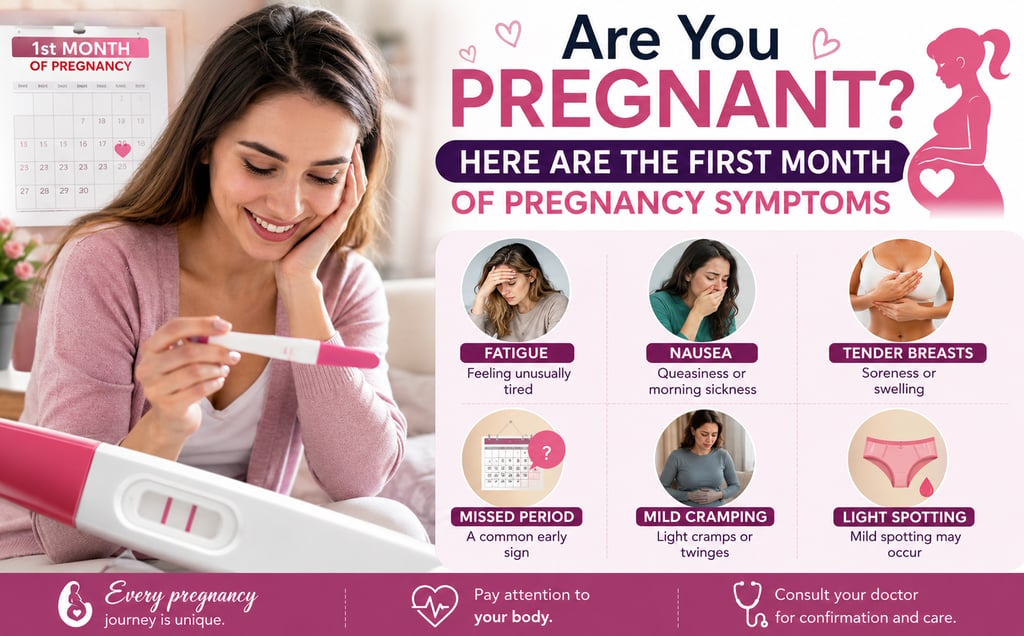
What Are the First Month of Pregnancy Symptoms?
That strange cocktail of feelings, equal parts wonder and worry, is often the true beginning of recognising the first month of pregnancy symptoms. Long before any doctor confirms anything, the body has already begun whispering its secrets: an unfamiliar heaviness, a peculiar tiredness, a sudden taste for toast that wasn't there last Tuesday.
Understanding the first month of pregnancy symptoms matters because early awareness shapes everything that follows, from lifestyle adjustments to emotional preparation.
This guide walks through what changes, why it changes, and how to separate ordinary premenstrual grumbling from something far more significant. Naturally, the conversation must begin with how the body actually feels during those opening weeks.
Also Read: White Discharge During Pregnancy: What’s Normal & What Could Be Dangerous
How do you feel if you are 1 month pregnant?
The first month of pregnancy symptoms rarely arrive with fanfare. Instead, they creep in quietly, disguised as ordinary tiredness or a slightly upset stomach. Hormonal shifts, particularly the rise of progesterone and human chorionic gonadotropin, are responsible for most of what a woman notices during 1 month pregnant symptoms. Fatigue tends to be the earliest and most universally reported sensation: an exhaustion that no amount of sleep seems to resolve.
Alongside this, nausea often makes its debut, sometimes confined to mornings, sometimes lingering through the entire day like an uninvited guest.
Emotionally, the first month of pregnancy symptoms can bring unpredictable waves: sudden tearfulness one moment, quiet contentment the next. Breasts may feel fuller or tender to the touch, and a subtle bloating around the midsection often appears well before any visible bump.
None of this is cause for alarm; it is simply the body reorganising its priorities around a new, remarkable task, and it is exactly why so many search specifically for first month of pregnancy symptoms rather than generic pregnancy advice.
Recognising these sensations early makes the following stage, actual detection, far easier to navigate, especially once the pattern of first month of pregnancy symptoms becomes familiar rather than confusing.
Also Read: Childbirth Normal Delivery: How to Increase Chances of Natural Birth Without C-Section
What are 100% signs of pregnancy in the first week?
Absolute certainty in week one is rare, yet certain patterns within the first month of pregnancy symptoms are worth paying close attention to. The most reliable early indicator remains missed periods, though cycle irregularities can occasionally muddy the picture.
What sets genuine first symptoms of pregnancy apart from a typical premenstrual phase is their persistence and combination: fatigue paired with tender breasts, mild nausea paired with heightened smell sensitivity.
A woman experiencing three or more of these together, rather than just one in isolation, is far more likely to be encountering true first month of pregnancy symptoms rather than a passing bout of stress or seasonal fatigue.
Pregnancy symptoms week 1 and 3 weeks pregnant symptoms
Slight cramping without bleeding, often mistaken for an approaching period.
A metallic taste that lingers unexpectedly.
Mild dizziness upon standing too quickly.
Breast sensitivity that intensifies by 3 weeks pregnant symptoms
Subtle food aversions that weren't present before
These clues rarely appear in isolation, and their overlapping nature is precisely what distinguishes them within the broader landscape of first month of pregnancy symptoms.
Many women researching 1st month pregnancy symptoms find that keeping a small daily note of these changes reveals a pattern far sooner than expected.
From here, attention naturally shifts toward one of the most commonly asked questions: what is actually happening within the abdomen itself?
Also Read: What Is Women White Discharge? Meaning, Types & Health Insights
How does the stomach feel in the first month of pregnancy?
Many women describe an odd tightness low in the abdomen, distinct from the familiar ache of a monthly cycle. This sensation forms a notable part of the first month of pregnancy symptoms, and it typically stems from the uterus gently expanding to accommodate its new occupant. Mild cramping is common and usually harmless, particularly when it feels more like a dull pulling than a sharp stab.
Light spotting may also occur around the time of implantation, appearing as a faint pink or brown discolouration rather than a full flow. It is important, however, to distinguish these from genuine miscarriage symptoms, which typically involve heavier bleeding, intense cramping, and the passing of tissue, a markedly different experience from the gentle twinges associated with early first month of pregnancy symptoms.
Comparing early abdominal sensations
2 weeks pregnant symptoms: minimal physical change, perhaps subtle bloating and heightened emotional sensitivity.
4 weeks pregnant symptoms: firmer lower abdomen, occasional twinges, and the first suggestions of a rounded softness beneath the navel.
The belly during these earliest days is neither hard nor swollen in any visible sense; it is simply reorganising itself internally, a transformation better felt than seen. This is one of the more reassuring facts hidden within the wider conversation around first month of pregnancy symptoms, since so many worry unnecessarily about visible change too soon.
Once the physical sensations are understood, the next logical step is learning how to actively confirm suspicion, and that begins with recognising the earliest first month of pregnancy symptoms in far greater detail.
Also Read: How to Get Period Fast at Home: Effective Tips Backed by Science & Tradition
How to know if you're pregnant in 1 month?
Confirming the first month of pregnancy symptoms involves a blend of physical observation and, eventually, medical testing, and it is often this stage where the earlier first month of pregnancy symptoms finally start making complete sense.
Beyond fatigue and nausea, tender breast soreness often intensifies, with veins becoming slightly more visible beneath the skin. Genuine implantation symptoms typically appear five to ten days after conception: light cramping, faint spotting, and occasionally a mild headache caused by shifting hormone levels. As the weeks progress, sensations evolve considerably.
Week-by-week progression of early signs
5 weeks pregnant symptoms: heightened nausea, exhaustion, and frequent urination beginning to appear.
6 weeks pregnant symptoms: stronger food aversions, occasional dizziness, and more pronounced breast tenderness.
7 weeks pregnant symptoms: emotional fluctuations becoming more noticeable, alongside persistent morning sickness.
8 weeks pregnant symptoms: visible changes in skin texture and a subtle increase in appetite despite nausea.
9 weeks pregnant symptoms: reduced bloating discomfort as the body begins adjusting to its new hormonal rhythm
Each of these stages builds upon the last, forming a continuous thread within the broader story of first month of pregnancy symptoms. Tracking these changes week by week often gives far more clarity than waiting passively, and it turns vague first month of pregnancy symptoms into a recognisable, organised timeline.
With detection covered, attention can now turn toward one of the most searched, and misunderstood, questions of all.
Also Read: Imbalance Hormones Symptoms - How Will You Check It? - Every Step Disclosed
Is early pregnant belly hard or soft?
The honest answer is that it depends almost entirely on timing and individual body composition. During genuine first month of pregnancy symptoms, the abdomen is generally soft, occasionally accompanied by bloating that can feel deceptively firm to the touch.
This bloating stems from digestive slowdown caused by rising progesterone, not from the growing embryo itself, which remains far too small to physically alter the belly's shape this early. Within the 1st trimester symptoms, true firmness does not typically arrive until much later, once the uterus rises above the pelvic bone.
Some of the most intense first month of pregnancy symptoms actually surface within the very earliest window. The first 72 hours of pregnancy symptoms are largely hormonal rather than physical: subtle fatigue, a slight temperature elevation, and heightened emotional sensitivity.
Similarly, 3 days pregnant symptoms are almost entirely invisible externally, existing more as internal shifts than outward change. On the opposite end of the spectrum, it becomes essential to flag certain 37 weeks pregnant symptoms not to ignore, such as sudden severe swelling, intense headaches, or a marked reduction in movement, since these belong to a much later and entirely different stage of pregnancy that deserves prompt, dedicated attention on its own.
Understanding this contrast helps place the first month of pregnancy symptoms in proper perspective: gentle, subtle, and softly building, rather than dramatic or alarming. Comparing the two stages side by side also reinforces just how quietly the first month of pregnancy symptoms tend to unfold compared with the more pronounced signals of later pregnancy.
Also Read: What Is Women White Discharge? Meaning, Types & Health Insights
Conclusion
Recognising the first month of pregnancy symptoms early allows for better preparation, both physically and emotionally. From fatigue to tender breasts, mild cramping to hormonal shifts, these signs form a fascinating, deeply personal story. Trusting professional guidance alongside these observations ensures the journey ahead begins on solid, well-informed footing.
FAQs
What is the quickest pregnancy symptom?
Ans: Fatigue often appears fastest, sometimes within days of conception, long before a missed period. This exhaustion feels distinct from ordinary tiredness, settling deep into the bones. Alongside fatigue, heightened smell sensitivity frequently emerges early, making certain scents suddenly overwhelming or unpleasant.
What are the 7 signs of implantation?
Ans: Light spotting, mild cramping, breast tenderness, fatigue, slight temperature rise, subtle nausea, and mood fluctuations together form the recognised cluster. These signs typically surface five to ten days post-conception, often overlapping and building gradually rather than appearing all at once or in isolation.
Which is day 1 of pregnancy?
Ans: Medically, day one is counted from the first day of the last menstrual period, not from conception itself. This method, though seemingly counterintuitive, allows for consistent, standardised dating across pregnancies regardless of exact ovulation timing.
Which 5 days are best for pregnancy?
Ans: The five days leading up to ovulation, plus ovulation day itself, offer the highest conception likelihood. Sperm can survive several days awaiting the egg, making this fertile window the most biologically favourable stretch within any given cycle.
What is the 5 5 1 rule for pregnancy?
Ans: This informal guideline suggests timing intercourse across five days before ovulation, the day of ovulation, and one day afterward. It maximises the fertile window, aligning closely with when conception odds are naturally at their highest.
About The Author
Mandeep Rawat is a writer who demystifies wellness for modern lives. He writes about nutrition, mindfulness, and sustainable habits, grounded in research, infused with real-world wisdom. His mission is to help you feel better without feeling overwhelmed.



Contact
Don't Let Your Wellness Journey Feel Boring! Get connected with us today to know your health better.
Phone
hello@nehashuklaa@gmail.com
+91 92110 33284
© 2026. All rights reserved.