
The Critical Heat Stroke Symptoms You Need to Know Immediately
Heat stroke symptoms can develop rapidly and become life-threatening if they are not recognised and treated immediately. This comprehensive guide explains the warning signs of heat stroke, including a high body temperature, confusion, dizziness, rapid heartbeat, hot and dry skin, nausea, and loss of consciousness. It also explores the common causes, risk factors, and how heat stroke differs from heat exhaustion. Along with identifying heat stroke symptoms, the blog provides practical first aid steps, effective treatment options, prevention tips, and advice on when emergency medical attention is essential. Whether you spend time outdoors, exercise regularly, or are caring for children or older adults during hot weather, understanding these symptoms can help you act quickly and potentially save a life. Stay informed, stay hydrated, and learn how to protect yourself and your loved ones from the dangers of extreme heat.
Neha Shukla
7/20/20266 min read
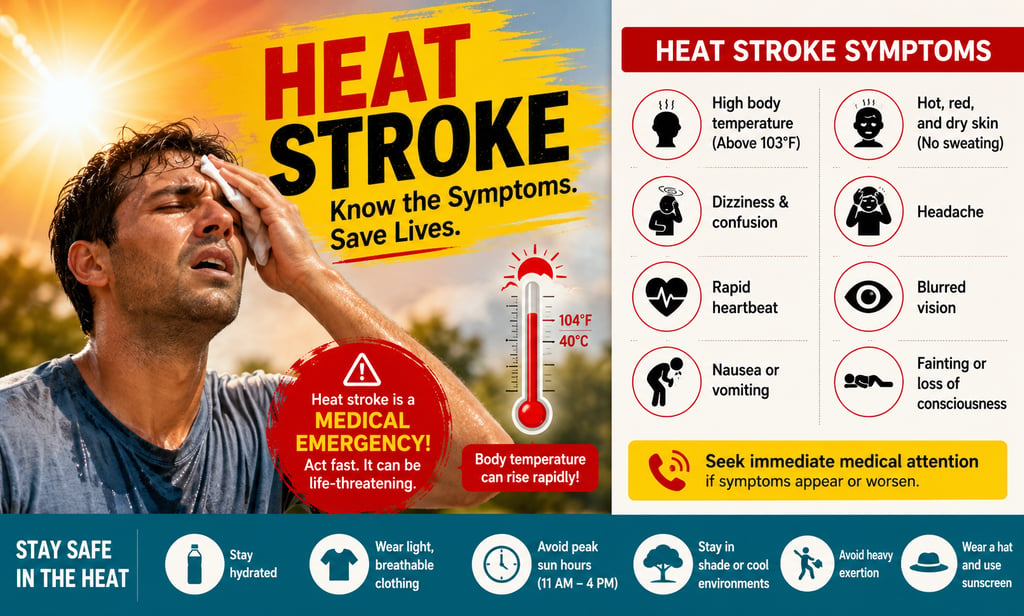
Don’t Ignore These Heat Stroke Symptoms: Prevention and Action Steps
Every single year the mercury climbs a notch higher, and with it climbs a quiet, creeping danger so many overlook until nearly too late. Recognising heat stroke symptoms early is not a mere health tip, it is a life saving skill, one that separates a routine afternoon from a genuine medical emergency.
This piece draws a firm, unmistakable line between simple discomfort, such as a tired brow after a walk, and the critical warning signs the body sends before collapse. Understanding heat stroke symptoms means understanding the body's own language, its quiet cries for help long before the heat turns fatal.
The tone stays urgent, yet remarkably steady, because panic never once saved a life, but knowledge always has.
By the closing line, spotting genuine heat stroke symptoms will feel entirely instinctive, calm rather than frightening, second nature rather than a source of dread.
Also Read: What Are Probiotics For Gut Health?
What is the cause of heat stroke?
The human body is a remarkably disciplined thermostat, keeping itself hovering near thirty seven degrees through a delicate balance of sweating, blood flow, and breath, a balance that falters visibly once heat stroke symptoms begin to surface. Heat stroke arrives when that balance falls out of tune.
The air turns oppressive, humidity thickens until sweat can no longer evaporate, and the cooling mechanism simply gives up the fight. This is where heat stress quietly takes root, building for hours before anyone notices a single symptom, a slow build many later describe as sun stroke symptoms once the damage is already done.
Older adults, infants, and those labouring outdoors carry a heavier burden here, since their cooling systems tire faster. Grasping this cause is the true foundation of heat stress prevention, because a body that understands its own limits rarely reaches crisis point.
Every subsequent heat stroke symptoms discussion in this article traces back to this single failure of internal cooling, and recognising it early is the surest way to stop heat stroke symptoms from ever taking hold.
Also Read: Top 10 Sources of Protein For Muscle Growth
What is the first stage of heat stroke?
Before the body reaches a genuine emergency, it sends smaller, gentler warnings that are far too often brushed aside as mere tiredness, a phase many wrongly label plain heat exhaustion and nothing more.
Compared with ordinary tiredness, this stage carries a distinct clamminess to the skin and a pulse that quickens even at rest.
Heat cramps, tight muscle spasms in the calves, arms, or abdomen.
Signs of exhaustion such as heaviness in the limbs and a foggy mind.
Clammy skin paired with a faster heartbeat.
A creeping sense of unease without clear cause.
Left unaddressed, this first stage slides steadily toward the more severe territory of full blown heat stroke symptoms, where the cooling system stops functioning altogether.
The transition rarely announces itself loudly, which is precisely why ignoring it is often the very first step toward that harsher chapter.
Also Read: Probiotic for Digestive Health: 10 Powerful Benefits Your Gut Will Thank You For
How long does it take for heat stroke to come on?
There is no single clock that ticks the same for everyone, and that unpredictability is exactly what makes tracking heat stroke symptoms so treacherous. Humidity plays a starring role, since thick, moisture laden air can turn a mild afternoon into a genuine hazard within forty five minutes of continuous exertion.
A well hydrated body might hold its ground for several hours under similar conditions, while a dehydrated one can tip into danger in under thirty minutes. Exertion levels matter just as much, a brisk jog under a punishing sun accelerates the timeline far faster than a leisurely stroll.
Mild heat stroke symptoms can surface gradually across a single day.
Heat stroke symptoms next day may linger as headaches, fatigue, or a stubborn thirst.
This delayed echo often catches people off guard, since many assume recovery is complete the moment the temperature drops, when the body is still quietly settling back into balance.
How do I know if I'm heat stroke?
Diagnostic awareness of heat stroke symptoms rests on three distinct pillars, and recognising even one of them warrants immediate attention. These signs of heat stroke rarely arrive in isolation.
Neurological changes, confusion, slurred speech, sudden disorientation.
Skin Alterations, either strikingly flushed and dry or unexpectedly cool and pale.
Cardiovascular distress, a racing heartbeat that refuses to settle even at rest.
Physical Red Flags
A throbbing headache that intensifies rather than fades.
Sudden lightheadedness while standing or walking.
Persistent Dizziness that disrupts balance.
An unexplained weakness across the whole body.
Internal Warning Signs
Gastrointestinal Distress, including nausea or vomiting.
Noticeable dehydration despite recent fluid intake.
Excessive thirst that water alone fails to satisfy.
When several of these arrive together, the body is essentially announcing its distress through every channel available, and that chorus of heat stroke symptoms should never be dismissed as mere fatigue.
Also Read: Probiotic Supplements For Gut health: Identifying Side Effects, Diets, And Its Cure
How do you treat mild heat stroke at home?
Years ago, a family gathering under a relentless summer sky taught a lesson no textbook ever could. A cousin, flushed and unusually quiet, waved away concern until the heat stroke symptoms became impossible to ignore.
What followed was a swift, methodical response that turned a frightening afternoon into a manageable one, and that same method holds true today.
Move the person into shade immediately.
Hydrate steadily with small, frequent sips rather than a hurried gulp.
Take a cool shower, or press a damp cloth against the skin.
Apply cold compresses at the neck, wrists, and underarms.
Swap heavy fabric for lightweight clothes that let air circulate freely.
Offer cooling foods such as chilled melon or cucumber, alongside juice or water.
This entire approach forms the backbone of sound heat stroke treatment for milder presentations. Should confusion deepen, vomiting persist, or the skin turn hot and dry despite these measures, home care has plainly reached its ceiling, and the moment calls for a swifter, more clinical hand than any kitchen remedy can offer.
Also Read: Top Immune Boosting Foods That Help Strengthen Your Immune System Naturally
Prevention and Risk Mitigation
Prevention here is less about grand gestures and more about quiet, deliberate habits woven into daily life.
Broader heat stress prevention means dressing sensibly, pacing physical exertion, and never underestimating how quickly conditions can shift from pleasant to punishing.
Schedule outings during the cooler hours of early morning or late evening.
Consider ac installation in bedrooms for uninterrupted overnight recovery.
Heat stroke symptoms in kids often appear as unusual irritability or a flushed face.
Elderly relatives living alone deserve regular check ins during heatwaves.
Pets left in vehicles face the same cooling failure as humans, only faster
Recognising these risk groups transforms prevention from a vague suggestion into a genuinely actionable plan, keeping the whole family several steps ahead of the earliest heat stroke symptoms, long before those heat stroke symptoms ever demand a hospital visit.
Also Read: Creatine Before or After Workout: 90% of People Get This Wrong
Conclusion
Monitoring heat stroke symptoms vigilantly, staying hydrated proactively, and acting swiftly once warning signs surface remain the sturdiest defence against a genuine emergency. Quick, informed action, not panic, is what separates safety from catastrophe when summer heat turns unforgiving, and every household deserves that quiet confidence against heat stroke symptoms.
FAQs
Can you recover from heat stroke?
Ans: Yes, most people recover fully when heat stroke symptoms are caught early and treated promptly. Recovery speed depends on how quickly body temperature is lowered and how severe the episode became. Lingering fatigue or headaches for a day or two afterward remain fairly common and usually settle without lasting complications.
Does drinking water prevent heat stroke?
Ans: Water alone will not guarantee immunity, but it dramatically lowers the odds by supporting the body's natural cooling process. Pairing hydration with shade, rest, and sensible clothing choices offers far stronger protection than fluids alone. Dehydration remains one of the fastest routes toward severe heat stroke symptoms developing.
Can heat stroke stop you from sleeping?
Ans: Yes, overheating disrupts the body's natural temperature drop that normally signals bedtime, leaving many people restless despite genuine exhaustion. Residual heat stroke symptoms such as headaches or a racing pulse can further interrupt deep, restorative sleep for a night following exposure, even once the room has cooled.
Why do I overheat so easily?
Ans: Certain medications, poor cardiovascular fitness, excess body weight, and even chronic dehydration all lower the threshold before heat stroke symptoms appear. Genetics and age also play a quiet role, since the sweating mechanism naturally becomes less efficient over time, leaving some people overheating sooner than others in identical conditions.
Why do I feel so lazy when it's hot?
Ans: Heat forces the body to redirect blood flow toward the skin for cooling, leaving less available for muscles and the brain. This shift often produces sluggishness, poor concentration, and a general reluctance to move, all subtle cousins of early heat stroke symptoms building beneath the surface.
Mandeep Rawat is a writer who demystifies wellness for modern lives. He writes about nutrition, mindfulness, and sustainable habits, grounded in research, infused with real-world wisdom. His mission is to help you feel better without feeling overwhelmed.
About The Author



Contact
Don't Let Your Wellness Journey Feel Boring! Get connected with us today to know your health better.
Phone
hello@nehashuklaa@gmail.com
+91 92110 33284
© 2026. All rights reserved.