
The Hidden Dangers of Hormone Disrupting Chemicals and How to Avoid Them
Everyday products that seem perfectly safe may quietly expose us to hormone disrupting chemicals, affecting the body's delicate hormonal balance over time. This blog explores what these chemicals are, where they are commonly found, and how they can interfere with the endocrine system, potentially contributing to thyroid disorders, reproductive issues, metabolic conditions, and certain hormone-related cancers. It also highlights the impact of hormone disrupting chemicals on female hormonal health, identifies common sources in household items, skincare products, cosmetics, and food packaging, and offers practical strategies to reduce exposure. From making informed dietary choices to replacing plastic containers with safer alternatives, small lifestyle changes can make a meaningful difference. By understanding the risks associated with hormone disrupting chemicals and taking proactive steps to minimise contact, you can better protect your long-term health and support a healthier, more balanced future.
Neha Shukla
7/2/20267 min read
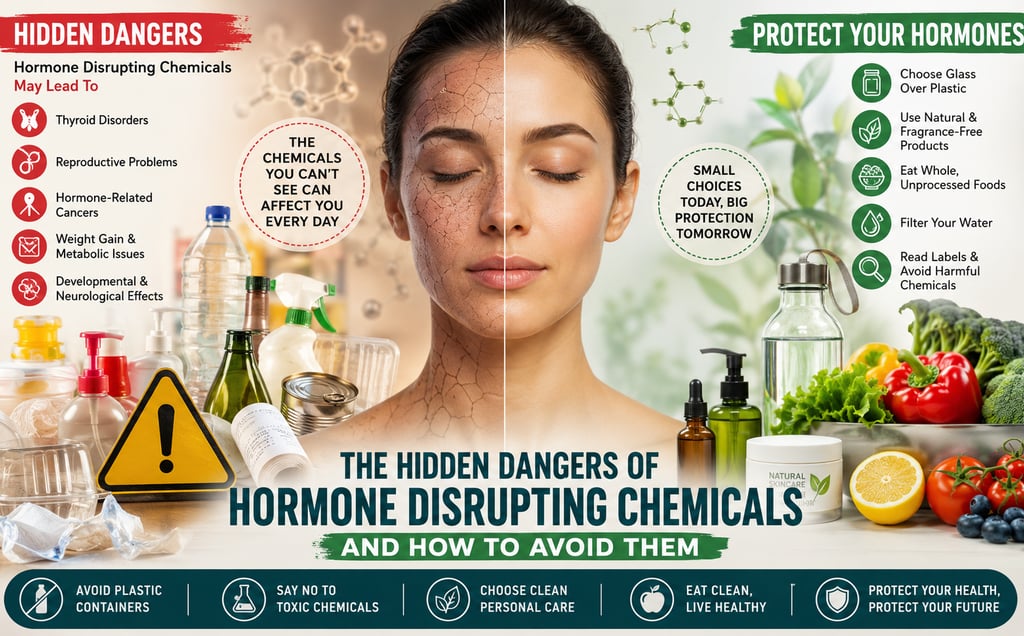
Why You Should Care About Hormone Disrupting Chemicals in Everyday Products?
Long before laboratories coined fancy names for such things, households trusted simplicity: rainwater collected in stone jars, beeswax polish, linen aired beneath an open sky. Modern living looks rather different now.
Daily life is quietly steeped in a chemical inheritance nobody ever consciously chose, tucked into plastic bottles, glossy till receipts, and the linings of tinned soup. These culprits are hormone disrupting chemicals: substances that mimic, block, or otherwise interfere with the body's natural hormonal signals.
They lurk in the mundane, a shampoo bottle here, a takeaway container there, even a child's favourite toy. Understanding hormone-disrupting chemicals has become less a fringe curiosity and more an urgent matter of everyday health, since these compounds have been quietly linked to fertility troubles, thyroid imbalances, and metabolic disarray.
What follows unpacks where hormone disrupting chemicals hide, the mischief they cause, and the sensible, almost old-fashioned wisdom that can help any household reclaim a cleaner, gentler way of living.
Also Read: White Discharge During Pregnancy: What’s Normal & What Could Be Dangerous
What Are Examples of Hormone Disrupting Chemicals?
Hormone disrupting chemicals go by many aliases across the ingredient lists of ordinary life, yet their mischief remains remarkably consistent. Bisphenol A, better known as BPA, has long been a staple of plastic bottles, food can linings, and till receipts, seeping into food and skin with unsettling ease.
Phthalates, another notorious family of hormone disrupting chemicals, are used to soften plastics and anchor fragrances in place, turning up in everything from vinyl flooring to scented candles. Alongside these sit parabens, flame retardants, and certain pesticides, each one quietly capable of nudging the body's hormonal orchestra out of tune.
What makes hormone disrupting chemicals particularly cunning is their gift for disguise: they impersonate oestrogen, block testosterone, or interfere with thyroid hormone production, all while sitting on packaging as seemingly harmless, regulated ingredients.
Endocrine Disrupting Chemicals and Hormone Disruptors Hiding in Plain Sight
Bisphenol A (BPA) lining tinned food and coating receipt paper.
Phthalates softening vinyl flooring, fragranced candles, and children's toys.
Parabens preserving lotions, shampoos, and pharmaceutical creams.
Flame retardants embedded in upholstery, carpets, and mattresses.
Organophosphate pesticides clinging to non-organic fruit and vegetables.
Once these substances are named and recognised, their sheer ordinariness becomes rather startling. A grandmother's pantry, stocked with tins and jars, would once have seemed the picture of thrift and care, yet the very seals that kept food fresh for decades have quietly introduced a new worry into the household.
This realisation naturally raises a graver question: what harm do such compounds actually cause once they settle within the body.
Also Read: How to Increase Testosterone Level Naturally (Most Men Ignore These 5 Tricks)
What Diseases Are Linked to Disruptors?
Scientific literature has spent decades tracing the fingerprints of hormone disrupting chemicals across a troubling list of ailments. The thyroid gland, that small butterfly-shaped conductor of metabolism, is particularly vulnerable, with certain hormone disrupting chemicals shown to interfere with iodine uptake and thyroid hormone synthesis, leaving fatigue, weight fluctuations, and sluggish cognition in their wake.
Researchers have also drawn troubling associations between prolonged exposure and hormone-sensitive cancers, including those of the breast and prostate, where oestrogen-mimicking compounds appear to fuel abnormal cell growth.
Metabolic disorders, too, bear the marks of hormone disrupting chemicals, with insulin resistance and stubborn weight gain increasingly tied to chemicals that interfere with the endocrine system's delicate feedback loops.
What begins as a microscopic disturbance in hormone signalling can, over years of quiet accumulation, cascade into disease that seems to arrive from nowhere.
How Hormone Disrupting Chemicals Interfere With the Endocrine System
Thyroid dysfunction from disrupted iodine and hormone synthesis pathways.
Hormone-sensitive cancers linked to oestrogen-mimicking compounds.
Insulin resistance and metabolic syndrome tied to chronic exposure.
Adrenal imbalance affecting stress response and energy regulation.
This tangled web of disease naturally draws attention to a further concern, namely how these same substances bear down unequally upon women's health.
There is something almost poetic, though deeply unsettling, in the notion that a compound designed to keep a bottle rigid or a receipt legible could quietly rewrite the rhythm of a woman's own biology.
Also Read: Childbirth Normal Delivery: How to Increase Chances of Natural Birth Without C-Section
What Disrupts Female Hormones?
Female physiology, with its intricate monthly rhythm, proves especially sensitive to hormone disrupting chemicals. Many such compounds behave as xenoestrogens, foreign substances that slot into oestrogen receptors and confuse the body's natural signalling.
This mimicry has been associated with irregular cycles, worsened premenstrual symptoms, and complications affecting fertility, as the reproductive system struggles to distinguish authentic hormonal cues from chemical impostors.
Endometriosis and polycystic ovary syndrome have both been examined through this lens, with researchers suggesting that lifelong exposure to hormone disrupting chemicals may compound underlying hormonal sensitivities.
Pregnancy, too, carries heightened stakes, since developing foetuses are exquisitely responsive to even minute hormonal interference, making the avoidance of hormone disrupting chemicals a matter of consequence that stretches across generations.
Endocrine System Disruptors and Reproductive Wellbeing
Xenoestrogens mimicking natural oestrogen and confusing receptor signalling.
Irregular menstrual cycles linked to chronic chemical exposure.
Fertility complications associated with long-term endocrine interference.
Foetal development sensitivity to even trace hormonal disruption
Reproductive health, however, is only one thread in a much wider tapestry, for such substances often enter daily routines through the most unassuming of household items.
It is worth pausing here to consider how ordinary these entry points feel, since nothing about a fluffy bath towel or a scented candle suggests hidden hazard, and yet the chemistry beneath the surface tells a rather different story.
Also Read: Yeast Infection Treatment: Causes, Symptoms, and Effective Remedies You Should Know
What Chemicals Are Bad for Hormones?
The bathroom cabinet and kitchen cupboard, oddly enough, are often the greatest reservoirs of hormone disrupting chemicals within a home.
Personal care products frequently harbour parabens, synthetic musks, and phthalates, ingredients chosen for their preservative or fragrance-fixing qualities rather than any regard for hormonal wellbeing.
Cleaning products, too, contribute their share, with certain surfactants and solvents behaving as hormone disrupting chemicals once absorbed through skin or inhaled as vapour.
Non-stick cookware, coated in perfluorinated compounds, quietly sheds particles that behave in strikingly similar ways within the body. Even receipts handed over at the till carry a thin coating of BPA, transferring onto fingertips with every innocent purchase.
Candles scented with synthetic fragrance oils, air fresheners plugged into hallway sockets, and dryer sheets tumbling through laundry cycles each add their own quiet contribution to this cumulative chemical burden, one that rarely announces itself until symptoms begin to accumulate.
Hormone-Disrupting Chemicals in Skincare and Endocrine Disruptors in Cosmetics
Parabens and synthetic fragrance blends in lotions and perfumes.
Phthalates used as fixatives in nail varnish and hairspray.
Triclosan lingering in antibacterial soaps and toothpaste.
Perfluorinated coatings shedding from non-stick cookware surfaces.
Having traced these chemicals through bottles and pans alike, attention now turns to the dinner plate, where hormone disrupting chemicals often arrive disguised as nourishment.
Also Read: How to Get Bigger Breast Naturally: Proven Methods, Diet, and Exercises
What Are 5 Estrogen Foods to Avoid?
Diet offers one of the most powerful, and most overlooked, avenues for reducing exposure to hormone disrupting chemicals. Certain foods, through cultivation methods or packaging choices, become unwitting carriers of oestrogen-mimicking compounds.
Conventionally farmed produce sprayed with pesticides, processed meats stored in plastic-lined packaging, and tinned goods sealed with BPA-coated interiors all deserve a wary glance.
Soy consumed in heavily processed forms, such as isolates found in protein powders, may also introduce concentrated phytoestrogens beyond what a traditional, whole-food diet would offer.
Farmed fish raised on hormone-laced feed rounds out this list, its flesh occasionally carrying residues that echo the very substances this guide has been unpacking throughout.
Choosing fresher, less processed alternatives where budget and access allow can meaningfully lower a household's cumulative exposure over time, particularly when such swaps become habitual rather than occasional.
Most Common Endocrine Disruptors Found on the Plate
Non-organic fruit and vegetables carrying pesticide residue.
Tinned foods sealed with BPA-lined interiors.
Processed soy isolates in protein powders and snack bars.
Farmed fish raised on hormone-supplemented feed.
Plastic-wrapped processed meats absorbing packaging chemicals.
Armed with this dietary awareness, the final task becomes a practical one: weaving these lessons into daily habits that genuinely lessen exposure to such substances.
Small, deliberate choices, repeated across weeks and months, tend to accumulate into meaningful protection far more reliably than any single dramatic overhaul ever could.
Also Read: What Is Women White Discharge? Meaning, Types & Health Insights
Conclusion
Hormone disrupting chemicals may be woven quietly into modern life, yet awareness offers genuine power. Choosing glass over plastic, organic where possible, and fragrance-free where sensible allows households to gently unpick this chemical inheritance, one considered decision at a time, restoring balance the body has always deserved.
FAQs
1. What fruit blocks estrogen?
Ans: Pomegranate is often cited for its ability to gently modulate oestrogen activity, thanks to compounds that interact with hormone receptors. Citrus fruits, rich in vitamin C, support liver pathways responsible for clearing excess hormones, offering a natural complement to reducing hormone disrupting chemicals within the diet.
2. Is coffee high in estrogen?
Ans: Coffee itself contains no oestrogen, though research suggests moderate consumption may influence circulating hormone levels differently across individuals. Rather than coffee being inherently problematic, attention is better directed toward avoiding hormone disrupting chemicals found in disposable cups and their plastic linings.
3. How to detox estrogen naturally?
Ans: Supporting the liver through cruciferous vegetables, adequate fibre, and hydration allows the body to metabolise and clear excess hormones efficiently. Reducing daily contact with hormone disrupting chemicals, alongside regular movement and restful sleep, further assists this natural detoxification process considerably.
4. What are the early signs of high estrogen?
Ans: Early indicators often include bloating, tender breasts, mood fluctuations, and irregular cycles. Fatigue and unexplained weight gain around the hips may also appear. Such symptoms frequently prompt closer examination of household exposure to hormone disrupting chemicals as a contributing environmental factor worth addressing.
5. Do carrots remove estrogen?
Ans: Carrots contain fibre that binds to excess oestrogen within the digestive tract, assisting its elimination rather than reabsorption. While not a singular remedy, including carrots alongside broader dietary changes supports the body's natural resilience against hormone disrupting chemicals encountered throughout daily life.
About The Author
Neha Shukla is a writer and LinkedIn creator who demystifies wellness for modern lives. She writes about nutrition, mindfulness, and sustainable habits, grounded in research, infused with real-world wisdom. Her mission is to help you feel better without feeling overwhelmed.



Contact
Don't Let Your Wellness Journey Feel Boring! Get connected with us today to know your health better.
Phone
hello@nehashuklaa@gmail.com
+91 92110 33284
© 2026. All rights reserved.