
What Are The Impact of Vitamin D Deficiency?
Vitamin D deficiency is a common yet often overlooked health concern that can quietly affect your bones, muscles, immune system, and overall wellbeing. This blog explores how vitamin d deficiency develops, the warning signs to watch for, and the potential long-term effects if left untreated. It also explains practical ways to restore healthy vitamin D levels through sensible sunlight exposure, nutrient-rich foods, and appropriate supplementation. You will learn about common symptoms, unusual indicators, the possible connection between vitamin d deficiency and hair loss, and the expected recovery timeline with proper care. Whether you are experiencing persistent fatigue, muscle weakness, or simply wish to safeguard your long-term health, understanding vitamin d deficiency is the first step towards making informed decisions. Regular blood tests and professional medical guidance can help you achieve and maintain optimal vitamin D levels for a healthier future.
Neha Shukla
7/1/20266 min read
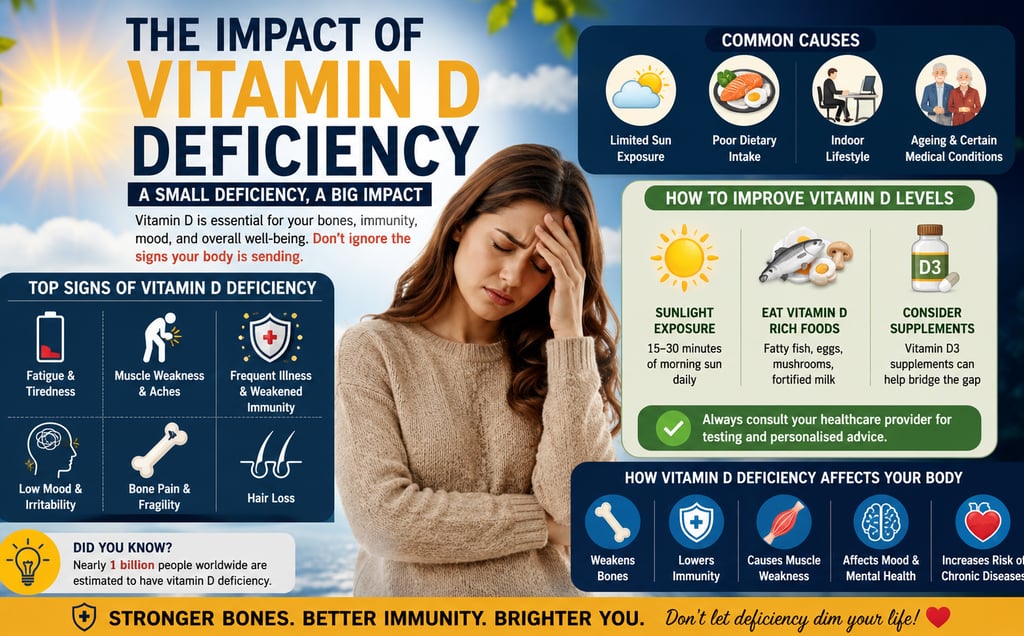
How Does Vitamin D Deficiency Affect Your Body?
Vitamin D deficiency has become one of the most overlooked health concerns of this generation, hiding behind everyday tiredness, forgettable aches, and a general sense of being run down. Defined simply, vitamin D deficiency occurs when the body fails to maintain adequate levels of this fat-soluble vitamin, essential for calcium absorption, bone strength, and a resilient immune system.
Busy offices, glowing screens, and sunscreen-laden routines have turned this once-abundant nutrient into a scarce commodity for millions. What makes vitamin D deficiency particularly dangerous is its stealth; symptoms creep in gradually, mistaken for stress or a change in season.
Left unattended, the consequences stretch far beyond weary bones, touching mood, immunity, and long-term wellbeing. Understanding this deficiency early is essential armour against a quiet cascade of avoidable troubles.
Also Read: What Are Probiotics For Gut Health?
What happens when your vitamin D is low?
Before the fatigue and the aches ever surface, something quieter is already unravelling inside the body. When it experiences a lack of vitamin D, its inner machinery begins to falter in ways rarely noticed until damage has taken root.
Vitamin D behaves less like a simple vitamin and more like a hormone, orchestrating calcium absorption, regulating cell growth, and keeping the nervous system in fine working order.
A prolonged vitamin D deficiency disrupts this orchestration, weakening bone density and leaving the immune system without its most dependable ally. Over months and years, untreated vitamin D deficiency has been linked to brittle bones, persistent fatigue, and a heightened susceptibility to seasonal illness.
The body rarely announces this shortfall with drama; it whispers instead, through tiredness and a creeping heaviness many simply accept as part of adult life.
Vitamin D deficiency disease: the toll on bone health and immunity
That whisper grows loudest within the skeleton and the immune system, two allies that lean on vitamin D more than most people realise.
Weakened calcium absorption leads to softer, more fragile bones over time.
Reduced bone mineral density increases the likelihood of fractures in later years.
A sluggish immune response leaves the body more vulnerable to infections.
Poor regulation of inflammatory markers can prolong recovery from illness.
Muscle function suffers, contributing to unsteady movement and occasional weakness.
Once bones and immunity have been quietly compromised, the next logical question becomes how to reverse the shortfall before it deepens further.
Also Read: Top 10 Sources of Protein For Muscle Growth
How to increase vitamin D quickly?
Raising depleted levels and reversing vitamin D deficiency need not feel like an uphill climb once the right habits enter daily life. Sunlight remains the most generous source, with skin converting ultraviolet rays into usable vitamin D within minutes of gentle exposure.
Dietary choices offer a second pathway; oily fish, egg yolks, and fortified foods carry amounts that the body readily absorbs. For a more stubborn vitamin D deficiency, a vitamin D supplement often becomes the fastest, most measurable route back to healthy levels, particularly when sunlight grows scarce.
Proper vitamin D deficiency treatment typically blends all three approaches rather than relying on a single fix, since sunlight triggers synthesis through the skin while supplements offer a controllable dose that bloodwork can track with precision.
Smart lifestyle habits for absorption
A blood test once revealed severe vitamin D deficiency lurking beneath what I had dismissed as ordinary exhaustion for months. Within weeks of adjusting a few overlooked habits, the tiredness lifted considerably, and small choices proved to outperform any drastic overhaul.
Step outside during late morning, when ultraviolet rays are strongest yet manageable.
Pair meals with healthy fats such as avocado or olive oil, since the vitamin is fat-soluble and absorbs better alongside them.
Avoid layering sunscreen immediately before brief, intentional sun sessions.
Keep supplementation consistent rather than sporadic, as steady dosing outperforms occasional bursts.
Balance magnesium intake, since this often-forgotten mineral helps activate vitamin D.
Once absorption habits are in place, the next step is learning to spot the earliest warnings the body sends out.
Also Read: Probiotic for Digestive Health: 10 Powerful Benefits Your Gut Will Thank You For
What are the signs of vitamin D deficiency?
Fatigue tends to arrive first with vitamin D deficiency, settling in quietly and refusing to lift even after a full night's rest. Muscle weakness follows closely, often mistaken for ageing rather than a genuine deficiency.
Bone discomfort around the lower back and legs frequently signals compromised calcium absorption, while mood fluctuations reminiscent of the winter blues often trace back to inadequate vitamin D rather than circumstance alone.
Weird symptoms of vitamin D deficiency worth watching
Beyond the familiar signs sit a handful of stranger clues that rarely make headlines yet appear time and again in clinical observation.
Unexplained muscle twitching or cramping, particularly at night.
Slow healing of minor wounds and cuts.
Frequent, nagging headaches without an obvious trigger.
A metallic or altered sense of taste in some individuals.
Increased sensitivity to pain in joints and connective tissue.
Fatigue and bone discomfort are one thing, but few people expect a deficiency to reach all the way to the mirror, particularly the hairline.
Also Read: Probiotic Supplements For Gut health: Identifying Side Effects, Diets, And Its Cure
Does vitamin D deficiency cause hair loss?
Hair follicles rely on a delicate cycle of growth, rest, and shedding, and untreated vitamin D deficiency plays a surprisingly influential role within that rhythm. When vitamin D deficiency takes hold, follicles can be pushed prematurely into their resting phase, resulting in noticeably increased shedding that often puzzles those experiencing it.
The vitamin works closely with receptors found within hair follicles, helping stimulate new growth and maintain the follicle's natural cycle. Without sufficient levels, this stimulation weakens, and thinning becomes gradually more apparent around the crown and temples.
Monitoring hair health alongside periodic bloodwork offers a clearer picture than guesswork, since shedding patterns paired with laboratory results tell a far more reliable story than appearance alone.
Shedding hair naturally raises a bigger question: once levels are corrected, how long before the body truly feels restored?
How long does it take to recover from a vitamin D deficiency?
Recovery from vitamin D deficiency unfolds gradually, with most individuals noticing meaningful shifts within eight to twelve weeks of consistent supplementation. Blood levels typically require retesting around the three-month mark, allowing dosage to be fine-tuned based on genuine progress rather than assumption.
Mild cases often rebound faster, while more severe, long-standing vitamin D deficiency can take several months of disciplined effort before levels stabilise fully. Consistency proves more valuable than intensity here; sporadic supplementation rarely produces the steady climb the body requires.
Maintaining a reliable vitamin D deficiency treatment routine, paired with sensible sun exposure and nourishing food, tends to shorten this timeline considerably.
Common vitamin D deficiency causes behind slow recovery
Recovery often stalls not from poor effort but from an underlying cause left unaddressed alongside supplementation.
Limited sun exposure from indoor, desk-bound routines.
Darker skin tones, which naturally require longer exposure to synthesise equal amounts.
Ageing skin, which grows less efficient at vitamin D production over time.
Digestive conditions that hinder proper fat absorption.
Long winters or persistent cloud cover in certain regions.
Also Read: Top Immune Boosting Foods That Help Strengthen Your Immune System Naturally
Conclusion
Vitamin D quietly shapes bones, immunity, and mood far more than most realise. Addressing vitamin D deficiency early prevents a slow drift toward larger complications down the road. A simple blood test reveals the whole story; scheduling one soon remains the wisest, most rewarding step toward lasting vitality.
FAQs
Which food is rich in vitamin D?
Ans: Oily fish such as salmon, mackerel, and sardines rank among the richest natural sources available. Egg yolks and fortified dairy products also contribute meaningfully to daily intake. Cod liver oil remains a traditional, concentrated option favoured for generations. Including these foods regularly helps counter vitamin D deficiency through steady, natural dietary support rather than relying solely on supplementation.
In which fruit is vitamin D high?
Ans: Fruits generally contain negligible vitamin D, as the nutrient is predominantly found in animal-based and fortified foods rather than produce. Orange juice fortified with vitamin D offers a rare exception worth noting. Otherwise, sunlight, oily fish, and supplementation remain far more dependable routes toward correcting any existing shortfall.
Is vitamin D good before bed?
Ans: Some evidence suggests taking vitamin D late at night may interfere slightly with melatonin production for certain individuals. Morning or early afternoon dosing, alongside a meal containing healthy fats, tends to support both absorption and undisturbed sleep. Personal response varies, so noticing individual patterns remains worthwhile.
Does vitamin D affect sleep?
Ans: Yes, adequate vitamin D supports the regulation of sleep-related hormones, including melatonin. A persistent vitamin D deficiency has been associated with disrupted sleep patterns, restlessness, and reduced sleep quality in several observational studies. Restoring healthy levels often brings noticeable improvement to sleep depth and daytime alertness.
Can vitamin D increase creatinine?
Ans: Excessively high vitamin D levels, typically from significant over-supplementation, can occasionally raise calcium levels enough to affect kidney function and creatinine readings. This remains uncommon at recommended doses. Bloodwork monitoring during supplementation helps ensure levels stay within a safe, beneficial range throughout treatment.
About The Author
Neha Shukla is a writer and LinkedIn creator who demystifies wellness for modern lives. She writes about nutrition, mindfulness, and sustainable habits, grounded in research, infused with real-world wisdom. Her mission is to help you feel better without feeling overwhelmed.



Contact
Don't Let Your Wellness Journey Feel Boring! Get connected with us today to know your health better.
Phone
hello@nehashuklaa@gmail.com
+91 92110 33284
© 2026. All rights reserved.