
How to Spot the Signs and Symptoms of Dehydration
Understanding the signs and symptoms of dehydration can help you prevent minor fluid loss from becoming a serious health concern. This guide explains how to recognise early warning signs such as excessive thirst, dry mouth, fatigue, dizziness, dark yellow urine, decreased urination, and sunken eyes, along with hidden indicators that many people overlook. It also explores the causes of dehydration, the organs most affected, and practical ways to restore healthy fluid balance quickly. You'll discover which drinks hydrate more effectively than water in certain situations, when medical attention is necessary, and simple everyday habits to maintain proper hydration. Whether you're exercising, recovering from illness, or coping with hot weather, recognising the signs and symptoms of dehydration early can protect your health, improve your wellbeing, and help you stay energised, alert, and properly hydrated throughout the day.
Neha Shukla
7/21/20267 min read
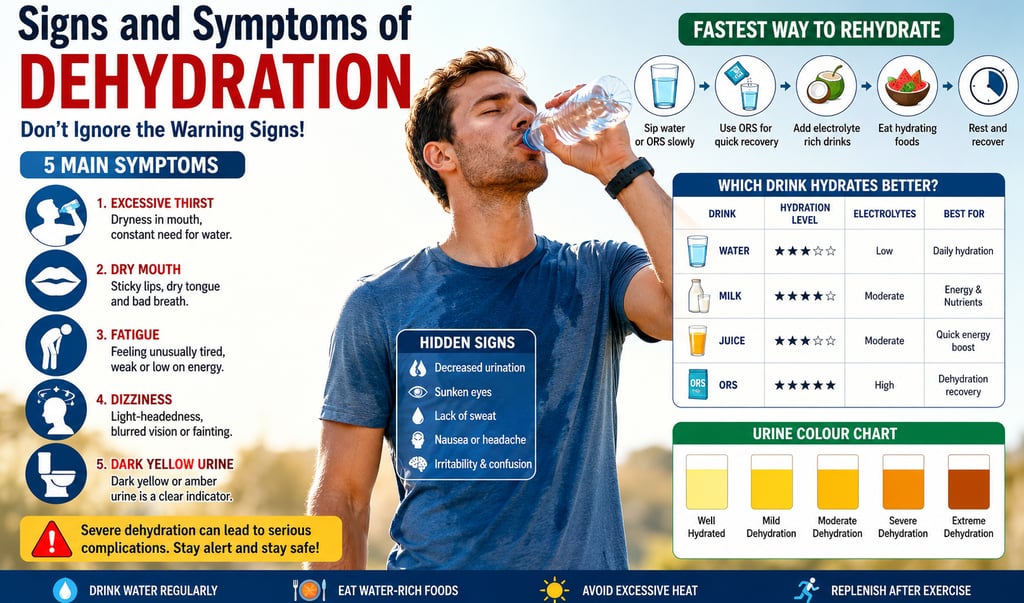
Recognising the Early Signs and Symptoms of Dehydration
The signs and symptoms of dehydration are frequently dismissed as ordinary tiredness or a passing headache, when in truth they are the body's earliest telegraph of distress. Recognising the signs and symptoms of dehydration is a cornerstone of everyday wellbeing, especially across sweltering summers, long commutes, and demanding workdays.
This guide draws upon established medical understanding of fluid balance, electrolyte function, and thermoregulation to offer a grounded, practical look at how dehydration truly manifests, why it deserves close attention, and what genuinely works to reverse it.
From subtle dehydration symptoms hiding in plain sight to the physiological chain reaction triggered inside vital organs, every section ahead has been crafted with clarity, precision, and old-fashioned common sense that modern health advice often forgets to offer entirely.
Also Read: Why Do I Sweat So Much? Causes, Symptoms, and Effective Treatments Explained
What are the 5 main symptoms of dehydration?
Long before a person collapses from heat exhaustion, the body has already been sending out polite little memos begging for water. Understanding the signs and symptoms of dehydration at their earliest stage can prevent a mild inconvenience from turning into a genuine emergency.
The trouble is that most of these memos are easy to overlook, especially when life is busy, and a cup of tea feels like a luxury rather than a necessity. Learning to catch the signs and symptoms of dehydration before they escalate is a small daily habit with an outsized reward, one that spares both the body and the mind from needless strain.
Mild dehydration symptoms
The gentlest signs and symptoms of dehydration often arrive quietly, almost apologetically, long before anything feels genuinely wrong:
Excessive thirst that feels disproportionate to the weather or activity.
A persistent dry mouth with a slightly sticky or pasty sensation.
Creeping fatigue that coffee simply refuses to fix.
Mild dizziness when standing up too quickly from a chair.
Dark yellow urine or amber urine instead of the usual pale straw shade.
Is nausea a sign of dehydration?
Yes, and it is one of the most underrated signs and symptoms of dehydration among adults. As blood volume drops, the stomach lining receives less circulation, which can trigger a queasy, unsettled feeling that many mistake for something they ate.
A dull, low-grade headache frequently accompanies this nausea, as the brain's protective fluid cushion thins out, quietly reinforcing how interconnected the body's warning system truly is when reading the signs and symptoms of dehydration correctly.
Also Read: What Are The Impact of Vitamin D Deficiency?
Severe dehydration symptoms
When mild warnings are ignored, the signs and symptoms of dehydration intensify considerably:
Fainting or a floating, lightheaded sensation.
Sunken eyes with visibly hollow, shadowed sockets.
Lack of sweat even during vigorous exertion or heat.
Rapid heartbeat paired with shallow, quickened breathing.
Confusion, irritability, or an odd sense of detachment from surroundings.
What are the 5 signs of dehydration?
If a shortlist is needed, the five most reliable signs and symptoms of dehydration to remember are excessive thirst, dark yellow urine, fatigue, dizziness, and decreased urination.
Together, they form a fairly dependable early-warning chorus that the body sings well before things turn serious. Watching how urine colour shifts throughout the day is arguably the single most practical home test available, requiring no equipment beyond a moment's glance.
Spotting these clues early naturally raises the next question: once the warning has been noticed, what actually works to put things right again, and quickly?
Also Read: Top Immune Boosting Foods That Help Strengthen Your Immune System Naturally
What is the fastest way to cure dehydration?
Once the signs and symptoms of dehydration have been spotted, speed matters, but so does method. Gulping an enormous glass of water in one go is a common instinct, yet it often does less good than a slower, more deliberate approach that respects how the gut actually absorbs fluid.
Reversing the signs and symptoms of dehydration properly is less about brute force and more about giving the body exactly what it needs, in the right order.
A step-by-step rehydration protocol
Pause and cool down first. Move away from direct heat or exertion before attempting to hydrate, as the body absorbs fluid more efficiently once its core temperature begins settling.
Sip steadily rather than gulp. Small, frequent sips every few minutes allow the stomach to absorb water without triggering discomfort or bloating.
Add electrolytes where possible. A pinch of salt and a squeeze of citrus in water mimics a simple rehydration solution when nothing else is available.
Introduce cooling foods. Cucumber, watermelon, and yoghurt carry both fluid and minerals, gently supporting recovery from the inside.
Take a cool shower. A cool shower lowers skin temperature quickly, reducing further fluid loss through sweat while the body catches up internally.
Rest in shade or indoors. Continuing activity while treating the signs and symptoms of dehydration only undoes the good work already done, so patience here matters as much as the fluid itself.
There was a particularly memorable afternoon during a long countryside walk when the warning signs arrived without much fanfare, just a heavy fog behind the eyes and legs that felt borrowed from someone else. Sitting beneath a hedgerow, sipping water slowly rather than draining the bottle in one theatrical gulp, made all the difference within twenty minutes.
That small experience became a lasting lesson in patience over panic when treating the signs and symptoms of dehydration. It also raised a curious question worth answering properly: which organ actually feels the pinch first, long before the rest of the body catches on?
Also Read: Probiotic Supplements For Gut health: Identifying Side Effects, Diets, And Its Cure
Which organ is first affected by dehydration?
The brain is remarkably thirsty for an organ that never seems to ask nicely. It depends on a delicate balance of fluid and electrolytes to fire its neurons correctly, which explains why the earliest signs and symptoms of dehydration so often show up as mental fog rather than physical collapse.
Few people connect a foggy afternoon at the desk with the signs and symptoms of dehydration, yet the two are far more linked than most realise.
The brain's early distress signals
As fluid levels drop by even one or two percent, brain tissue can shrink slightly, pulling gently on surrounding membranes and nerves. This tugging sensation is frequently behind the dull, band-like headache many people report during hot afternoons. Concentration wavers, mood turns short-tempered, and simple decisions suddenly feel unusually taxing.
Diseases that cause dehydration in adults
Certain conditions quietly accelerate fluid loss and worsen the signs and symptoms of dehydration without much warning, making awareness of the signs and symptoms of dehydration even more essential for those managing chronic illness:
Diabetes, through frequent urination driven by elevated blood sugar.
Kidney disorders that impair the body's ability to conserve water.
Gastrointestinal illnesses causing prolonged vomiting or diarrhoea.
Adrenal gland conditions that disrupt sodium and fluid regulation.
Certain medications, particularly diuretics prescribed for blood pressure.
The kidneys are the second casualty
Once the brain has raised its alarm, the kidneys step into the spotlight. They begin conserving water aggressively, which is precisely why decreased urination and darker urine colour appear so early in the timeline.
Left unaddressed, prolonged strain on the kidneys can eventually affect their filtering efficiency, turning a temporary inconvenience into a more lasting concern. With the brain and kidneys both in mind, choosing the right fluid to reach for becomes far less of a guessing game.
Also Read: Top 10 Sources of Protein For Muscle Growth
What drinks hydrate better than water?
Plain water remains a faithful companion, yet it is not always the fastest route back to balance, particularly after heavy sweating or illness. Comparing common options reveals some genuinely surprising results.
Milk
Whole or semi-skimmed milk contains natural sugars, protein, and sodium, all of which slow gastric emptying and allow fluid to stay in the body longer than plain water alone. Studies examining hydration indexes have repeatedly placed milk above water for sustained rehydration, largely thanks to this slower release.
Juice
Fruit juice offers natural sugars and potassium, both useful for replenishing what sweat carries away, though its high sugar concentration can occasionally draw water into the gut rather than the bloodstream if consumed undiluted. Diluting juice with water tends to strike a sensible balance.
Oral rehydration salts
Formulated specifically to match the body's own fluid and mineral ratios, oral rehydration salts remain the gold standard for treating the signs and symptoms of dehydration during illness, heat exhaustion, or intense physical exertion.
Their precise blend of glucose and sodium allows for far quicker absorption through the intestinal wall than water managed on its own, which is exactly why medical settings reach for them first when the signs and symptoms of dehydration turn serious.
A quick comparison at a glance
Water hydrates reliably but passes through the system fairly quickly.
Milk hydrates for longer thanks to its natural fat and protein content.
Juice replenishes minerals but works best when diluted.
Oral rehydration salts absorb fastest and are ideal for genuine dehydration episodes.
Also Read: Probiotic for Digestive Health: 10 Powerful Benefits Your Gut Will Thank You For
Conclusion
Recognising the signs and symptoms of dehydration early transforms a potential crisis into a minor footnote in an otherwise ordinary day. With mindful sipping, sensible food choices, and a little patience, staying properly hydrated becomes second nature rather than an afterthought reserved for scorching summers.
Frequently Asked Questions
Is nausea a sign of dehydration?
Ans: Yes, nausea is genuinely among the signs and symptoms of dehydration that people overlook most often. Reduced blood flow to the stomach lining during fluid loss can create queasiness resembling travel sickness. Pairing this with a dull headache and fatigue usually confirms fluid loss rather than an unrelated stomach upset.
What are severe dehydration symptoms?
Ans: Severe dehydration symptoms include fainting, sunken eyes, extreme dizziness, rapid breathing, and confusion. These represent a serious escalation beyond mild thirst or dry mouth, signalling that the body's fluid reserves have dropped considerably and require prompt, deliberate rehydration rather than casual sipping or half-hearted measures.
What are the 5 signs of dehydration?
Ans: The five most recognised signs and symptoms of dehydration are excessive thirst, dark yellow urine, persistent fatigue, dizziness, and decreased urination. Together these form a reliable early checklist that most people can assess quickly at home, without needing any medical equipment or specialist knowledge whatsoever.
What diseases cause dehydration in adults?
Ans: Diabetes, kidney disorders, gastrointestinal illnesses, adrenal conditions, and diuretic medications are common contributors to dehydration in adults. Each disrupts the body's natural fluid regulation differently, which is why the signs and symptoms of dehydration can sometimes appear more suddenly in people managing these underlying conditions.
What are mild dehydration symptoms?
Ans: Mild dehydration symptoms typically include excessive thirst, a dry mouth, gentle fatigue, faint dizziness, and slightly dark yellow urine. These early signs and symptoms of dehydration are easily reversed with steady water intake, cooling foods, and a brief, restful pause from heat, exertion, or stress.
Mandeep Rawat is a writer who demystifies wellness for modern lives. He writes about nutrition, mindfulness, and sustainable habits, grounded in research, infused with real-world wisdom. His mission is to help you feel better without feeling overwhelmed.
About The Author



Contact
Don't Let Your Wellness Journey Feel Boring! Get connected with us today to know your health better.
Phone
hello@nehashuklaa@gmail.com
+91 92110 33284
© 2026. All rights reserved.