Why Do I Sweat So Much? Causes, Symptoms, and Effective Treatments Explained
Excessive sweating can be frustrating, uncomfortable, and sometimes a sign that your body needs attention. If you've ever found yourself asking, why do i sweat so much, you're not alone. While sweating is a natural process that helps regulate body temperature, persistent or unexplained sweating may be linked to conditions such as hyperhidrosis, hormonal changes, diabetes, thyroid disorders, or lifestyle factors like stress and caffeine intake. This comprehensive guide explores the common causes of excessive sweating, associated symptoms, diagnostic methods, effective medical treatments, and practical home remedies to help you manage the condition confidently. It also explains when sweating is harmless and when it may require medical evaluation. By understanding why do i sweat so much, you can identify potential triggers, make informed lifestyle changes, and seek timely treatment to improve your comfort, confidence, and overall quality of life.
Neha Shukla
6/29/20268 min read
Why Do I Sweat So Much and How to Stop Excessive Sweating?
If you have ever wondered why do i sweat so much, you are certainly not alone. Millions of people experience episodes of excessive sweating, often without understanding why they happen. Sweating is one of the body's most remarkable natural cooling systems. It protects us from overheating and helps regulate body temperature during exercise, hot weather, or emotional stress.
However, when sweating becomes frequent, excessive, or occurs without an obvious trigger, it may indicate hyperhidrosis or another underlying medical condition that warrants attention.
This guide explains why do I sweat so much, explores the reasons for excessive sweating, discusses common symptoms, diagnosis, effective treatment options, practical home remedies, and when medical advice becomes essential.
Before assuming your sweating is simply "normal", continue reading to discover what your body may be trying to tell you.
Also Read: Side Effects of Alcohol: What It Does to Your Brain, Liver, Heart, and Overall Health
Why Do I Sweat So Much? What Are the Reasons for Excessive Sweating?
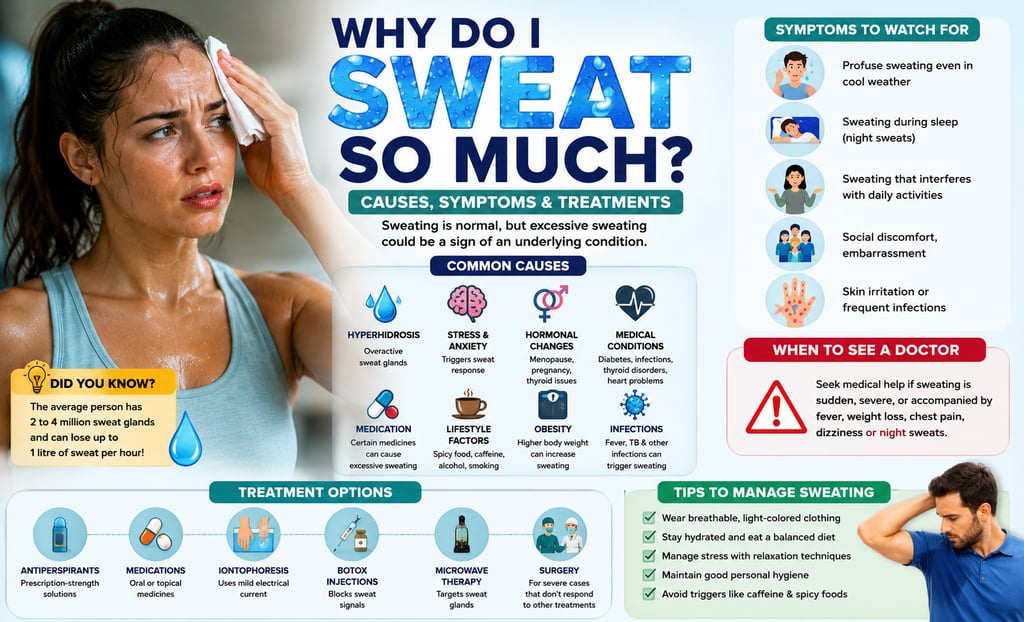
Between two and four million eccrine glands populate the human body, with the highest density on the palms, soles, forehead, and underarms. Each gland responds to rising core temperature by releasing a thin, water-based fluid. That fluid evaporates, drawing heat outward. It is thermal engineering of the most elegant order. Trouble begins when this system fires without genuine thermal need, producing sweat too much volumes that no physiological demand has actually requested.
Normal Sweating Versus Excessive Sweating
Normal perspiration follows an internal logic. Heat provokes it. Exertion demands it. It resolves once the trigger fades. Excessive sweating defies this entirely. It saturates clothing during sedentary activity, persists through cool temperatures, and disrupts sleep.
Clinicians consider sweating excessive when it occurs at least once weekly, visibly soaks through clothing, and interferes with daily function.
Someone quietly asking why do I sweat so much during a calm afternoon meeting is, far more often than chance suggests, sitting precisely at this clinical threshold.
Primary and Secondary Sweating Differences
Hyperhidrosis divides into two distinct forms. Primary hyperhidrosis has no identifiable medical origin - it concentrates on focal zones such as hands, feet, or underarms, emerges in adolescence, and pauses during sleep.
Secondary hyperhidrosis is driven by a medical condition or medication, spreads more diffusely across the body, and continues through the night. This distinction shapes every reasons for excessive sweating conversation that follows.
Common Causes Behind Excessive Sweating
Primary Hyperhidrosis
Primary hyperhidrosis causes centre on eccrine glands receiving nerve signals of disproportionate intensity. The glands are structurally unremarkable; it is the neurological instruction driving them that is amplified.
A hereditary component appears consistently, with many sufferers identifying at least one first-degree relative with an identical pattern. Crucially, fitness offers no insulation: a person in peak physical condition can experience drenched palms in a cool, quiet room.
Physical excellence and primary hyperhidrosis causes inhabit entirely separate domains.
Medical Conditions Linked to Sweating
Secondary hyperhidrosis draws from a wide reservoir of underlying conditions:
Diabetes: Hypoglycaemic episodes provoke acute excessive sweating as the body responds to falling blood glucose.
Thyroid disorders: Hyperthyroidism accelerates metabolic rate and amplifies perspiration across the body.
Obesity: Excess insulation demands sustained thermoregulatory output, worsening sweat too much patterns.
Infections: Tuberculosis and endocarditis carry a long association with drenching nocturnal perspiration.
Menopause: Declining oestrogen disrupts hypothalamic temperature regulation, producing hot flushes and attendant moisture.
Neurological disorders: Conditions involving autonomic dysfunction directly interfere with eccrine signalling.
Lifestyle Factors
Daily habits quietly worsen reasons for excessive sweating:
Caffeine stimulates the nervous system and activates eccrine glands directly.
Spicy foods trigger thermoreceptors, simulating heat and provoking perspiration.
Alcohol dilates peripheral vessels, raising skin surface temperature.
Anxiety elevates cortisol and adrenaline, potent stimulants of the sympathetic sweat response.
Certain medications, including antidepressants and opioids, list diaphoresis among documented side effects.
Also Read: How to Increase Eyesight and Fix Blurry Vision: Natural Solutions Backed by Science
What Is Excessive Sweating a Sign Of?
A vigorous summer walk, a plate of fiery food, a nerve-laden first presentation - all provoke perspiration, and none of it warrants reflection.
The body reads psychological stress with the same neurological circuitry it reserves for physical danger, and sweating follows accordingly.
Someone asking why do I sweat so much after an emotionally charged morning is almost certainly describing a proportionate autonomic response, not a disorder.
When Sweating Signals Something Beneath the Surface
The question of what is excessive sweating a sign of carries far greater weight when perspiration arrives without provocation, particularly during sleep.
Night sweats that soak through bedclothes and require a change of nightwear, without any discoverable environmental cause, deserve serious attention.
The clinical territory of what cancer causes excessive sweating is specific: lymphomas, particularly Hodgkin's lymphoma, are classically associated with drenching nocturnal perspiration alongside fever and unexplained weight loss - collectively termed B symptoms in oncological assessment.
Patterns worth acting upon:
Sweating that begins suddenly without any new trigger
Night sweats requiring a clothing or bedding change
Perspiration accompanied by unexplained weight reduction
Fever alongside persistent sweating episodes
Chest discomfort or palpitations coinciding with heavy sweating
Dizziness or trembling suggesting possible blood glucose irregularity
Symptoms That May Accompany Excessive Sweating
Physical Symptoms
Chronically damp skin is structurally vulnerable. Maceration - the softening and breakdown of tissue from sustained moisture - afflicts many who sweat too much.
Fungal organisms flourish in warm, humid environments, making tinea pedis and intertrigo considerably more common among those living with hyperhidrosis.
Dehydration presents a genuine risk when fluid loss is substantial and inconsistently replaced.
Emotional and Social Symptoms
The social weight of excessive sweating is systematically underestimated. Those affected restructure professional and personal lives around managing visibility: choosing dark fabrics, avoiding handshakes, rehearsing exits before entering rooms.
Peer-reviewed dermatology research consistently places the quality-of-life impact of hyperhidrosis alongside severe psoriasis and eczema. The condition is physiological in origin and profoundly social in consequence.
Also Read: A Complete Mental Disorders List: Exploring Common Mental Health Conditions
How Doctors Diagnose Excessive Sweating
A thorough clinical history maps onset, distribution, timing, and severity alongside associated symptoms. Distribution patterns carry diagnostic weight: localised focal sweating points toward primary hyperhidrosis; diffuse generalised patterns suggest a systemic investigation.
Objective measures include Minor's starch-iodine test, which maps active eccrine zones by producing a vivid violet colour change on contact with sweat, gravimetric testing to calculate output by weight, and blood or urine analysis to screen for thyroid dysfunction, diabetes, and infection.
A practical detail many clinicians find invaluable: maintaining a structured sweat diary across seven days before an appointment - noting time, trigger, zone, severity, and accompanying symptoms - routinely shortens the diagnostic process and accelerates access to effective treatment for over sweating.
Also Read: How to Increase Metabolism Overnight: Myth or Reality? Here’s the Truth
What Are the Treatment for Over Sweating?
Prescription-strength aluminium chloride antiperspirants, applied to completely dry skin before sleep, constitute the first credible clinical intervention. Concentrations far exceed anything available over the counter and produce a meaningful reduction in localised excessive sweating with consistent use.
Anticholinergic medications, primarily glycopyrrolate and oxybutynin, suppress eccrine activity by blocking the acetylcholine signal that instructs glands to fire. Particularly effective for diffuse hyperhidrosis, though dry mouth and blurred vision limit tolerability in some patients.
Iontophoresis immerses the affected area in a water bath through which a controlled electrical current passes, temporarily disrupting eccrine function. Sessions of twenty to thirty minutes, repeated several times weekly, carry robust evidence for palmar and plantar hyperhidrosis.
Botulinum toxin injections interrupt nerve-to-gland signalling in the underarm, with effects lasting four to twelve months - among the most effective excessive sweating treatment options for axillary zones.
Microwave-based therapy permanently destroys underarm eccrine glands through precisely targeted energy, with results considered enduring.
Endoscopic thoracic sympathectomy, the surgical option, severs the sympathetic nerve chain but carries a documented risk of compensatory hyperhidrosis elsewhere on the body and sits firmly at the furthest end of the intervention spectrum.
Also Read: Think It’s Just a Fever? These Dengue Symptoms Say Otherwise
How to Stop Sweating Which Is Excessive?
Natural fibres - cotton, linen, and merino wool - allow genuine airflow in ways synthetic blends cannot replicate. Merino's thermal regulation is particularly sophisticated, wicking moisture from skin while remaining odour-resistant.
Reducing caffeine, alcohol, and capsaicin-rich foods removes the three most consistent dietary provocateurs of excessive sweating. Adequate hydration keeps core temperature lower during physical activity, reducing the volume of perspiration the body needs to produce.
Breathwork, progressive muscle relaxation, and structured mindfulness practices reduce the sympathetic activation that floods eccrine glands with instruction, making stress management a genuine component of how to stop sweating, not merely a platitude.
What Causes Excessive Sweating in Females?
What causes excessive sweating in females encompasses a set of hormonal dynamics that generalised hyperhidrosis literature consistently underweights. Oestrogen and progesterone fluctuations across the menstrual cycle alter the hypothalamic temperature set point.
During pregnancy, accelerated metabolic rate and increased blood volume generate additional thermal load throughout every trimester.
Perimenopause and menopause are the most acutely recognised triggers: declining oestrogen destabilises hypothalamic thermoregulation, generating the characteristic hot flush and drenching perspiration that accompanies it.
Polycystic ovarian syndrome creates broader hormonal dysregulation that can manifest as excessive sweating among a range of systemic effects.
Thyroid disorders, disproportionately prevalent in women, similarly amplify perspiration when hormone output exceeds the reference range.
Also Read: Yoga for Stress Relief: Transform Your Mood in Just 10 Minutes a Day
Home Remedies That May Help Control Excessive Sweating
For mild hyperhidrosis or as adjuncts to clinical management, several accessible measures carry reasonable practical value:
Sage tea: Tannins and astringent compounds may modestly reduce eccrine output; small studies provide limited supportive evidence.
Apple cider vinegar: Topical application may temporarily adjust skin pH and reduce surface moisture; evidence remains anecdotal.
Bicarbonate of soda: Functions as a natural absorbent for short-term underarm use; prolonged application risks mild irritation.
Consistent hydration: Adequate fluid intake supports more efficient thermoregulation, reducing overall perspiration demand.
Natural fibre bedding: Linen and cotton allow nocturnal perspiration to evaporate rather than accumulate.
These measures offer genuine supplementary support. They do not replace clinical excessive sweating treatment for moderate or severe hyperhidrosis.
Also Read: How to Get Better Sleep Naturally: Simple Tips to Improve Sleep Quality Every Night
Conclusion
The question why do I sweat so much deserves a considered answer rather than resigned acceptance. Hyperhidrosis is well-mapped, well-researched, and thoroughly manageable across a graduated spectrum of interventions. Understanding whether the origin is primary excessive sweating, hormonal, systemic, or lifestyle-driven is the first genuinely productive step - and one a knowledgeable clinician can navigate with precision.
FAQs
What to do for excessive sweating?
Ans: Identify the most likely trigger first - stress, caffeine, and medication are consistently overlooked as culprits. Apply prescription-strength antiperspirant to dry skin before sleep. Maintain a seven-day sweat diary before any clinical appointment. Multiple effective interventions exist across every severity level of hyperhidrosis.
What is the cause of excessive sweating?
Ans: Excessive sweating arises from overactive eccrine glands without underlying pathology (primary hyperhidrosis) or from medical drivers including thyroid dysfunction, diabetes, menopause, and certain medications (secondary hyperhidrosis). Anxiety, caffeine, and alcohol amplify both forms and are among the most directly modifiable reasons for excessive sweating.
What nervous system disorder causes sweating?
Ans: The sympathetic division of the autonomic nervous system governs eccrine gland activity. Autonomic neuropathy, Parkinson's disease, multiple system atrophy, and certain spinal injuries all disrupt this regulatory pathway. In primary hyperhidrosis, sympathetic signalling to eccrine glands is constitutionally overactive despite the absence of identifiable structural neurological pathology.
What vitamin deficiency causes excessive sweating?
Ans: Associations rather than direct causation are more accurate here. Low vitamin D has been linked to autonomic dysregulation in some research. Vitamin B12 deficiency can alter nervous system function in ways that influence sweat patterns. Magnesium depletion may heighten the stress-related perspiration response. These rarely constitute primary hyperhidrosis causes in isolation.
What home remedy is good for sweating?
Ans: Hydration, breathable natural fabrics, and structured stress reduction carry the strongest practical evidence. Sage tea offers modest research support; apple cider vinegar and bicarbonate of soda provide limited anecdotal benefit. All function best alongside clinical management rather than in replacement of it for persistent excessive sweating.
About The Author
Neha Shukla is a writer and LinkedIn creator who demystifies wellness for modern lives. She writes about nutrition, mindfulness, and sustainable habits, grounded in research, infused with real-world wisdom. Her mission is to help you feel better without feeling overwhelmed.



Contact
Don't Let Your Wellness Journey Feel Boring! Get connected with us today to know your health better.
Phone
hello@nehashuklaa@gmail.com
+91 92110 33284
© 2026. All rights reserved.