Reason for High Blood Pressure: Causes, Symptoms & Natural Ways to Control It
High blood pressure, or hypertension, is a serious yet often silent condition that develops due to a combination of lifestyle habits, medical conditions, and genetic factors. The reason for high blood pressure is rarely singular; it commonly includes poor diet, excessive sodium intake, obesity, lack of physical activity, chronic stress, and inadequate sleep. Medical issues such as kidney disease, thyroid imbalance, and sleep apnoea can further elevate risk. While symptoms like headaches, dizziness, fatigue, and blurry vision may appear, they often occur late, making regular monitoring essential. The condition can quietly damage vital organs, including the heart, brain, kidneys, and eyes, earning its reputation as a “silent killer.” Fortunately, it can be managed effectively through natural strategies such as maintaining a healthy diet rich in potassium, engaging in regular exercise, managing stress, and achieving healthy weight levels. Quick fixes may offer temporary relief, but long-term consistency is key. Understanding the root causes and adopting sustainable lifestyle changes can significantly reduce risks and improve overall cardiovascular health.
Neha Shukla
5/15/20268 min read
What Are the Reason for High Blood Pressure?
There’s a very funny incident of mine, while I was talking about the reason for high blood pressure. My friends and I were at a party, and one of my friends is usually high-tempered, so we used to tease her a lot. Once, as usual, we were all teasing her, and out of temper, she bet on something she lost eventually. That’s when she discussed her short temper, and we then got to know that she had high blood pressure.
And this thing has made me excited to write a blog solving not only her, but for everyone who is looking for the reasons for high blood pressure. So, let’s get started.
Also Read | Breast Cancer Symptoms: How to Spot the Signs Early and Stay Safe
What is High Blood Pressure and Why Should You Care?
High blood pressure, or hypertension, occurs when the force of blood pushing against your artery walls remains persistently elevated. Think of your arteries as garden hoses, if the pressure runs too high for too long, the hose wears thin and eventually gives way.
Elevated blood pressure is classified into stages that carry real clinical weight:
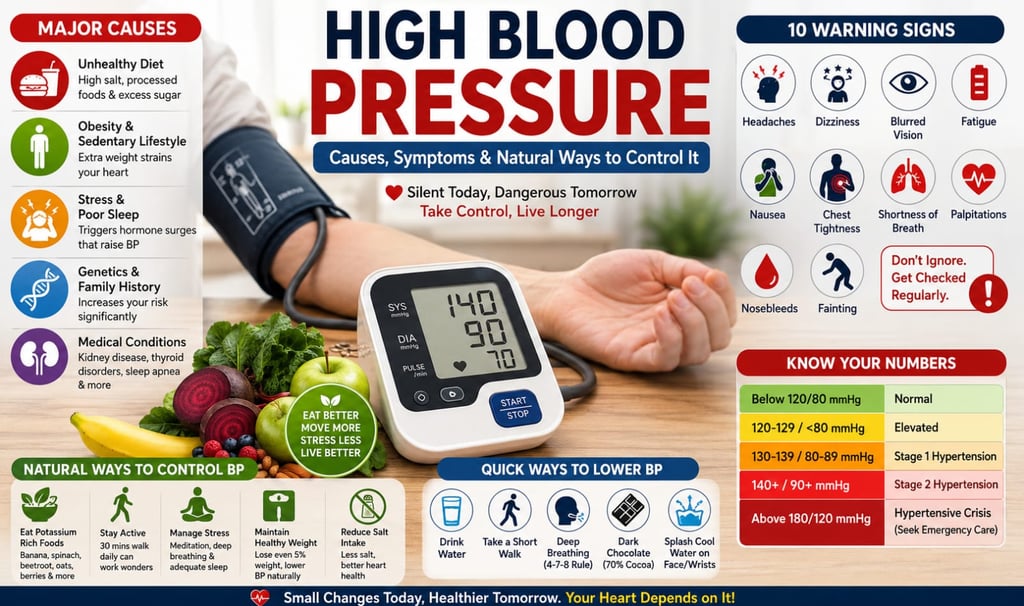
Normal: Below 120/80 mmHg
Elevated: 120 to 129 systolic, less than 80 diastolic
Stage 1 hypertension: 130 to 139 systolic or 80 to 89 diastolic
Stage 2 hypertension: 140 or higher systolic or 90 or higher diastolic
Hypertensive Crisis: Above 180/120 mmHg, seek emergency care immediately
Understanding these types of blood pressure is not merely academic. Stage 1 is your body's first polite warning. Stage 2 is where organ damage quietly begins. Ignoring either is a gamble no one should take.
Check Out | How Do HIV AIDS Symptoms Look Like And Why Do They Happen?
What are the Major Causes of High Blood Pressure?
The real reason for high blood pressure is often a layered, interconnected web of choices, biology, and circumstance. Let us unravel it properly.
Lifestyle-Related High BP Causes
Poor diet sits at the very crown of lifestyle-driven hypertension. Diets saturated with sodium and processed foods cause the body to retain fluid, expanding blood volume and forcing the heart to work harder. Add obesity into the equation, excess adipose tissue demands more blood supply, straining arterial walls relentlessly, and you have a quietly compounding crisis.
Here is something most people ignore: late-night eating raises nocturnal blood pressure, disturbing the natural pressure dip the body needs during sleep. Poor sleep quality, consistently fewer than six hours, is now recognised as an independent risk factor for hypertension.
Medical Reasons for Hypertension
Reasons for hypertension are not always behavioural. Several medical conditions drive blood pressure upward with clinical precision:
Chronic kidney disease disrupts the body's ability to filter excess sodium and fluid, directly elevating blood volume and pressure.
Thyroid disorders disturb the hormonal balance that governs vascular tone.
Obstructive sleep apnoea triggers stress hormone surges that push pressure upward nightly.
Adrenal gland tumours release adrenaline surges that spike pressure violently.
Role of Genetics
Genetics is the inheritance no one chooses. If both your parents carry hypertension, your risk doubles in a measurable, documented way. Certain gene variants affect how the kidneys handle sodium and how efficiently stress hormones are metabolised. Genetics does not seal your fate, but it does set the stage.
Impact of Chronic Kidney Disease
Chronic kidney disease and high blood pressure share a vicious cycle. Damaged kidneys cannot excrete sodium and fluid properly, raising blood volume and pressure. Elevated pressure, in turn, damages delicate kidney vessels further, accelerating decline. Breaking this cycle requires early detection and consistent management.
Causes of elevated blood pressure at a glance:
Excessive sodium and ultra-processed food intake
Obesity and metabolic syndrome
Chronic kidney disease and adrenal disorders
Genetic predisposition
Poor sleep quality and late-night eating patterns
Prolonged, unmanaged psychological stress
Check Out | What Are Probiotics For Gut Health?
What are 10 Warning Signs of High Blood Pressure?
When pressure climbs to extreme levels, the body begins to whisper. Here is what to listen for:
Persistent, dull headaches, particularly at the back of the skull upon waking.
Dizziness or a swimming sensation when standing or turning quickly.
Blurry vision or fleeting visual disturbances that come and go without warning.
Fatigue that sleep simply does not resolve.
Nausea without any obvious digestive cause.
Chest tightness or a subtle pressure that surfaces with exertion.
Shortness of breath during routine, gentle activity.
Heart palpitations or an irregular, fluttering pulse at rest.
Nosebleeds that occur without any physical injury.
Fainting or a sudden, overwhelming sense of faintness in ordinary situations.
Doctors rarely explain this clearly: these symptoms often appear late, after damage has already accumulated for months or years. Annual blood pressure checks are among the most valuable and most neglected things you can do for your long-term health.
Check Out | Breast Cancer Symptoms: How to Spot the Signs Early and Stay Safe
What is the Silent Killer of Blood Pressure?
High blood pressure is called the silent killer because it destroys organs for years while the person carrying it feels absolutely fine.
The effects of high blood pressure accumulate silently across multiple systems:
Heart: Left ventricular enlargement, heart failure, and coronary artery disease.
Brain: Stroke, vascular dementia, and mini-strokes that erode cognition gradually.
Kidneys: Progressive damage culminating in renal failure.
Eyes: Hypertensive retinopathy leading to blurred or lost vision.
Arteries: Aneurysms, progressive hardening, and eventual rupture.
Also Read | High Cholesterol Symptoms - Lower Cholesterol in 15 Days?
How to Calm Down Before Taking Blood Pressure?
White coat syndrome spikes readings by 10 to 30 points in some individuals. Here is a precise, practical ritual to settle your nervous system before the cuff goes on.
Breathing Technique
Practise the 4-7-8 method: inhale for four counts, hold for seven, exhale slowly for eight. Repeat three times. This activates the parasympathetic nervous system, signalling your body to release the grip of anxiety.
Body Posture
Sit upright with both feet flat on the floor. Uncross your legs. Rest your arm at heart level on a flat surface. Slouching or crossing your limbs measurably distorts readings.
Avoiding Caffeine and Stress Triggers
Avoid caffeine for at least 30 minutes before measurement. Do not check your phone or discuss anything stressful. Sit quietly for a full five minutes before the reading begins.
Pre-measurement checklist:
Empty your bladder beforehand
Remove tight clothing from your arms
Breathe slowly and deliberately for five minutes
Take three separate readings and use the average
Check Out | What Are the Symptoms of Diabetes And How To Prevent Them?
What is the 7 Second Trick to Lower Blood Pressure?
The so-called "7-second trick" refers to vagal breathing, a prolonged, slow exhale lasting approximately seven seconds. When you extend your exhale beyond your inhale, you stimulate the vagus nerve, which governs the parasympathetic "rest and digest" response. Heart rate eases. Blood vessels relax slightly. Pressure nudges lower.
To practise it: inhale gently for three counts, then exhale slowly and completely for seven counts. Repeat six times.
This technique offers a temporary, modest reduction, perhaps five to eight points at most. It is a useful ally in a moment of acute stress, not a replacement for sustained treatment or genuine lifestyle reform.
Check Out | Imbalance Hormones Symptoms - How Will You Check It? - Every Step Disclosed
Natural Ways to Control High Blood Pressure That Actually Work
Diet: Foods That Lower Blood Pressure Quickly
A healthy diet rich in potassium, magnesium, and dietary fibre actively lowers arterial pressure. Foods that lower blood pressure quickly include bananas, leafy greens such as spinach and kale, beetroot, oats, berries, and flaxseed. Doctors rarely explain this clearly: reducing sodium is effective, but increasing potassium simultaneously is far more powerful. The two work in elegant biochemical opposition.
Exercise: Consistent Movement
Exercise is among the most potent non-pharmacological tools for reducing blood pressure. Brisk walking for 30 minutes five days a week can reduce systolic pressure by five to eight points sustainably. Start gently if you have been sedentary. Consistency matters more than intensity.
Managing Stress at Its Root
Chronic emotional stress keeps cortisol and adrenaline elevated, sustaining arterial constriction indefinitely. To genuinely manage stress, explore practices that suit your temperament: mindfulness meditation, deliberate journaling, or simply setting firm boundaries on your availability.
Weight Management
Weight management yields outsized cardiovascular returns. Losing even five per cent of body weight can reduce systolic pressure by three to five points. Obesity is not merely a cosmetic concern. It reshapes the cardiovascular architecture of the body at a fundamental level.
Check Out | Depression symptoms - why people are suffering from it?
Instant Home Remedies to Lower Blood Pressure Safely
When pressure spikes unexpectedly, these tricks to lower blood pressure instantly through home remedies can serve as a sensible bridge before proper care is sought:
Hydration: Two glasses of cool water can offer mild and surprisingly rapid relief for dehydration-driven pressure spikes.
Walking: A calm, unhurried 10-minute walk reduces circulating adrenaline and relaxes vascular tone.
Cooling techniques: Splashing cool water on the face or wrists activates the mammalian dive reflex, slowing heart rate almost immediately.
Dark chocolate: A small square of 70 per cent or higher cocoa chocolate contains flavonoids that mildly dilate blood vessels.
Also Read | High Cholesterol Symptoms - Lower Cholesterol in 15 Days?
How to Cure High Blood Pressure in 3 Minutes? Myth vs Reality
"How to cure high blood pressure in 3 minutes" is one of the most searched and most misleading health queries circulating today. The blunt truth is that hypertension cannot be cured in three minutes. No breathing exercise, no herb, no ancient trick achieves that with any durability.
What can happen in three minutes is a temporary, modest reduction through relaxation. But the underlying contributors, arterial stiffness, kidney dysfunction, and metabolic imbalance, require weeks to months of consistent lifestyle adjustment and, in many cases, sustained medical management.
Long-term care is not glamorous, but it is the only path that works with genuine permanence. Worry meaningfully when readings consistently exceed 130/80 mmHg. Act urgently when they exceed 180/120 mmHg, which constitutes a hypertensive crisis requiring immediate medical attention.
Compare this with the low blood pressure range, generally below 90/60 mmHg, which carries its own risks: fainting, dizziness, and shock in severe cases. Both extremes deserve prompt attention.
Emergency signs that warrant immediate care:
A sudden, severe headache, unlike anything previously experienced.
Chest pain or a crushing sense of pressure.
Sudden difficulty speaking or moving limbs
Vision loss or sudden visual distortion.
Extreme breathlessness at complete rest.
Check Out | How Do HIV AIDS Symptoms Look Like And Why Do They Happen?
Conclusion
The reason for high blood pressure is rarely singular; but a confluence of choices, genetics, and circumstance accumulating quietly over years. Recognise the warning signs, respect the silent threat, and act before symptoms force your hand. Small, consistent shifts in diet, exercise, and stress management form your most enduring defence. Your blood pressure is not your destiny, unless you choose to ignore it.
FAQs
How can I bring my BP down quickly?
Ans: To lower BP quickly, sit calmly, practise deep breathing, and drink water. A short walk can help regulate circulation. Avoid caffeine or stress triggers. These steps offer temporary relief, but consistent lifestyle changes remain essential for long-term control of blood pressure.
What drink is best for high blood pressure?
Beetroot juice is widely regarded as beneficial due to its nitrate content, which supports blood vessel relaxation. Coconut water and herbal teas also help. Staying hydrated is crucial, as dehydration can worsen blood pressure levels subtly over time.
What is emergency treatment for high blood pressure at home?
If BP spikes dangerously, sit down, remain calm, and practise slow breathing. Avoid panic, as stress worsens the condition. Seek medical help immediately if symptoms like chest pain or vision issues occur. Home remedies are supportive, not replacements for emergency care.
What to do if BP 160/100?
A reading of 160/100 indicates stage 2 hypertension. Rest immediately, recheck after a few minutes, and avoid stimulants. Consult a doctor promptly. Ignoring such levels can increase the risk of stroke or heart complications significantly.
Can lifestyle alone control high blood pressure?
In many cases, yes. Regular exercise, a healthy diet, weight management, and stress reduction can significantly improve blood pressure. However, some individuals may still require medication depending on the severity and underlying health conditions. Consistency is the key to success.

Contact
Don't Let Your Wellness Journey Feel Boring! Get connected with us today to know your health better.
Phone
hello@nehashuklaa@gmail.com
+91 92110 33284
© 2026. All rights reserved.