
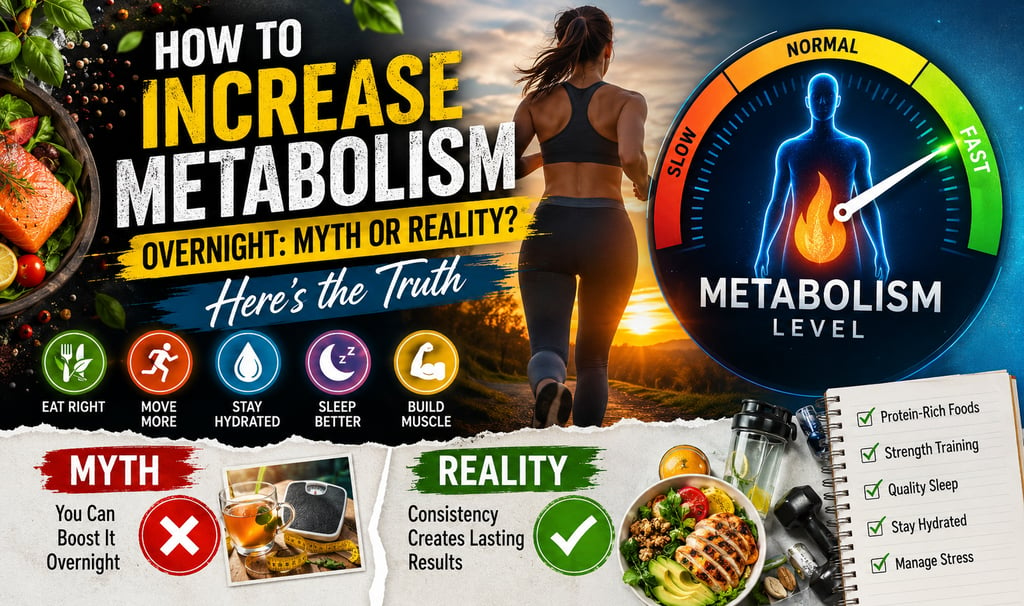
How to Increase Metabolism Overnight: Myth or Reality? Here’s the Truth
In a world captivated by instant results, the search for how to increase metabolism overnight often leads to confusion and disappointment. This blog gently unravels the myth, revealing that metabolism is not a switch to be flipped, but a delicate system shaped by sleep, nutrition, movement, and daily habits. It explores realistic strategies for how to increase metabolism naturally, from optimising rest and hydration to embracing strength training and mindful eating. Rather than chasing fleeting shortcuts, the article encourages a refined, sustainable approach rooted in consistency and balance. With insights into metabolism boosting foods, lifestyle patterns, and hidden factors that slow progress, it offers clarity to those feeling stuck. Ultimately, it reminds readers that true metabolic change is gradual, elegant, and enduring, far removed from the illusion of overnight transformation.
Neha Shukla
6/16/20267 min read
How to Increase Metabolism: The #1 Reason Yours Is Slow (And Fix It Fast)
The search for “how to increase metabolism” naturally has become a modern obsession because when the body feels sluggish and resistant, the confusion is genuinely consuming. Metabolism is the engine converting food into energy, and when it sputters, everything from stamina to waistline suffers quietly.
But here is what nobody states plainly: how to increase metabolism naturally is not an overnight act. It is a craft built slowly and deliberately, day after steady day.
This blog separates the enduring myth from the grounded method with honesty and zero theatre.
Also Read: Top Immune Boosting Foods That Help Strengthen Your Immune System Naturally
How to Increase Metabolism Easily and Effectively?
How to increase metabolism easily begins with rhythm, not reaction - it is built across weeks, not achieved in a single night. Sleep is the foundation sacrificed most readily.
During deep sleep, cortisol retreats, growth hormone rises, and the capacity to increase metabolism peaks. Fragmenting that sleep dismantles every metabolic gain.
Hydration upon waking with 500 ml of cold water forces thermogenic expenditure, compounding beautifully over time. The meal frequency myth deserves burial.
Eating every two hours does not help you increase metabolism naturally. Quality and circadian alignment matter profoundly more.
Circadian rhythm impact: Eating late at night suppresses fat oxidation, making meal timing as metabolically powerful as caloric content when working to increase metabolism naturally.
Meal timing vs calorie timing: Identical calories at breakfast versus dinner produce measurably different hormonal responses; morning eating consistently supports efforts to increase metabolism more effectively.
Metabolism boosting foods eaten in alignment with circadian rhythms amplify thermogenic response organically.
What to eat to increase metabolism is inseparable from when you eat it.
These rhythms bridge naturally into the most actionable question - what belongs on the plate?
Also Read: Probiotic Supplements For Gut health: Identifying Side Effects, Diets, And Its Cure
What Are the Foods That Increase Metabolism and Burn Fat?
To increase metabolism through food, the Thermic Effect of Food is the anchoring concept. Protein burns up to 30% of its own caloric value during digestion, making protein-first eating the most accessible, powerful food-level strategy to increase metabolism in any ordinary kitchen.
Foods that increase metabolism and burn fat begin with protein-rich sources - eggs, lentils, and salmon demand harder digestive effort whilst preserving lean muscle, the tissue most responsible for a higher resting metabolic rate.
Thermogenic foods, including raw ginger, chillies, and green tea, contain capsaicin and EGCG that gently accelerate caloric expenditure. Gut health foods such as kefir and kimchi cultivate the microbiome governing efficient energy production.
Turmeric with black pepper is one pairing of enduring elegance - piperine amplifies curcumin absorption by nearly 2,000%, turning a humble spice duo into a genuine metabolic event.
Metabolism boosting foods work most powerfully when combined with intention. Think of the plate as a composed metabolic strategy, not an accident, and the bridge into daily lifestyle optimisation becomes entirely natural.
Also Read: Probiotic for Digestive Health: 10 Powerful Benefits Your Gut Will Thank You For
How Can I Boost My Metabolism?
How can I boost my metabolism is the decade's most searched wellness question, and the answer lives unglamorously in ordinary daily architecture. NEAT - Non-Exercise Activity Thermogenesis - commands a remarkable share of daily caloric expenditure.
Every staircase climbed, every standing call, every walk to refill water collectively burns far more than most estimate.
In active individuals, NEAT accounts for up to 350 additional calories burned daily. Knowing how to increase metabolism through micro-movement requires only daily awareness.
Daily Habits That Silently Slow Metabolism
The answer to why is my metabolism slow hides in the unremarkable:
Chronic stress hormones elevate cortisol, directing abdominal fat storage and suppressing the thyroid - the master governor of how to increase metabolism across every cell.
Poor sleep cycles dismantle the hormonal conditions necessary to increase metabolism during rest and overnight recovery.
Under-eating triggers metabolic adaptation - the body interprets prolonged scarcity as famine and protectively reduces all energy expenditure.
Sedentary postures suppress lipoprotein lipase, the fat-metabolism enzyme active hour by hour.
Quick Fixes vs Sustainable Metabolic Changes
Detox teas and extreme fasting borrow metabolic energy from tomorrow to fund today's illusion. Weight shed in severe restriction is predominantly water and muscle - precisely the tissue sustaining a higher resting metabolism.
To increase metabolism sustainably is unglamorous, consistent, and compoundingly rewarding over months.
Also Read: Top 10 Sources of Protein For Muscle Growth
How to Increase Metabolism for Weight Loss?
How to increase metabolism for weight loss is not about eating less at any cost. A deficit of 300 to 500 calories below daily maintenance is the most intelligent range - deep enough to drive fat loss, shallow enough to preserve the metabolic engine.
Protein intake of 1.6 to 2.2 grams per kilogram of bodyweight is non-negotiable to increase metabolism and protect lean tissue. Refeed days - periodic returns to maintenance calories - restore leptin and prevent adaptive slowdown.
How to increase metabolism for weight loss naturally lives in a composed daily rhythm: protein within thirty minutes of waking, a balanced midday meal, dinner before 7:30 PM, and eight protected hours of sleep.
That cadence, held with quiet discipline, builds lean muscle, the body's most enduring metabolic asset.
Also Read: What Are Probiotics For Gut Health?
What Are the Top Strength Training Methods to Adopt to Increase Metabolism?
Muscle is metabolically expensive tissue. Each pound of lean muscle burns approximately six calories per day at rest versus two for fat.
Strength training is the most enduring method to increase metabolism and the most durable long-term investment in metabolic health available to anyone.
Best Compound Exercises
Squats recruit quadriceps, hamstrings, glutes, and core simultaneously - one of the most complete compound ways to increase metabolism through deliberate movement.
Deadlifts engage the entire posterior chain, commanding more muscle fibre activation than almost any other lift in existence.
Push exercises including bench press and overhead press stimulate testosterone and growth hormone, both essential to increase metabolism at rest over time.
Weekly Training Split for Beginners
Day 1: Lower body - squats, lunges, Romanian deadlifts.
Day 2: Upper body push - bench press, overhead press, dips.
Day 3: Rest or light walking.
Day 4: Upper body pull - rows, pull-ups, face pulls.
Days 5 to 7: Full-body session, then active recovery.
Why Muscle Increases Resting Metabolism
Basal Metabolic Rate rises proportionally with lean muscle mass. Progressive overload - consistently demanding slightly more each session - drives that growth.
Rest periods of sixty to ninety seconds maximise hormonal stimulus, progressively elevating resting metabolic rate and making strength training the enduring cornerstone of how to increase metabolism for a lifetime.
Also Read: Weight Loss Exercise: Routines, Workouts, And Training - Everything You Need To Know
Why Is My Metabolism Slow?
Hormonal imbalance - Hypothyroidism, insulin resistance, and elevated cortisol suppress how to increase metabolism in compounding, distinct ways.
Age-related muscle loss - Lean mass declines roughly one per cent annually after thirty without resistance training.
Chronic dieting history - Years of severe restriction produce metabolic adaptation, a measurable downregulation the body defends stubbornly.
Gut microbiome disruption - An imbalanced microbiome makes it harder to increase metabolism even with a sound diet in place.
Nutrient deficiencies - Low iron, vitamin D, magnesium, and B12 compromise the mitochondrial function underpinning every metabolic process.
What Unhealthy Foods to Avoid to Increase Metabolism?
Certain unhealthy foods actively dismantle metabolic machinery - the direct antithesis of how to increase metabolism naturally. Ultra-processed foods disrupt the gut microbiome, spike insulin, and ignite inflammatory pathways that suppress fat burning.
Swap them for whole grains and fermented alternatives. Sugary drinks train hormonal pathways toward fat storage; replace with unsweetened green tea.
Trans fats impair mitochondrial efficiency - avocado, extra virgin olive oil, and raw nuts honour rather than sabotage the body's capacity to increase metabolism naturally every day.
Also Read: Best Cardio for Fat Loss at Home: Easy Workouts That Burn More Calories
The Truth About Overnight Metabolism Boosting
There is no honest mechanism by which metabolism transforms meaningfully in a single night. How to increase metabolism in any lasting sense - how to make your metabolism fast naturally is the patient's work of months accumulated into seasons.
What can happen overnight is preparation: a protein-rich dinner consumed early, a screen-free evening protecting deep sleep architecture.
These quiet, compounding decisions are the true foundation. Every genuine effort to increase metabolism rests upon them.
Also Read: Yoga for Stress Relief: Transform Your Mood in Just 10 Minutes a Day
Conclusion
Learning how to increase metabolism is never a single dramatic act. It is a thousand small, deliberate choices compounding silently across a lifetime. Surrender the shortcuts. Embrace the rhythm. The body rewards consistency with an enduring vitality that no overnight promise ever genuinely could.
FAQs
What blocks your metabolism?
Ans: Chronic stress, sleep deprivation, severe caloric restriction, thyroid dysfunction, and ultra-processed diets are the principal culprits. Each disrupts the hormonal pathways governing how to increase metabolism naturally, and each responds measurably to deliberate, sustained lifestyle correction over time rather than short-term intervention.
What's the hardest age to lose weight?
Ans: Most people experience the sharpest resistance in their forties, when hormonal shifts and declining muscle mass converge. Strategic resistance training and adequate protein intake restore significant metabolic capacity at any decade, provided the consistency is genuine and the effort is sustained across meaningful stretches of time.
What is the 30 30 30 rule for weight loss?
Ans: The 30 30 30 rule involves thirty grams of protein within thirty minutes of waking, followed by thirty minutes of low-intensity movement. This sequence stabilises blood sugar, initiates thermogenesis, and creates hormonal conditions most favourable to fat loss and a supported metabolism throughout the rest of the day.
What are signs of slow metabolism?
Ans: Persistent fatigue unresolved by sleep, stubborn weight despite sensible eating, consistently feeling cold, sluggish digestion, dry skin, and low mood are telling signals. These collectively reflect why is my metabolism slow and typically respond well to improvements in sleep quality, protein intake, and consistent strength training over time.
What is the 3 4 law of metabolism?
Ans: Rooted in biological scaling research, the 3/4 law holds that metabolic rate scales to the three-quarters power of body mass across species. It explains why individual metabolic rates vary and reinforces why building lean muscle - the most controllable metabolic variable available - remains the most reliable long-term strategy to increase metabolism naturally.
About The Author
Neha Shukla is a writer and LinkedIn creator who demystifies wellness for modern lives. She writes about nutrition, mindfulness, and sustainable habits, grounded in research, infused with real-world wisdom. Her mission is to help you feel better without feeling overwhelmed.



Contact
Don't Let Your Wellness Journey Feel Boring! Get connected with us today to know your health better.
Phone
hello@nehashuklaa@gmail.com
+91 92110 33284
© 2026. All rights reserved.