
What Is a Seizure? A Comprehensive Guide to Symptoms, Causes, and Care
Understanding what is a seizure can replace fear with confidence when faced with a medical emergency. This guide explains what is a seizure in simple, practical terms, explores the different types, highlights early warning signs, and discusses the most common causes. It also provides clear advice on recognising seizure symptoms, offering first aid during seizure, and understanding modern seizure treatment options. Readers will learn why not every seizure is linked to epilepsy, how long seizures typically last, and when urgent medical care is needed. Alongside medically accurate information, the guide offers compassionate insights for caregivers, helping them respond calmly and safely during a seizure. Whether you are supporting a loved one or simply expanding your health knowledge, this comprehensive resource empowers you to recognise what is a seizure and take informed, reassuring action when it matters most.
Neha Shukla
6/30/20267 min read
What Is a Seizure and How Does It Happen?
Understanding what is a seizure transforms fear into confidence. Rather than viewing the event through myths or alarming stories, it helps to recognise the medical reality behind it. A seizure is not always dramatic, nor does it always mean someone has epilepsy. It can appear in many different forms, with equally varied causes.
Learning what is a seizure, recognising its warning signs, and knowing how to respond calmly can make a remarkable difference to a person's safety and recovery.
This guide explains what is a seizure in clear, practical language while exploring symptoms, causes, treatment options, and essential care, empowering you with knowledge that truly matters.
Also Read: Depression symptoms - why people are suffering from it?
What is a seizure?
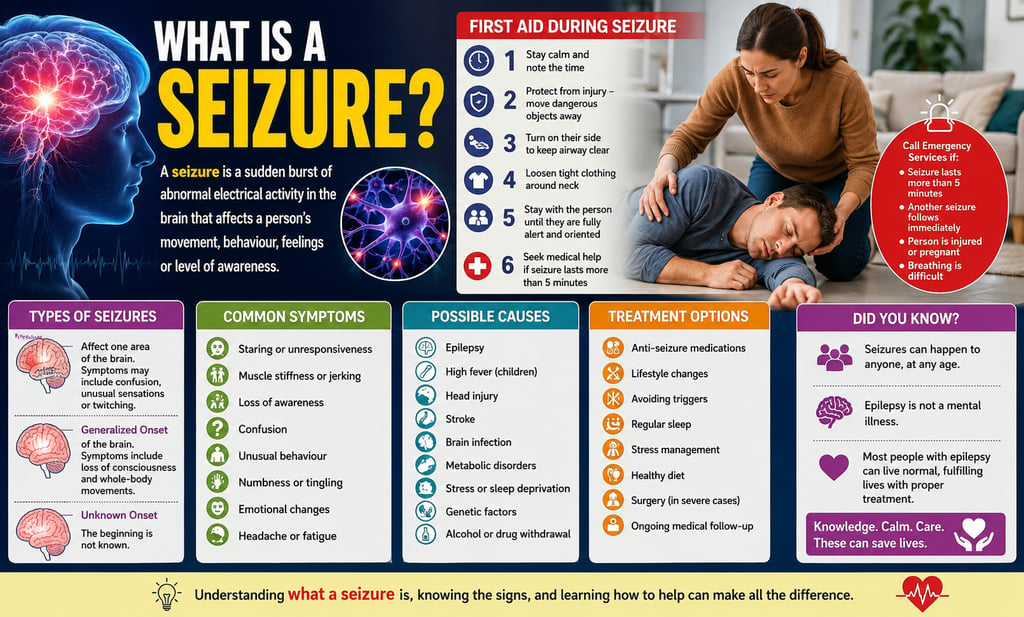
What is a seizure, asked in the truest medical sense, refers to a sudden, uncontrolled surge of electrical activity within the brain, a momentary storm that disrupts the orderly signalling between neurons. The seizure pronunciation is straightforward, "see-zher", yet the word carries weight far beyond its two syllables.
The seizure meaning in medical literature describes a transient disturbance of brain function that may alter movement, awareness, sensation, or behaviour depending on which region is affected.
A common misconception holds that every seizure looks like dramatic convulsing on the floor. In truth, what is a seizure can range from a barely visible flicker of the eyelids to full body shaking.
Another myth suggests seizures always indicate seizure epilepsy, yet a single seizure does not automatically mean someone lives with epilepsy. Epilepsy is diagnosed only when seizures recur without an obvious provoking event.
Grasping what is a seizure as a symptom rather than a standalone illness reshapes how families, teachers, and colleagues respond when one occurs nearby, and this distinction bridges naturally into recognising the earliest warning signs.
Also Read: Breast Cancer Symptoms: How to Spot the Signs Early and Stay Safe
What are the first signs of a seizure?
Long before the visible event, the brain often whispers its intentions through subtle, easily dismissed cues, a phase that is just as much part of what is a seizure as the dramatic moment itself.
This early window, sometimes called a prodrome or an aura, can last minutes or even days, and recognising it is one of the most underappreciated skills in seizure awareness.
Understanding what is a seizure at this earliest stage gives families a genuine head start on safety.
Subtle warning cues to notice
A creeping sense of déjà vu or unfamiliar dread without explanation.
Unusual tingling, numbness, or a metallic taste in the mouth
Sudden irritability, anxiety, or a flat, distant stare
Repetitive lip smacking, fidgeting, or aimless wandering
Visual disturbances such as flashing lights or blurred edges
A wave of fatigue or heaviness disproportionate to the moment
These seizure symptoms are often mistaken for tiredness or stress, which is precisely why families miss them until the pattern becomes familiar, and why learning what is a seizure in its earliest form matters so much.
Once recognised, this stage allows someone to sit down, move away from stairs or sharp furniture, or alert a nearby adult, small actions carrying outsized protective value, and this awareness leads directly into the question of why these episodes happen at all.
Also Read: Heart Attack Symptoms - What Are The Early Signs To Look For?
What is a cause of a seizure?
Pinpointing what is a cause of a seizure requires looking beneath the surface, because the brain's electrical misfire behind what is a seizure rarely has one tidy explanation.
Seizure causes generally fall into several broad families, and distinguishing between them is part of properly answering what is a seizure for any given individual, since the trigger shapes the entire treatment conversation that follows.
Common categories behind seizure causes
Genetic influences: inherited tendencies that lower the brain's threshold for electrical disruption.
Metabolic imbalances: low blood sugar, sodium disturbances, or kidney and liver dysfunction.
Traumatic injury: head trauma from falls, accidents, or sporting impact.
Infections: meningitis, encephalitis, or high fever in young children.
Structural changes: scarring, tumours, or malformations within brain tissue.
Withdrawal triggers: abrupt cessation of alcohol or certain prescribed medications
A solitary seizure, perhaps from a fever spike or extreme sleep deprivation, differs considerably from seizure epilepsy, where the brain repeatedly generates seizures without an identifiable provoking event, a nuance that often gets lost when people ask what is a seizure without distinguishing isolated episodes from a chronic pattern.
This distinction matters enormously, as it determines whether ongoing seizure treatment becomes part of someone's long term routine or remains a one off precaution, a difference that bridges naturally into the practical question of how to respond when an episode unfolds in front of you.
Also Read: Reason for High Blood Pressure: Causes, Symptoms & Natural Ways to Control It
How to manage a seizure?
This is the section that matters most when the moment actually arrives, when instinct competes with information and only practised knowledge wins. Genuine first aid during seizure is less about heroics and more about quiet, deliberate stillness.
Understanding what is a seizure at the level explained earlier is precisely what makes this calm, deliberate response possible.
Steps that protect and reassure
Anyone who understands what is a seizure can follow these steps with confidence rather than panic.
Ease the person gently to the ground if they are standing, cushioning the head with something soft.
Clear away nearby furniture, glassware, or anything with sharp edges.
Turn the individual onto their side once shaking eases, allowing saliva to drain safely.
Loosen tight clothing around the neck to support easy breathing.
Stay close, speak in a low and steady voice, and begin timing the episode discreetly.
Remain present until full awareness returns, offering orientation and warmth rather than rapid fire questions.
What not to do during a seizure
Never restrain the limbs or attempt to stop the movements.
Never place anything inside the mouth, the tongue cannot be swallowed and this myth causes injury.
Never offer water, food, or medication until the person is fully alert.
Avoid crowding the individual with too many voices or flashing phone cameras.
Bridging this practical guidance back to what is a seizure matters, because every action above only makes sense once the underlying nature of the event, a temporary electrical storm rather than a conscious choice, is genuinely understood.
Calm care follows naturally once panic is replaced with comprehension, and this naturally leads into how ongoing care is managed over the longer term.
Also Read: Is It Just Stress, or Something More? Recognising the Signs of a Panic Attack
What is the main treatment for seizures?
Modern seizure treatment has moved far beyond the rigid approach of earlier decades, and answering what is a seizure for a specific patient is the first step any neurologist takes before recommending a plan.
Anti seizure medications remain the cornerstone, carefully matched to the individual's seizure type and tolerated through gradual dose adjustments.
For some, a single medication brings complete control, while others require a thoughtful combination tailored over months.
Recognising what is a seizure as a uniquely individual neurological event explains why no single treatment suits everyone equally. Beyond pharmaceuticals, lifestyle adjustments play a quietly powerful role.
Consistent sleep patterns, stress management, and avoidance of known personal triggers, flashing lights for some, alcohol for others, often reduce frequency meaningfully.
Dietary approaches, particularly the ketogenic diet, have shown genuine promise for certain treatment resistant cases, especially in children.
Surgical intervention and neurostimulation devices remain options reserved for carefully selected situations where medication alone proves insufficient, and this brings the conversation neatly to the practical matter of timing, since duration itself carries clinical weight.
Also Read: Yoga for Stress Relief: Transform Your Mood in Just 10 Minutes a Day
How long does a seizure last?
Most seizures are mercifully brief, typically resolving within thirty seconds to two minutes, a duration that surprises many people once they truly grasp what is a seizure in physiological terms. What follows, the post ictal phase, often stretches considerably longer and deserves equal attention.
During this recovery window, confusion, slurred speech, profound tiredness, and temporary weakness are entirely normal, sometimes lasting anywhere from several minutes to a few hours.
Timing the episode itself carries genuine medical weight. A seizure lasting beyond five minutes, or a second seizure occurring before full recovery from the first, signals a condition called status epilepticus, a circumstance demanding urgent attention.
This single act of glancing at a clock often becomes the most valuable contribution a bystander makes, bridging ordinary care into something that genuinely protects life, and it brings the entire picture of what is a seizure full circle, from recognition through response to recovery.
Also Read: Why Do I Sweat So Much? Causes, Symptoms, and Effective Treatments Explained
Conclusion
Understanding what is a seizure transforms fear into capable, gentle action. Preparation, patience, and genuine empathy matter as much as clinical knowledge. Seizures remain unpredictable, yet informed care brings safety and dignity to an overwhelming moment, reminding everyone present that calm hands and steady hearts truly do make all the difference.
FAQs
How do you feel after a seizure?
Ans: Answering what is a seizure fully means including the aftermath too. The post ictal phase often brings deep confusion, exhaustion, and gaps in memory regarding the event itself. Some individuals experience headaches, sore muscles, or temporary weakness on one side. Speech may feel sluggish, and full mental clarity can take anywhere from minutes to several hours to return completely.
How long does a seizure last?
Ans: Understanding what is a seizure in terms of duration matters greatly. Most seizures last between thirty seconds and two minutes, followed by a longer recovery period. Anything extending beyond five minutes, or repeated seizures without recovery between them, constitutes status epilepticus, a genuine emergency requiring immediate intervention.
Can stress cause a seizure?
Ans: Emotional and physical stress can lower the brain's seizure threshold, making an episode more likely in susceptible individuals. Sleep deprivation, exhaustion, and heightened anxiety often compound this effect. Managing stress through consistent routines and relaxation practices forms a meaningful, often underestimated part of seizure prevention strategies.
How to avoid seizures?
Ans: Consistent medication adherence remains fundamental, alongside regular sleep, balanced nutrition, and avoidance of personally identified triggers such as flashing lights or alcohol. Routine check ins with a neurologist allow timely adjustments. Small, disciplined lifestyle habits collectively reduce frequency far more than occasional, inconsistent efforts ever could.
Can you live a long life with seizures?
Ans: Absolutely, countless individuals lead full, vibrant, and remarkably ordinary lives alongside seizure management. With appropriate treatment, supportive relationships, and informed self care, most people achieve significant control over their condition. Hope, structure, and community support make long term wellbeing a genuinely realistic outcome.
About The Author
Neha Shukla is a writer and LinkedIn creator who demystifies wellness for modern lives. She writes about nutrition, mindfulness, and sustainable habits, grounded in research, infused with real-world wisdom. Her mission is to help you feel better without feeling overwhelmed.



Contact
Don't Let Your Wellness Journey Feel Boring! Get connected with us today to know your health better.
Phone
hello@nehashuklaa@gmail.com
+91 92110 33284
© 2026. All rights reserved.