
Pneumonia Symptoms: Ignoring These Signs Could Cost You More Than Your Health
Pneumonia symptoms often begin subtly, presenting as a mild cough, fatigue, or slight breathlessness that many people dismiss as a routine illness. However, these early signs can quickly progress into a more serious condition if ignored. This blog explores how pneumonia develops, what causes pneumonia, and the different types of pneumonia, including viral pneumonia. It highlights how pneumonia symptoms vary across age groups, especially in adults and the elderly, where they are frequently overlooked. The article also explains the stages of pneumonia, treatment options such as antibiotics for pneumonia, and why timely diagnosis is crucial. Alongside medical insights, it offers practical recovery strategies and daily care tips. Recognising pneumonia symptoms early can prevent complications, support faster healing, and ultimately protect your overall health from long-term consequences.
6/15/20267 min read
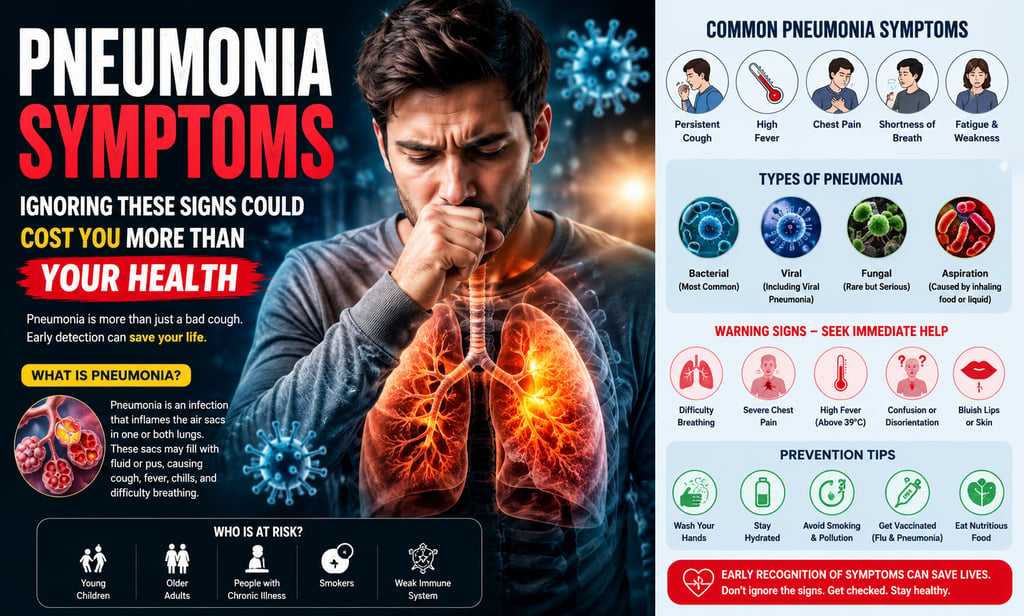
Understanding Pneumonia Symptoms: From Early Detection to Recovery
A neighbour once dismissed a stubborn winter cough for eleven days, convinced the body would sort itself out. On the twelfth morning, an ambulance was called. The diagnosis was advanced bilateral pneumonia; the delay had turned something treatable into a three-week hospital stay. Pneumonia symptoms rarely arrive wearing a warning. They borrow the face of something ordinary, and that disguise is precisely what makes them costly to ignore.
The elderly, the very young, and the immunocompromised carry the steepest risks, but no adult is truly exempt. Catching pneumonia symptoms early is not overcaution; self-preservation demands nothing less.
Also Read: Think It’s Just a Fever? These Dengue Symptoms Say Otherwise
What are the symptoms of pneumonia?
Across a quiet but dangerous continuum, pneumonia symptoms unfold in tiers, and the earliest is precisely where most people lose precious time.
Early pneumonia symptoms
Dry cough persisting beyond five days
Low evening fever that retreats by morning
Fatigue heavier than ordinary tiredness, unrelieved by rest
Faint chest tightness on deep inhalation
Moderate pneumonia symptoms
Cough producing rust-coloured or yellow-green mucus
Fever above 38.5°C with shaking chills
Breathlessness during previously effortless activity
Sharp chest pain deepening on inhalation
Severe pneumonia symptoms
Visibly laboured breathing, neck muscles visibly straining
Blue or grey tinge at the lips or fingernails
Sudden confusion, particularly in older adults
Oxygen saturation falling below 93%
A cold settles in the nose and throat; influenza brings full-body agony. Unlike a cold or flu, pneumonia symptoms embed deep in the chest and worsen progressively, never plateauing by day three.
Also Read: Top Immune Boosting Foods That Help Strengthen Your Immune System Naturally
What are the symptoms of pneumonia in adults?
Recognising general pneumonia symptoms is the foundation; understanding how they shift across age groups is what transforms that awareness into timely action. Adult life creates fertile ground for delayed recognition, because professional pressures override the body's earliest signals.
Symptoms in working adults
In adults aged thirty to fifty-five, pneumonia symptoms masquerade as burnout. The cough is blamed on a dry office, the fever on overwork. What distinguishes pneumonia symptoms from fatigue is their refusal to improve after a full rest weekend, and breathlessness on climbing a single flight of stairs.
Symptoms in elderly individuals
Beyond sixty-five, pneumonia symptoms confound even experienced carers. Fever may be absent, the cough suppressed. Dominant signals are sudden confusion, an unexplained fall, or quiet withdrawal from food. Some elderly patients run subnormal temperatures, making pneumonia in this group a matter for clinical review rather than watchful waiting.
What is pneumonia?
Pneumonia is an acute infection inflaming the alveoli, those microscopic air sacs responsible for the lungs' essential gas exchange.
What happens inside the lungs during Pneumonia?
Under normal conditions, alveoli inflate and deflate elastically. When infection establishes, they fill with fluid and pus, losing both elasticity and gas-exchange capacity; the tissue acquires a waterlogged density incompatible with breathing.
Why oxygen levels drop in Pneumonia?
Accumulated fluid creates a barrier between inhaled air and surrounding blood vessels. The brain registers the deficit and drives the respiratory muscles harder, which is precisely why breathlessness ranks among the defining pneumonia symptoms.
What is pneumonia and is it dangerous? Globally, pneumonia ranks among the leading infectious causes of adult death, yet early recognition of pneumonia symptoms sees the overwhelming majority recover fully. The danger resides in the delay, never the diagnosis itself.
Also Read: Probiotic Supplements For Gut health: Identifying Side Effects, Diets, And Its Cure
What are different types of pneumonia?
Knowing which of the types of pneumonia is present is not an academic exercise; each carries distinct pneumonia symptoms and demands a correspondingly different treatment approach.
Bacterial pneumonia
Bacterial pneumonia, caused most commonly by Streptococcus pneumoniae, presents with sudden high fever, rigors, and rust-coloured sputum; it responds decisively to antibiotics for pneumonia without delay.
Viral pneumonia
Viral pneumonia develops gradually, with dry cough and profound fatigue as the headline pneumonia symptoms. Antibiotics for pneumonia carry no efficacy here; treatment is supportive and antiviral in high-risk patients.
Fungal pneumonia
Fungal pneumonia appears almost exclusively in those with suppressed immunity, its pneumonia symptoms unfolding over weeks: chronic cough, night sweats, and progressive weight loss.
Aspiration pneumonia
Aspiration pneumonia arises when food, liquid, or stomach acid enters the lungs, producing pneumonia symptoms resembling bacterial pneumonia but with a slower, more insidious onset in those with swallowing dysfunction.
Also Read: Probiotic for Digestive Health: 10 Powerful Benefits Your Gut Will Thank You For
What are the main causes of pneumonia?
The neighbour from the opening had spent two weeks in a poorly ventilated office during a respiratory virus season. That detail tells the essential story of what causes pneumonia.
Infections
What causes pneumonia is a pathogen overwhelming the respiratory defences: Streptococcus pneumoniae leads the bacterial category; influenza and RSV lead the viral.
Weakened immunity
What causes pneumonia to take hold in nominally healthy adults is transient immune suppression: a preceding viral illness, prolonged steroid use, or chronic sleep disruption each create the opening a pathogen requires.
Environmental exposure
Polluted air and industrial dust erode the mucociliary lining, stripping the lung's first line of defence. Daily diaphragmatic breathing keeps the lower lobes ventilated and inhospitable to colonisation; an elementary measure almost universally overlooked.
Also Read: Top 10 Sources of Protein For Muscle Growth
What are the 4 stages of pneumonia?
With the causes established, the next question is how the condition progresses once it takes hold. Pneumonia unfolds in four stages, each altering the character of pneumonia symptoms in ways that matter clinically.
Stage 1: Congestion
Within forty-eight hours, infectious exudate floods the alveoli. In this opening stage, pneumonia symptoms wear a mild disguise: an emerging cough, low fever, and a heaviness easily mistaken for a cold.
Stage 2: Red hepatization
Days two to four see alveoli solidify with red blood cells and fibrin. Here, pneumonia symptoms intensify without mercy: fever spikes, breathing becomes laboured, chest pain sharpens with each inhale.
Stage 3: Grey hepatization
Days four to eight bring grey consolidated tissue as red cells degrade. Persistent breathlessness and bone-deep fatigue define the pneumonia symptoms here.
Stage 4: Resolution
Enzymatic activity gradually dissolves accumulated debris. Over days to weeks, pneumonia symptoms soften as the alveoli clear, though a residual cough may linger a full month beyond clinical recovery.
Also Read: Reason for High Blood Pressure: Causes, Symptoms & Natural Ways to Control It
How long do lungs heal after pneumonia?
Recovery is rarely the swift affair a newly discharged patient imagines.
Timeline for mild, moderate, and severe cases
Mild pneumonia resolves in two to three weeks. Moderate cases need four to six weeks. Severe pneumonia can leave lungs requiring three to six months to reclaim full function.
Factors affecting healing
Age: older tissue clears debris more slowly
Pre-existing conditions such as COPD or asthma
Whether bacterial or viral pneumonia was involved
Nutritional status throughout recovery
Elevate the torso at thirty degrees during sleep to prevent fluid pooling. Warm broths and ginger teas outperform cold water, which provokes bronchospasm in inflamed airways.
Also Read: What Are Probiotics For Gut Health?
Warning Signs You Should Never Ignore
Attend hospital immediately if any of the following pneumonia symptoms appear:
Breathing rate exceeding thirty cycles per minute
Lips or fingernails turning blue or grey
Fever above 39.5°C that will not yield to antipyretics
Chest pain making a full breath impossible
Sudden confusion or failure to recognise familiar surroundings
Oxygen saturation below 92% on a pulse oximeter
Coughing up blood
Treatment Options You Can TRY
Antibiotics for pneumonia are definitive for confirmed bacterial cases. Amoxicillin remains first-line for community-acquired presentations; macrolides serve those with allergies or atypical organisms.
Why they do not work for viral cases
Antibiotics for pneumonia are biologically inert against viruses, which lack the structures these drugs target. Prescribing them for viral pneumonia delivers no clinical benefit and accelerates resistance. Rest, hydration, and targeted antivirals are the correct course.
Also Read: What Are the Symptoms of Diabetes And How To Prevent Them?
Is Pneumonia Contagious?
Is pneumonia contagious? Bacterial pneumonia spreads through respiratory droplets; a healthy immune system usually neutralises the pathogen before infection establishes. Viral pneumonia is more transmissible in enclosed, poorly ventilated spaces.
Aspiration and fungal pneumonia are not contagious. Pneumococcal and influenza vaccination alongside rigorous hand hygiene remain the most reliable preventive measures.
Practical Daily Care Plan Most Articles Miss
Hydration: warm broths and honey-laced herbal teas. Cold water can provoke bronchospasm in inflamed airways.
Positioning: elevate the torso to thirty degrees. Lying flat pools fluid in the lower lobes and worsens breathlessness.
Breathing techniques:
Diaphragmatic breathing: inhale for four counts, exhale through pursed lips for six; ten repetitions every waking hour.
Use an incentive spirometer hourly if available.
Diet tips:
High-protein foods to sustain immune cell production
Anti-inflammatory additions: turmeric, ginger, garlic
Small frequent meals; a full stomach compresses the diaphragm
Also Read: Think It’s Just a Fever? These Dengue Symptoms Say Otherwise
Conclusion
Pneumonia symptoms speak in a register most people are not trained to hear until the volume becomes impossible to ignore. Catching them early, understanding the type of pneumonia at work, and responding precisely is not overcaution; that decisive act is the most consequential a person can make for their continued health.
FAQs
What is the danger level of pneumonia?
Ans: Pneumonia ranges from mild outpatient illness to a life-threatening emergency. The very young, those beyond sixty-five, and those with chronic conditions face the gravest risk of pneumonia symptoms progressing into sepsis or respiratory failure. Early recognition dramatically reduces the probability of reaching that critical threshold.
What to avoid with pneumonia?
Ans: Avoid smoking, alcohol, cold air, and exertion during the acute phase. Stopping antibiotics for pneumonia mid-course is equally damaging. Cough suppressants block mucus clearance and prolong infection. These are the most common drivers of avoidable relapse in those recovering from pneumonia at home.
What are the four danger signs of pneumonia?
Ans: The four cardinal pneumonia danger signs are: breathing rate above thirty per minute, oxygen saturation below 92%, sudden confusion or altered consciousness, and systolic blood pressure below 90 mmHg. Any one of these pneumonia symptoms signals an emergency requiring immediate hospital assessment.
Can you recover 100% from pneumonia?
Ans: The majority of otherwise healthy adults recover fully, with lung function returning within six to twelve weeks. Severe cases may leave minimal scarring rarely affecting daily life. Completing antibiotics for pneumonia as prescribed, strict rest, and daily breathing exercises remain the most reliable path to complete restoration.
What is the root cause of pneumonia?
Ans: Pneumonia is caused by bacterial, viral, or fungal pathogens overwhelming the lungs' defences. What causes pneumonia to establish itself is pathogen virulence combined with a host whose immunity is diminished by age, preceding illness, or prolonged exposure to environmental airway irritants damaging the mucociliary lining.
About The Author
Neha Shukla is a writer and LinkedIn creator who demystifies wellness for modern lives. She writes about nutrition, mindfulness, and sustainable habits, grounded in research, infused with real-world wisdom. Her mission is to help you feel better without feeling overwhelmed.



Contact
Don't Let Your Wellness Journey Feel Boring! Get connected with us today to know your health better.
Phone
hello@nehashuklaa@gmail.com
+91 92110 33284
© 2026. All rights reserved.