What are the first period symptoms?
Puberty is a unique journey, and every girl experiences first period symptoms differently. Recognising the early physical and emotional changes, from breast development and white vaginal discharge to mood swings and mild period cramps, can help girls feel more confident and prepared for their first period. This guide explains the common signs of first periods, outlines the menstrual cycle and its phases, and offers practical advice on tracking periods, managing self-care, supporting emotional wellbeing, and knowing when to seek medical advice. It also dispels common myths, highlights lesser-known changes, and provides helpful checklists for parents and caregivers. Understanding first period symptoms through accurate, evidence-based information encourages open conversations, reduces anxiety, and empowers girls to embrace this natural stage of growing up with confidence and reassurance.
Neha Shukla
7/27/20266 min read
First Period Symptoms: A Complete Guide for Girls and Parents
Every girl's first period arrives at its own pace because puberty develops differently for everyone. Some notice several signs of first periods months beforehand, while others experience only a few subtle changes before their menstrual cycle begins.
Understanding these early signs helps girls feel more confident and allows parents, carers and teachers to provide the right support.
In this guide, you will discover the physical, emotional and practical changes that often appear before menstruation, along with useful tips to make this natural stage of growing up feel much easier to understand.
Also Read: Are You Pregnant? Here are the first month of pregnancy symptoms
What are the symptoms of a girl's first periods?
Before the first period itself arrives, the body sends soft, early messages.
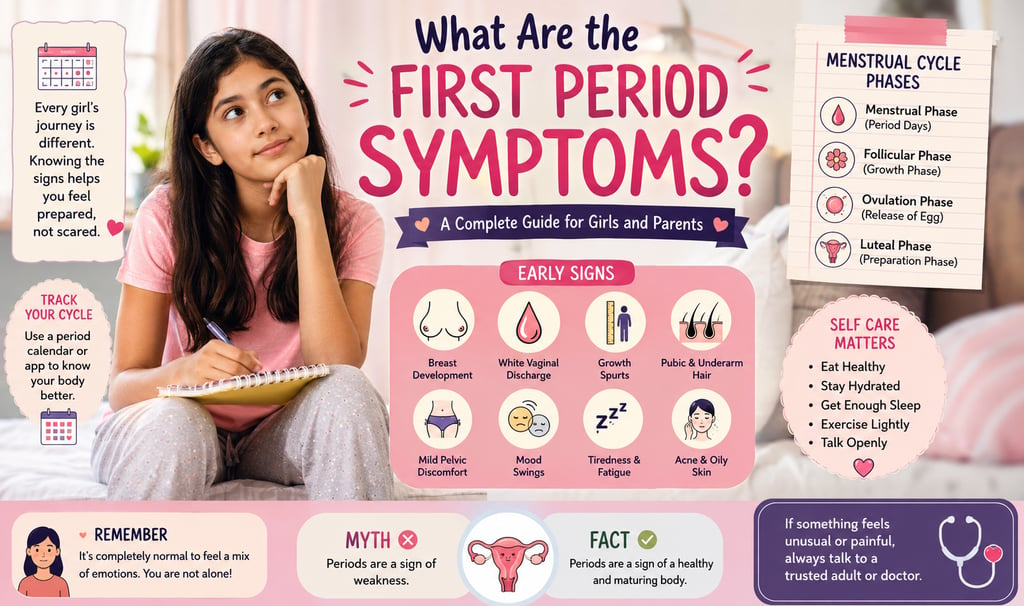
Breast Development
Breast budding is usually the opening chapter, often two to three years before menstruation starts, as rising oestrogen gently reshapes the chest.
White Vaginal Discharge
A milky discharge, sometimes called leucorrhoea, appears months before the first bleed. This is amongst the most classic first period symptoms. Normal discharge stays odourless or mild, while a strong smell or itching is worth noting.
Growth Spurts
Height climbs rapidly, and hips widen. These first period symptoms are part of a broader growth cascade guided by hormone shifts.
Pubic and Underarm Hair
Puberty hormones encourage fine hair to appear, usually alongside the other first period symptoms already mentioned.
Mild Pelvic Discomfort
A faint, dull ache low in the belly appears as the uterus prepares itself, a rehearsal before the real menstrual cycle begins.
Quick Symptom Checklist
Breast tenderness or budding
White or clear discharge
Sudden height or weight changes
Pubic and underarm hair growth
Mild period cramps low in the tummy
These early first period symptoms naturally lead into how a girl actually feels once menstruation itself begins.
Also Read: What Is Masterbation: Insights into Its Psychological and Physiological Effects
How does a girl feel when she gets her first period?
Physical change is only half the story; emotions shift just as dramatically among first period symptoms.
Mood Swings
Fluctuating oestrogen and progesterone can turn laughter into tears within minutes, a completely ordinary part of early PMS symptoms.
Feeling Nervous
Uncertainty about pads, timing, or leaks is common, and this nervousness is one of the most overlooked first period symptoms nobody warns girls about.
Excitement and Curiosity
Many girls feel genuinely proud and curious, welcoming these first period symptoms as proof of growing up.
Increased Sensitivity
Small comments may feel larger than intended, another gentle echo of hormonal movement.
Fatigue
Hormonal shifts can leave girls feeling drained, even after a full night's sleep.
For parents and siblings, the kindest response is a soft voice and reassurance that these feelings are entirely ordinary. Once the emotional picture is clear, the natural next step is seeing how these changes line up on a calendar.
Also Read: How to Get Period Fast at Home: Effective Tips Backed by Science & Tradition
Timeline of first period symptoms before menstruation
Every girl's calendar is unique, yet a loose pattern often unfolds. Two years beforehand, breast budding quietly begins. A year prior, a growth spurt follows. Six months before, discharge increases. Weeks before the first bleed, mood changes surface, and in the final days, mild cramps close the early chapter of first period symptoms.
There was once a girl who noticed her trainers no longer fitted and her jumpers felt oddly tight around the chest, months before she ever saw a spot of blood, proof that the body always whispers long before it speaks. Once this pattern feels familiar, tracking it properly is the next useful skill.
Also Read: What Is Women White Discharge? Meaning, Types & Health Insights
How does a period calendar look?
What is a Period Calendar?
A period calendar is a record of dates, flow, and first period symptoms used to understand a girl's rhythm over time.
What Should Be Recorded?
Start and end dates
Flow intensity
Pain or cramping levels
Mood shifts
Any unusual first period symptoms
Paper Calendar vs Mobile Apps
Some prefer a small paper diary, others favour discreet mobile apps that quietly track the ovulation calendar alongside bleeding days.
When Tracking Becomes Helpful
Tracking becomes especially useful once periods begin, helping identify patterns before irregular periods feel confusing. With tracking established, understanding the phases behind those numbers makes the picture click.
Also Read: How to Get Bigger Breast Naturally: Proven Methods, Diet, and Exercises
What are the different menstrual cycle phases?
Menstrual Phase
The uterine lining sheds, marking the visible bleeding days most associate with periods.
Follicular Phase
The body prepares a new egg while oestrogen quietly rises again.
Ovulation Phase
An egg is released, the most fertile point within the ovulation cycle.
Luteal Phase
Progesterone rises, often bringing familiar PMS symptoms before the cycle restarts, completing the four menstrual cycle phases that repeat once periods settle. Knowing these phases makes it easier to tell an ordinary pattern apart from one needing a second look.
Also Read: Yeast Infection Treatment: Causes, Symptoms, and Effective Remedies You Should Know
Understanding normal versus concerning first period symptoms
Mild cramps, light spotting, gentle mood swings, and slight tiredness are typically ordinary first period symptoms. Fainting, an unusually heavy bleeding period lasting many days, fever, or extremely large clots sit far outside that range, and a family GP visit becomes the sensible next move.
Heavy periods of this kind stay uncommon early on but should never be quietly ignored.
Also Read: Childbirth Normal Delivery: How to Increase Chances of Natural Birth Without C-Section
What can delay a girl's first period?
Genetics
Family patterns often influence timing, as mothers and daughters share similar ages.
Nutrition
Low body fat or inconsistent eating can quietly delay period onset.
Excessive Exercise
Intensive training, particularly in gymnastics or ballet, sometimes postpones the first bleed.
Medical Conditions
Thyroid imbalances occasionally play a role.
Stress
Emotional strain can subtly interfere with hormonal signalling, delaying first period symptoms from appearing on schedule.
Also Read: How to Increase Testosterone Level Naturally (Most Men Ignore These 5 Tricks)
How to console a girl getting her first period?
What Parents Should Say
Simple, warm phrases work beautifully, acknowledging that these first period symptoms are a natural, graceful part of growing up.
What Parents Should Avoid Saying
Avoid dramatic reactions or comparisons to other girls.
School Preparation Tips
A spare pad in a school bag and a quiet word with a trusted teacher ease early anxiety.
Emergency Period Kit
Pads
Spare underwear
Wipes
Small disposal bag
Pain relief, only if appropriate and previously discussed
Discreet little pouch
Also Read: White Discharge During Pregnancy: What’s Normal & What Could Be Dangerous
First period myths every girl should stop believing
Myth: You cannot exercise during your period. Fact: Gentle movement is generally encouraged.
Myth: Periods always arrive exactly every 28 days.
Fact: Early menstrual cycle lengths and first period symptoms vary considerably at first.
Myth: First period symptoms are always painful. Fact: Experiences differ enormously between individuals.
Self care tips during your first period
Staying gently hydrated throughout the day
Enjoying iron rich foods such as leafy greens
Prioritising restful sleep
Choosing soft, comfortable clothing
Light, easy movement like walking
Consistent hygiene habits
Sensible pain relief when genuinely needed
Talking openly about period cramps and premenstrual syndrome with someone trusted
Frequently overlooked first period symptoms many girls experience
Mild bloating around the tummy
Temporary acne along the jawline
Sudden food cravings
A dull lower back ache
Sensitive or reactive skin
Slight digestive changes
Gentle headaches
Subtle shifts in body odour
Every girl experiences these first period symptoms in her own individual combination, never quite identical to another.
Also Read: Imbalance Hormones Symptoms - How Will You Check It? - Every Step Disclosed
Signs your daughter is about to start her period
Watch for breast budding, discharge, mood shifts and a growth spurt arriving together.
How long does a first period last for a 12 year old
Typically between two and seven days, though early cycles often remain wonderfully unpredictable.
First period age 10
Starting at ten is entirely within the normal medical range for many girls today.
Girl period age limit
Most begin between ages nine and fifteen, with genetics guiding the exact timing.
Weird signs your period is coming for the first time
Unexpected cravings, sudden clumsiness, or oddly vivid dreams are quirky, lesser-known first period symptoms some girls report.
Worth noting: pregnancy symptoms, such as nausea or a missed cycle, are entirely unrelated to a girl awaiting her very first period, and a period delay pill holds no relevance here, as such medicine belongs to adult menstrual management.
Also Read: Breast Cancer Symptoms: How to Spot the Signs Early and Stay Safe
Conclusion
First period symptoms unfold differently for every girl, painted in her own unique shades and timing. With gentle preparation, open conversation, and quiet confidence, this graceful milestone becomes something to embrace rather than fear, a beautifully ordinary chapter in growing up.
FAQs
How long does a first period usually last?
Ans: A first period typically lasts between two and seven days, though early cycles are often irregular periods. Flow may be lighter or heavier than expected, and this variation is entirely normal unless bleeding turns excessively heavy or drags on unusually long.
What are the 7 signs of period?
Ans: Common first period symptoms include breast tenderness, white discharge, mild cramps, mood changes, bloating, occasional acne and general fatigue, all appearing gradually as the body readies itself for menstruation.
What can delay your first period?
Ans: Genetics, poor nutrition, intensive exercise, emotional stress and certain health conditions can all quietly delay period onset. Most delays settle naturally, though a noticeably late start beyond typical milestones is worth a family chat with a GP.
How do girls act right before their period?
Ans: Mood swings, heightened sensitivity, tiredness and occasional irritability are common right before menstruation. These emotional first period symptoms stem from hormonal fluctuation and settle once the cycle finds its natural rhythm.
What discharge shows your period is coming?
Ans: Clear or milky white discharge often increases in the months before the first period, driven by rising hormone levels. This is normal unless paired with an unusual odour or persistent discomfort.
About The Author
Neha Shukla is a writer and LinkedIn creator who demystifies wellness for modern lives. She writes about nutrition, mindfulness, and sustainable habits, grounded in research, infused with real-world wisdom. Her mission is to help you feel better without feeling overwhelmed.



Contact
Don't Let Your Wellness Journey Feel Boring! Get connected with us today to know your health better.
Phone
hello@nehashuklaa@gmail.com
+91 92110 33284
© 2026. All rights reserved.