
What Is Cortisol? Understanding Causes, Symptoms, and Balance Higher Cortisol and Lower Cortisol
In a world where stress feels constant and energy often fluctuates, understanding what is cortisol becomes essential for maintaining balance. This blog explores what is cortisol, the hormone responsible for regulating stress, energy, and daily rhythm, and how its imbalance can quietly affect sleep, mood, and overall wellbeing. It uncovers the causes behind higher cortisol, the subtle yet telling symptoms, especially in women, and the often-overlooked impact of modern habits like poor sleep and overstimulation. Moving beyond theory, the guide offers practical, realistic ways to restore harmony, helping lower cortisol levels or gently support lower cortisol when needed. Rather than quick fixes, it focuses on sustainable lifestyle shifts that align with the body’s natural rhythm. By truly understanding what is cortisol, readers can take control of their energy, improve resilience, and create a steadier, more balanced life.
Neha Shukla
6/22/202624 min read
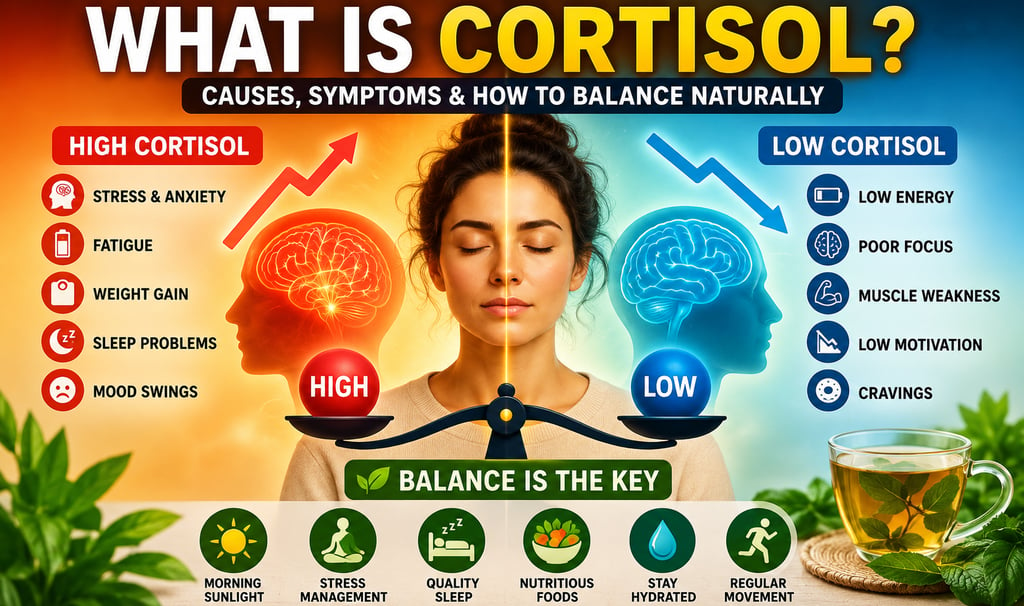
What Is Cortisol and How Do Higher Cortisol and Lower Cortisol Affect Your Body?
The urgency of understanding what is cortisol in the present era comes from a specific modern collision: the body's hormonal architecture evolved for periodic stress and substantial recovery. Contemporary life offers continuous stimulation and negligible rest. In that gap, both higher cortisol and lower cortisol take root, each producing its own catalogue of quiet damage.
This guide moves through every dimension of what is cortisol: its production, its triggers, its distinct expressions in the female body, its ten most telling warning signs, its bearing on the menstrual cycle, and the most grounded methods for restoring the balance that chronic modern life has steadily eroded.
Also Read: Yoga for Stress Relief: Transform Your Mood in Just 10 Minutes a Day
What Is Cortisol?
What is cortisol in biological terms? It is a steroid hormone synthesised from cholesterol in the zona fasciculata of the adrenal cortex, released under instruction from the hypothalamic-pituitary-adrenal axis, and delivered through the bloodstream to virtually every tissue in the body.
The cortisol definition that captures its full significance is this: it is the hormone that governs the body's relationship with time, threat, and energy simultaneously.
Picture the adrenal glands as two small, industrious workshops seated atop the kidneys. Their most consequential daily output is the cortisol hormone, and that output follows a daily rhythm with the reliability of a fine mechanical clock.
Cortisol peaks within 30 to 45 minutes of waking, providing the biochemical momentum that initiates alertness, metabolic readiness, and the capacity to engage with the day.
It declines steadily through the afternoon and reaches its lowest point in the hours before dawn. That arc, when intact, is the foundation on which nearly every other hormonal, metabolic, and neurological rhythm in the body is built.
What is cortisol doing across those hours? The functions of cortisol hormone reach further than most people appreciate:
Mobilising stored glucose from the liver and muscles to fuel the brain and body during any form of stress, whether physical exertion, emotional pressure, or blood sugar fluctuation.
Suppressing biological processes that are non-urgent during a crisis, including digestion, reproductive activity, and certain branches of immune surveillance.
Anchoring the cortisol awakening response, the precise morning surge that the suprachiasmatic nucleus orchestrates to initiate the day's biological momentum.
Regulating the inflammatory response, acting as the body's own anti-inflammatory compound and calibrating the immune reaction to perceived threat.
Communicating with the hippocampus to consolidate memory, calibrate emotional response, and sharpen the threat-detection circuitry that keeps the body responsive to its environment.
Understanding what is cortisol in its full dimension makes one thing immediately clear. The goal is never its elimination. The goal is its restoration to the calibrated, time-anchored rhythm it was designed to follow, the rhythm that most people reading this have, at some point, lost without quite realising when it happened. That loss has causes, and those causes are more specific than "stress".
Also Read: How to Get Better Sleep Naturally: Simple Tips to Improve Sleep Quality Every Night
What Causes Higher Cortisol Levels?
Higher cortisol does not typically arrive in a single identifiable moment. It accumulates. It builds through the persistent layering of habits that seem individually manageable but that collectively keep the adrenal glands in a state of readiness they were never designed to sustain across months and years without interruption.
The body's foundational logic here is important to hold in mind. What is cortisol is a survival signal. Every trigger that elevates it is the body responding, with biochemical precision, to what it reads as a threat.
The problem is never the response itself. The problem is the volume and continuity of the triggers that the modern environment provides, and the complete absence of the resolution that should follow each one.
The well-established causes of higher cortisol deserve more than a list. Each one operates through a specific mechanism:
Chronic psychological pressure: The adrenal glands register no meaningful biological difference between a physical threat and a professional one. Both activate the same cascade through the HPA axis.
And when that cascade runs without resolution, higher cortisol stops being a temporary physiological state and becomes a fixed one. The body holds the alarm open because no signal of safety arrives to close it.
Sleep deprivation: A single night of significantly disrupted sleep elevates morning cortisol by up to 37 percent in otherwise healthy adults. Sustained across weeks, that elevation compounds into a chronic adrenal burden.
The relationship is also bidirectional. Higher cortisol at night disrupts the sleep that would otherwise allow it to decline, producing a cycle that reinforces itself with quiet efficiency.
Overtraining relative to recovery capacity: Exercise produces cortisol by design, because the body treats physical exertion as a metabolic stressor requiring a hormonal response. That response is appropriate and beneficial in measured doses. The threshold is crossed when training frequency and volume outpace the body's capacity to recover between sessions.
Beyond that threshold, the cortisol accumulation from training compounds with the cortisol from everything else, and the net effect is catabolic rather than restorative.
Diets built around refined and processed foods: Ultra-processed foods and refined sugars provoke rapid and repeated insulin surges. Each surge signals metabolic instability, and the adrenal glands respond with a cortisol output that was designed to manage genuine physiological crisis, not the blood sugar fluctuations produced by a poor breakfast.
Across a full day of repeated spikes, the cortisol output is substantial and entirely avoidable.
Two causes that receive far less attention than their prevalence warrants:
Evening consumption of distressing digital content: The brain's threat-detection circuitry, centred in the amygdala, activates in response to perceived danger regardless of whether that danger is proximate or digital. The nervous system has no mechanism for reassigning a threatening stimulus as non-threatening simply because it arrived through a screen.
Consuming distressing content in the hour before sleep activates the same adrenal response as a direct stressor, at precisely the time when cortisol should be at its daily minimum.
Caffeine consumed within the cortisol awakening window: The natural cortisol peak occurs in the 30 to 45 minutes following waking. Consuming caffeine within this window does not add alertness to the body's existing cortisol momentum. It suppresses the natural peak and displaces it into the mid-morning, where it produces the energy trough that most people interpret as a signal to reach for a second cup.
Delaying caffeine until 90 minutes after waking preserves the natural arc and produces measurably more stable energy across the morning without any additional intervention.
Recognising these specific causes converts the management of higher cortisol symptoms from a reactive exercise into a genuinely preventive one.
And the next section answers the question that follows naturally from that recognition: what do those higher cortisol symptoms look like in the female body specifically, where the hormonal stakes are particularly high?
Also Read: What Is Bipolar Disorder? Causes, Symptoms, and Treatment Explained
Symptoms of High Cortisol Levels in Females?
Symptoms of high cortisol levels in females are the most persistently misread signals in women's health, arriving dressed as ordinary modern fatigue, attributed to diet or schedule or the general demand of a full life, and left unexamined for precisely that reason.
That misattribution means the cortisol level continues its quiet disruption unchecked, often for years.
To understand what is cortisol doing to the female body specifically, a specific portrait is useful. A woman in her mid-thirties. Nothing in her diet has changed meaningfully, yet something has gathered around her middle, firm and new and resistant to any adjustment.
She wakes between 2 and 4 in the morning with an uncomfortable alertness, lies in the dark for an hour, and returns eventually to a sleep that does not restore her.
Her skin has thinned. A bruise from three weeks ago has not yet resolved. Her patience, previously a dependable quality, has developed an unpredictable edge that surprises her as much as anyone else.
She has attributed all of it to being busy. The one thing she has not examined is her cortisol level.
The specific signals of elevated high cortisol in women:
Central abdominal weight that resists every dietary effort: The cortisol hormone instructs adipose tissue to preferentially deposit fat in the abdominal region during any period of sustained perceived threat.
This pattern is distinct from ordinary weight fluctuation. Its location is specific, its texture is characteristically firm, and its indifference to caloric management is complete, because its driver is hormonal rather than caloric. Changing the food without addressing the cortisol changes nothing that matters.
Mood volatility that feels disproportionate: Tearfulness, irritability, and emotional reactivity that does not match its apparent trigger are among the most prevalent and least named symptoms of high cortisol levels in females.
The hippocampus, which governs both memory consolidation and emotional regulation, is among the most cortisol-sensitive structures in the brain.
Sustained high cortisol reduces hippocampal grey matter volume over time, with direct and measurable consequences for how proportionately and predictably emotions are regulated.
Hormonal suppression that reshapes the cycle: Elevated cortisol level competes directly with and suppresses the production of oestrogen and progesterone. The resulting hormonal shift produces menstrual irregularity, worsened premenstrual symptoms, unexplained changes in cycle length or flow.
And a reduction in libido that women reliably attribute to exhaustion or relationship dynamics rather than to the cortisol level that has quietly displaced the hormones responsible
.
Characteristic facial rounding: A softening and fullness of the face, particularly around the cheeks and jawline, is a physical expression of sustained high cortisol that appears long before the more striking presentations associated with formal hypercortisolism.
It is almost always attributed to dietary sodium or fluid retention and almost never examined further.
Loss of skin integrity and slowed healing: Cortisol suppresses collagen synthesis directly. Women with persistently elevated cortisol level notice that minor cuts take longer to close, bruises remain visible far past their expected resolution, and the skin has lost the elasticity it once maintained without effort.
This is not the passage of time. It is cortisol-mediated suppression of the repair processes the skin depends upon to maintain its structural integrity.
A genuinely useful observational practice: track these symptoms in relation to the menstrual cycle for two to three months, mapping their timing against cycle phase rather than examining them as isolated occurrences.
When they cluster consistently in the ten days before menstruation, the relationship between high cortisol and the luteal hormonal environment is the thread worth following. That thread leads directly into the next section.
Also Read: What Is Bipolar Disorder? Causes, Symptoms, and Treatment Explained
What Are the 10 Warning Signs of High Cortisol Levels?
The 10 warning signs of high cortisol levels are not dramatic presentations. They are ordinary ones. So ordinary that most people have absorbed them into their baseline and stopped registering them as signals at all.
That normalisation is the most consequential mistake in the entire cortisol story, because it allows the underlying elevation to continue undisturbed.
For anyone approaching what is cortisol through its symptom picture rather than its biochemistry, these ten presentations are the most direct answer available:
Fatigue that sleep does not resolve: Not tiredness after activity, but a specific bone-level depletion that meets the morning regardless of hours spent in bed.
The body is being exhausted not by what it has done but by the sustained biochemical cost of higher cortisol symptoms running without interruption across days that never fully resolve.
Central abdominal weight that defies rational explanation: The firm, centralised gathering around the middle that arrived without a corresponding change in food or movement, and that refuses to respond to caloric management because its cause is hormonal rather than dietary.
Brain fog as a persistent daily state: Not tiredness, but a genuine reduction in cognitive throughput. Processing speed is slower. Words become briefly inaccessible mid-sentence.
Holding several thoughts in sequence simultaneously becomes effortful. One of the most consistently reported yet most consistently unattributed higher cortisol symptoms, invisible precisely because its cause is internal.
Intense carbohydrate cravings that arrive specifically in the late afternoon: The body under cortisol pressure draws continuously and heavily on blood glucose. By mid-afternoon those reserves are depleted and the demand for rapid fuel becomes a physiological instruction rather than a preference.
This is not a failure of discipline. It is a predictable metabolic consequence of higher cortisol chemistry running without correction.
Fractured sleep with precise nocturnal waking: The inability to fall asleep before midnight, the 3 a.m. waking that arrives with clockwork regularity, the sleep that does not deepen into restoration even when the hours are sufficient.
In a dysregulated system, cortisol peaks at night rather than at dawn, and the body responds to that nocturnal peak with the alertness appropriate to a morning it has not yet reached.
A resting heart rate that sits persistently above its usual baseline: The cardiovascular system under sustained high cortisol holds a state of low-level readiness.
A resting pulse consistently above 80 beats per minute in an otherwise healthy adult is a measurable expression of the autonomic nervous system maintaining an activation that should long since have resolved.
Infections that arrive frequently and resolve slowly: The immune suppression that sustained high cortisol enforces is comprehensive. The body's capacity to mount an effective inflammatory response to pathogens is reduced.
Cold sores appear at any moment of significant pressure. Ordinary illness resolves over weeks rather than days. The body is defending less effectively because its defensive resources have been systematically suppressed.
Anxiety with no identifiable object: Not worry about a specific situation, but a persistent low-grade physiological state of unease. The nervous system perpetually anticipating a threat it cannot name.
This is the lived experience of an HPA axis that has been running at elevated output for long enough that the alarm state has become the resting state, indistinguishable now from normal.
Progressive muscle loss alongside regular activity: Cortisol in excess is catabolic. It breaks down muscle protein and converts it to glucose for fuel, a response that makes complete biological sense during genuine survival emergency and makes no sense at all as the ongoing consequence of sustained daily pressure.
The body grows softer and structurally weaker despite the time invested in maintaining it.
Digestive disruption that worsens with pressure: Bloating, cramping, unpredictable bowel function, and a generalised gut sensitivity that worsens visibly during stressful periods. The enteric nervous system communicates directly with the HPA axis, and cortisol signals travel through that connection with remarkable efficiency.
Digestive disturbance is one of the more reliable and least recognised higher cortisol symptoms, almost never attributed to its actual hormonal cause.
These ten signs, read together, describe a body running on emergency fuel for long enough that the emergency has become its default.
Recognising the portrait is the first step. Understanding how cortisol specifically intersects with the menstrual cycle adds a layer of specificity that is essential for the women in whom this pattern is most disruptive.
Also Read: Is It Just Stress, or Something More? Recognising the Signs of a Panic Attack
How Does Cortisol Hormone Work During Periods?
Answering what is cortisol fully requires following it into the reproductive system, where its influence is specific, consistent, and almost entirely absent from the conversations most women have access to.
How cortisol affects during periods is one of the more practically useful bodies of knowledge in women's health, and it is also one of the most reliably withheld from general awareness.
The mechanism is precise. Progesterone, which rises in the luteal phase of the cycle in the fortnight following ovulation, shares receptor affinity with the cortisol hormone.
Under normal hormonal conditions, progesterone acts as a natural cortisol buffer, binding to cortisol receptors and blunting the adrenal stress response with quiet efficiency.
When cortisol affects during periods because cortisol output is chronically elevated, it overwhelms this buffering mechanism. Progesterone is displaced from those receptors.
Its moderating influence on the nervous system, the uterine lining, and the mood regulation circuitry is lost.
The result is a luteal phase of heightened physiological vulnerability: premenstrual symptoms that intensify inexplicably, cramping that worsens, fluid retention that increases, and an emotional register that becomes considerably harder to manage in the days before menstruation than the rest of the month would suggest it should be.
The second mechanism by which cortisol hormone disrupts the cycle operates at the level of ovulation itself. The hypothalamus, which initiates the hormonal signalling cascade that makes ovulation possible, reads sustained elevated cortisol as a biological signal that physiological conditions are not safe for reproduction.
Its response is to delay or suppress the release of gonadotropin-releasing hormone, which disrupts the LH surge that ovulation depends upon.
Cycles lengthen unpredictably. Bleeds become lighter. Intervals become erratic. In women who are otherwise doing everything conventional health guidance recommends, this disruption is both baffling and, once its cortisol origin is understood, entirely addressable.
Specific adjustments that address the mechanism rather than the symptom:
Magnesium glycinate from cycle day 14 onward: This form of magnesium supports GABA receptor activity, which directly counters the luteal phase anxiety that elevated cortisol hormone amplifies, and supports progesterone synthesis, which addresses the displacement mechanism at the root of worsened premenstrual symptoms.
Dark leafy greens, pumpkin seeds, and minimally processed cacao provide meaningful dietary amounts. Targeted supplementation at 300mg daily fills the gap between dietary supply and the luteal phase demand.
A two-month stress and cycle diary: Logging perceived daily stress alongside cycle day, using only a number from one to ten, reveals the precise windows of cortisol vulnerability across the month with a clarity that no single blood test provides.
For the majority of women who complete this for two full cycles, the peak vulnerability lands between cycle days 19 and 26. That knowledge shifts management from reactive to proactive.
Caffeine reduction from ovulation onward: Caffeine stimulates the adrenal glands and amplifies cortisol output directly. In the second half of the cycle, when the progesterone buffer is already being overwhelmed by elevated cortisol hormone, maintaining habitual caffeine intake compounds the problem at precisely the moment when reducing it would produce the most measurable relief.
Halving the usual daily intake from ovulation to the onset of menstruation produces a measurable softening of premenstrual severity within one to two cycles.
That understanding of how the cortisol hormone acts on the female cycle creates the natural pivot into the most action-oriented question this guide addresses: what, in specific and grounded terms, can be done to bring cortisol back to where it belongs?
Also Read: Reason for High Blood Pressure: Causes, Symptoms & Natural Ways to Control It
How Do I Reduce Cortisol Levels?
What is cortisol doing when it rises without resolution? It is spending the body's future reserves to service a present that never settles. How to decrease cortisol levels deserves a more exacting answer than the generic prescription of more sleep and less stress, not because those are wrong, but because the mechanism behind each intervention determines whether it produces real physiological change or merely a temporary subjective improvement.
The approach that produces lasting results operates across three interlocking areas. Each reinforces the others, and the combined effect is substantially greater than any single adjustment made in isolation.
Daily Habits to Lower Cortisol
What is cortisol most immediately responsive to in terms of daily environmental input? The most evidence-supported methods to lower cortisol levels are also the simplest, a fact that makes them consistently easy to underestimate:
Morning outdoor light within 30 minutes of waking: Natural light, even at the intensity of an overcast sky, is sufficient to entrain the suprachiasmatic nucleus and initiate a clean cortisol awakening response. This anchors the daily hormonal arc at its correct start point, ensuring that the morning peak is brisk, purposeful, and brief rather than blunted, dysregulated, or misplaced.
Among all available environmental adjustments for those seeking to lower cortisol levels, consistent morning light has the broadest downstream effect on the full day's hormonal behaviour.
The physiological sigh, twice daily: A double nasal inhale held briefly, followed by a long deliberate oral exhale, is the fastest-acting known method of activating the parasympathetic nervous system without any equipment.
It deflates the alveoli that accumulate air during shallow breathing under stress, restores carbon dioxide balance, and produces measurable reduction in circulating cortisol within minutes. Two repetitions in the morning and two before sleep, sustained as a daily practice, create a meaningful cumulative effect on HPA axis reactivity over time.
Sleep timing fixed before sleep duration: The body's cortisol diurnal arc is anchored to clock time rather than to elapsed sleep duration. Waking at the same hour seven days a week, regardless of the previous night's quality, preserves the integrity of the cortisol awakening response with a reliability that no nutritional supplement currently approaches.
This is not a lifestyle preference. It is a chronobiological requirement for maintaining the rhythm on which everything else depends.
Foods That Help Lower Cortisol
The nutritional capacity to lower cortisol levels operates through distinct biochemical pathways. The most effective contributors to how to decrease cortisol levels through diet are those that act on more than one of those pathways simultaneously:
Phosphatidylserine from white beans and egg yolks: This phospholipid blunts the HPA axis response to psychological stress, reducing both the peak output of cortisol and the duration of each elevation episode.
Its mechanism is specific and the evidence is substantive, making it one of the more credible nutritional contributions to lower cortisol levels in the existing research literature.
Ashwagandha root extract standardised to KSM-66: Multiple independently conducted trials using morning salivary cortisol as their primary outcome have shown significant reductions in participants with elevated cortisol level at baseline.
Effects emerge typically within six to eight weeks of consistent daily use. The specificity of the KSM-66 standardisation matters because the active constituent profile varies considerably across different preparations of the same root.
Oily fish three times weekly: The omega-3 fatty acids EPA and DHA reduce the amplitude of the adrenal stress response, meaning the cortisol surge produced by any given stressor is measurably smaller when tissue fatty acid levels are maintained at adequate concentrations.
Mackerel, sardines, and wild salmon are the most accessible and concentrated sources available without supplementation.
Raw cacao and dark chocolate above 70 percent cacao content: The flavonoid compounds in minimally processed cacao modulate HPA axis reactivity and reduce the cortisol response to psychosocial stress.
This effect has held across several independent study designs. The required dose is modest enough to incorporate as a daily habit without difficulty.
Lifestyle Mistakes to Avoid
Several common daily habits actively work against efforts to lower cortisol levels, and their removal is at least as consequential as any addition:
Skipping breakfast or delaying it beyond 90 minutes of waking: The cortisol awakening response requires nutritional acknowledgement. Without food in the first hour after waking, the stress physiology of overnight fasting extends beyond its natural window and drives compensatory cortisol production through the morning.
The breakfast itself matters: protein, fat, and slow-releasing carbohydrate in combination, not refined cereal or toast alone.
Evening screen exposure used as a method of relaxation: The blue-spectrum light emitted by screens suppresses melatonin synthesis and holds the brain's alerting networks in a state of mild but persistent activation. Cortisol cannot begin its natural evening decline in that state.
Screens provide the opposite of the neurological condition cortisol requires to descend. Ending screen exposure 90 minutes before sleep is a hormonal requirement dressed as a productivity tip.
High-intensity training during periods of elevated life demand: When sleep is compromised and daily pressures are high, the cortisol from vigorous training adds to the cortisol already circulating from everything else. The body cannot classify one source of cortisol as acceptable and another as problematic.
It accumulates all of it. In those conditions, a 45-minute walk or a restorative yoga session produces better adrenal outcomes than an hour of high-intensity training, because it provides movement without adding to the adrenal burden already present.
These three domains, addressed together, create the conditions in which cortisol can return to its natural rhythm. For cases where the elevation has moved beyond functional into something that requires a more structured response, the next section addresses what that looks like in practical terms.
Also Read: Heart Attack Symptoms - What Are The Early Signs To Look For?
Treatment for High Cortisol
Treatment for high cortisol that produces real results works at the level of the driving mechanism rather than the surface expression. Sustained high cortisol that has calcified into a fixed physiological state rather than a temporary stress response requires a structured approach, and the most effective interventions in that context are not always the ones that receive the most attention.
Cognitive-behavioural therapy holds the strongest evidence position among non-pharmacological approaches to reducing chronic cortisol elevation. Its mechanism is specific: the patterns of threat-appraisal that keep the HPA axis in a state of sustained activation are learned cognitive habits, built through repetition and maintained through the same neurological reinforcement that sustains any other entrenched behaviour.
CBT addresses those patterns through structured methods that have demonstrated measurable reductions in salivary and serum cortisol across multiple independent trials. This places CBT as a direct contributor to high cortisol cure, not a secondary support.
Adaptogens occupy a credible and specific position within treatment for high cortisol when selected with precision. Ashwagandha, Rhodiola rosea, and Siberian ginseng each modulate the HPA axis through distinct mechanisms that respond differently to different patterns of cortisol elevation.
Morning-dominant excess responds differently to adaptogenic support than evening-dominant excess or the flat, depleted pattern associated with extended adrenal strain. Understanding which pattern is present guides which adaptogen is appropriate, and that specificity is what separates effective use from generic supplementation.
Where the elevation has a structural origin, such as a cortisol-secreting adrenal adenoma or the pituitary-driven overproduction characteristic of Cushing's syndrome, the path to high cortisol cure runs through specialised hormonal testing: 24-hour urinary free cortisol collection, late-night salivary cortisol measurement, and low-dose dexamethasone suppression testing.
These are investigative tools, not treatments, but they are the tools that reveal whether the elevation is functional or structural, and that distinction determines everything about the appropriate response.
The essential principle of treatment for high cortisol is this: the appropriate intervention matches the layer of the problem. Functional elevation driven by lifestyle responds to the adjustments in this guide. Cognitive and nervous system activation responds to structured psychological approaches.
Structural elevation driven by a physical cause responds to targeted hormonal investigation and the appropriate intervention based on its findings. Each layer is real. None of them makes the others irrelevant, and the sequence in which they are addressed matters.
Also Read: Depression symptoms - why people are suffering from it?
How to Treat High Cortisol Level?
What is cortisol if not a precise daily record of everything the nervous system has been asked to absorb and has absorbed without resolution? Knowing how to treat high cortisol level as a lived daily reality requires a plan built around what the adrenal system and nervous system actually need to shift their baseline, rather than what sounds compelling in isolation.
A week-by-week reset built on the principle of subtraction before addition:
Week One: Remove the inputs before adding the practices. Identify the two or three habits most reliably sustaining cortisol elevation in the specific context of daily life. Late caffeine, erratic sleep timing, and evening screen use are the three most common.
Removing them does not require willpower. It requires substitution: a fixed bedtime replaces the open-ended evening, morning light replaces the morning phone, herbal tea replaces the 4 p.m. coffee. The physiological space this creates is not metaphorical. It is the actual prerequisite for anything added in the following weeks to take genuine effect.
Week Two: The nutritional anchor. A whole-food breakfast within 60 minutes of waking, every morning without exception. Protein, fat, and complex carbohydrate in combination. Magnesium glycinate at 300mg taken 45 minutes before sleep. These two adjustments address the cortisol spike that follows overnight fasting and the sleep-quality deficit that amplifies the next morning's adrenal starting point.
They operate in sequence and that sequence matters: the morning nutrition stabilises the daytime arc; the evening magnesium supports the overnight recovery that makes the following day's arc viable.
Week Three: The silence window. A firm, non-negotiable screen-free hour immediately after waking and a screen-free 90 minutes before sleep. The nervous system's capacity to downregulate cortisol output is directly inhibited by sustained stimulation, regardless of the emotional content of what is being consumed.
The stimulation itself is the variable. Removing it is the intervention. Replacing the screen time with anything that does not involve one, including genuine idleness, is the practice.
Week Four: Vagal recalibration. One daily practice of parasympathetic activation, chosen from the options with the most specific evidence base. Slow diaphragmatic breathing at a 4-count inhale and 8-count exhale, sustained for eight uninterrupted minutes. Cold water held against the face and neck for 30 seconds on waking.
Five minutes of sustained humming at a consistent pitch. Progressive muscle relaxation performed lying down in the 20 minutes before sleep. Any one of these, applied with daily consistency rather than occasional intensity, produces cumulative and measurable downregulation of HPA axis reactivity across four to six weeks.
The orientation that gives this plan its utility is that it removes cortisol-driving inputs as its primary mechanism and adds cortisol-reducing practices as its secondary one. The sequence is deliberate: addition without prior subtraction produces modest results because the adrenal burden that was already present absorbs the benefit before it can accumulate.
With this reset established, the opposite end of the cortisol spectrum deserves equal and specific attention.
Also Read: Imbalance Hormones Symptoms - How Will You Check It? - Every Step Disclosed
What Happens in Lower Cortisol Levels?
What is cortisol when it falls below the threshold the body requires to function at its baseline? The enormous cultural attention paid to cortisol excess means that lower cortisol receives only the discussion left over after that conversation has concluded, which is rarely adequate, despite the fact that its consequences are as physiologically significant and considerably more difficult to identify.
In its most severe form, lower cortisol is Addison's disease: an autoimmune destruction of the adrenal cortex that removes the body's capacity to produce adequate cortisol hormone regardless of demand. Its subclinical predecessor, the functional adrenal depletion that develops across years of unresolved chronic stress without adequate recovery, is encountered far more frequently and far less often identified correctly.
The physiological portrait of lower cortisol is entirely distinct from higher cortisol, yet its origin is the same disrupted rhythm:
Fatigue of a specific, intractable quality: Not the tiredness that a strong cup of tea might briefly interrupt, but a depletion so thorough that it does not lift with rest, does not respond to stimulants, and intensifies under any additional demand placed upon the body.
The adrenal reserves are too depleted to mount the cortisol response that ordinary daily function continuously requires.
Postural hypotension: A drop in blood pressure on moving from sitting or lying to standing, producing a brief grey-out or dizziness that lasts several seconds before clearing. The cortisol hormone regulates vascular tone by modulating the sensitivity of blood vessel walls to noradrenaline.
Without adequate cortisol output, that regulation becomes unreliable and the blood pressure response to positional change fails to occur quickly enough.
A compulsive and persistent craving for salt: The cortisol hormone governs aldosterone production, which controls sodium retention in the kidneys.
When lower cortisol is present, sodium is lost more readily in the urine, and the body responds with a visceral, insistent demand for salt that is physiological in origin rather than habitual or dietary.
Outsized reactions to minor disruptions: A delayed reply, an unexpected change in plans, a brief interpersonal friction, each produces a stress response that feels physically enormous relative to its cause.
The adrenal reserves are insufficient to modulate the reaction proportionately, and every small stressor registers at the intensity that should be reserved for significant ones.
Gradual, unexplained reduction in body mass: In direct contrast to the central weight accumulation that marks higher cortisol, adrenal depletion produces a slow and unexplained weight loss, frequently accompanied by nausea and a diminished appetite that worsens through the day and is most pronounced by the afternoon.
The contrast between higher cortisol and lower cortisol clarifies the essential truth of adrenal health. Both are expressions of the same disrupted rhythm.
The symptoms point in opposite directions but the corrective logic points the same way: restore the timing, the environmental signals, and the biological conditions that the adrenal system was designed to operate within. That restoration is what the final section addresses directly.
Also Read: Is It Just Stress, or Something More? Recognising the Signs of a Panic Attack
How to Balance Higher Cortisol and Lower Cortisol Naturally
The most complete picture of what is cortisol reveals that the hormone itself is not the problem. The loss of its rhythm is. Balancing higher cortisol and lower cortisol is not a project of chemical suppression or artificial stimulation.
It is the recovery of a biological timing system that the human body has followed across its entire evolutionary history with extraordinary precision, and that modern life has dismantled with equal precision across a remarkably brief period of time.
The principles that govern this recovery hold regardless of which direction the imbalance has taken, because both higher cortisol excess and lower cortisol depletion are downstream consequences of the same disrupted foundation:
Circadian rhythm alignment as the non-negotiable starting point: The body's cortisol production is coupled to the light-dark cycle through the suprachiasmatic nucleus with a precision that most people never fully appreciate. Morning light tells the adrenal axis when to produce its peak output. Evening darkness tells it when to cease.
When both signals are delivered consistently, the adrenal axis recalibrates progressively and independently. This single environmental adjustment produces measurable improvement in both higher cortisol excess and lower cortisol depletion because it restores the temporal signal that both conditions have drifted away from. No dietary or supplementation approach produces comparable results in the absence of this foundation.
Meal timing as a hormonal calibration tool: Eating within 60 minutes of waking interrupts the cortisol-driven stress physiology of overnight fasting and anchors the morning metabolic state on a stable foundation.
Positioning the largest meal at midday, when digestive enzyme output and gastric motility are naturally at their highest, reduces the adrenal demand of processing a substantial meal in the evening when those capacities are declining.
Completing the final meal at least two hours before sleep prevents the nocturnal cortisol elevation that fractures sleep architecture and worsens the following morning's adrenal starting position. These are hormonal signals. The body responds to their timing as biological information.
Movement calibrated to capacity rather than aspiration: Walking, swimming, tai chi, and restorative yoga have the most consistent evidence base for regulating both higher cortisol and lower cortisol across time. The variable that determines their effectiveness is not intensity but consistency, and consistency is most reliably achieved when the practice feels restorative rather than demanding.
The body in a state of cortisol imbalance does not benefit from additional physiological stress dressed as a health practice. It benefits from rhythmic, pleasurable movement that the nervous system reads as safe rather than as another demand.
The quiet truth at the centre of everything this guide has covered about what is cortisol is this: the body's capacity to restore its own rhythm is not gone. It is buried beneath accumulated overstimulation, disrupted timing, and the persistent withdrawal of the environmental signals it has always depended upon.
Restoration does not require dramatic or expensive intervention. It requires the patient, consistent, and unglamorous return to the basic conditions of biological life: light at the right time, food at the right time, movement the body experiences as pleasure rather than punishment, and enough genuine quiet to allow the adrenal system to remember what its resting state is supposed to feel like.
Also Read: Are You Experiencing Anxiety Attack Symptoms? Here’s What Your Body Is Telling You
Conclusion
What is cortisol is not a stress hormone to be feared or suppressed. It is the body's most eloquent daily record of everything it has been asked to sustain. Whether the body is contending with the weight, fatigue, and disruption of higher cortisol, or the depletion and fragility of lower cortisol, the corrective is the same: restore the rhythm. Small, consistent, unhurried adjustments to light, timing, food, and stillness are the most enduring tools available, and they require nothing more than the decision to begin.
Frequently Asked Questions
How do I reduce my cortisol levels?
Ans: To lower cortisol levels with genuine physiological effect, the three most impactful starting points are: fixing a consistent waking time seven days a week, stepping outside for morning light within 30 minutes of waking, and delaying caffeine until 90 minutes after rising. These address the most structurally common causes of higher cortisol and begin restoring the natural diurnal cortisol arc within two to three weeks of consistent practice.
What are 10 warning signs of high cortisol?
Ans: The 10 warning signs of high cortisol levels are: unrestorative fatigue, centralised abdominal weight gain, brain fog, intense late-afternoon sugar cravings, fractured or non-restorative sleep, elevated resting heart rate, frequent infections with slow recovery, persistent low-grade anxiety without identifiable cause, progressive muscle loss despite regular activity, and stress-correlated digestive disruption. These higher cortisol symptoms are most reliably attributed to ageing or burnout, which is precisely why the hormonal origin goes unaddressed.
What happens if cortisol is low?
Ans: What is cortisol at insufficient levels? When lower cortisol is present, the body loses its capacity to sustain baseline energy, regulate blood pressure on standing, and produce a proportionate response to ordinary stress. Fatigue becomes profound and unresponsive to rest. Salt cravings intensify. Minor disruptions produce outsized physical and emotional reactions. Unlike higher cortisol, which presents with visible physical changes, lower cortisol operates with a quieter symptom profile that is consistently and significantly underidentified.
How to check cortisol levels?
Ans: Cortisol level is most comprehensively assessed through a four-point salivary test at waking, midday, late afternoon, and bedtime, which maps the full diurnal rhythm rather than a single moment in it. A fasting morning blood draw captures the daily peak in isolation. A 24-hour urinary free cortisol collection reflects total daily output across the full cycle. Each method answers a different and specific question about what is cortisol doing across the day.
How to lower cortisol in 30 days?
Ans: The four-week protocol in this guide produces genuine, progressive results when followed in sequence: week one removes the primary cortisol-driving inputs; week two establishes a nutritional anchor with a timed breakfast and evening magnesium glycinate; week three introduces morning and evening screen-free windows; week four adds a daily vagal nerve activation practice. Together across 30 days, these steps create the physiological conditions in which lower cortisol levels becomes a measurable and sustained outcome.
About The Author
Neha Shukla is a writer and LinkedIn creator who demystifies wellness for modern lives. She writes about nutrition, mindfulness, and sustainable habits, grounded in research, infused with real-world wisdom. Her mission is to help you feel better without feeling overwhelmed.



Contact
Don't Let Your Wellness Journey Feel Boring! Get connected with us today to know your health better.
Phone
hello@nehashuklaa@gmail.com
+91 92110 33284
© 2026. All rights reserved.